Autumn is marching right along, and so are the objects in the night sky. November is the final full month of fall, and with daylight saving time ending Nov. 1, the sun will set even earlier. That’ll give skygazers more time to see some cool sights without staying up horribly late or waking up unbearably
Autumn is marching right along, and so are the objects in the night sky. November is the final full month of fall, and with daylight saving time ending Nov. 1, the sun will set even earlier. That’ll give skygazers more time to see some cool sights without staying up horribly late or waking up unbearably early.
When to see each planet in November
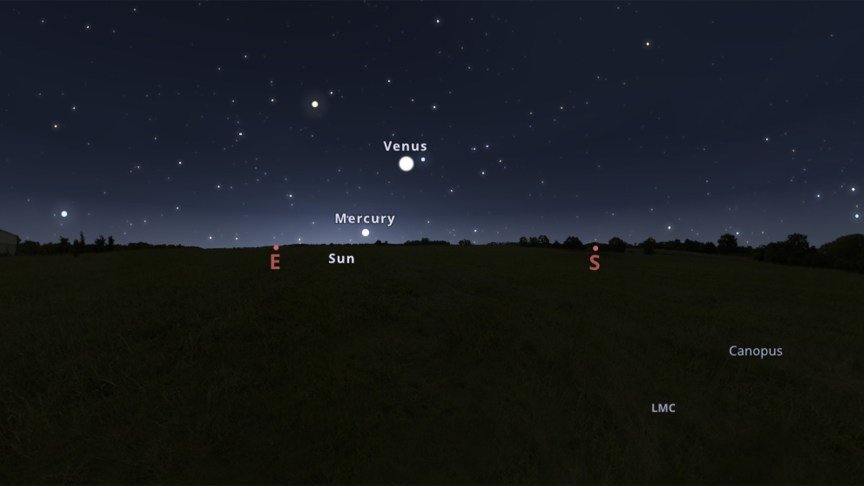
Every planet is visible during the month of November, though depending on the time and day, you’ll get a better or worse view of them. Mercury and Venus are the most difficult to see due to their proximity to the sun.
Mercury: Mercury was at its eastern elongation during October, so it starts November a bit too close to the sun to see safely. It reaches western elongation on Nov. 20, where it’ll be easily visible just before sunrise for the rest of the month.
Venus: Venus starts the month just ahead of the sun at sunrise, technically making it possible to see every morning in November. It gets further from the sun as the month goes on, making it easier and safer to see toward the end of the month.
Mars: Mars is high in the sky all month. It rises out of the eastern horizon shortly after midnight at the start of November and rises earlier as the month progresses. Early morning is the best time to see it, or right around midnight toward the end of the month.
Jupiter: Jupiter and Mars are close pals for all of November, rising at roughly the same time and right next to each other in the sky. The star Regulus joins in to form a trio, which is visible to the naked eye the entire month.
Saturn: Saturn is also visible every night in November. It’s in the eastern sky when the sun sets, and sets on the western horizon shortly before sunrise. Right after dark is the best time to see it, but you’ll need binoculars or a telescope to capture its glorious rings.
Neptune: Neptune and Saturn are teamed up for November, with both of them being very close in the sky and following a similar trajectory. Bring binoculars or a telescope.
Uranus: Uranus is in the night sky every day in November, rising in the east shortly before sunset and setting in the west right around sunrise. It reaches opposition on Nov. 25, which means it’s as far away from the sun as it can get, and will be the most visible. You’ll still want to bring some binoculars or a telescope for best results.
Nov. 2-3: The moon, Mars and Jupiter dance party
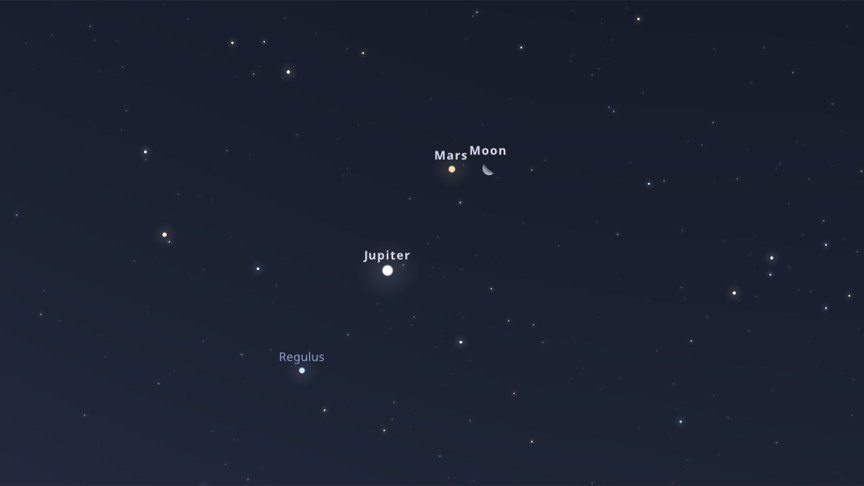
The month begins with a meetup among Mars, Jupiter and the moon. The three will appear close together in the night sky, making them easy to spot: The moon is easy to find, and both planets are visible to the naked eye. On Nov. 2, the moon will be closer to Mars, and the trio will follow one another across the sky throughout the night. Regulus will also be in tow and readily visible to the naked eye.
Nov. 3 continues the good vibes. The moon slides over to the other side of Regulus on that night, but all four celestial bodies are still quite close together and easy to spot. Mars, Jupiter and Regulus will get even closer to each other as November progresses, but the moon moves even further away after Nov. 3.
Nov. 4-5: Southern Taurids meteor shower peaks
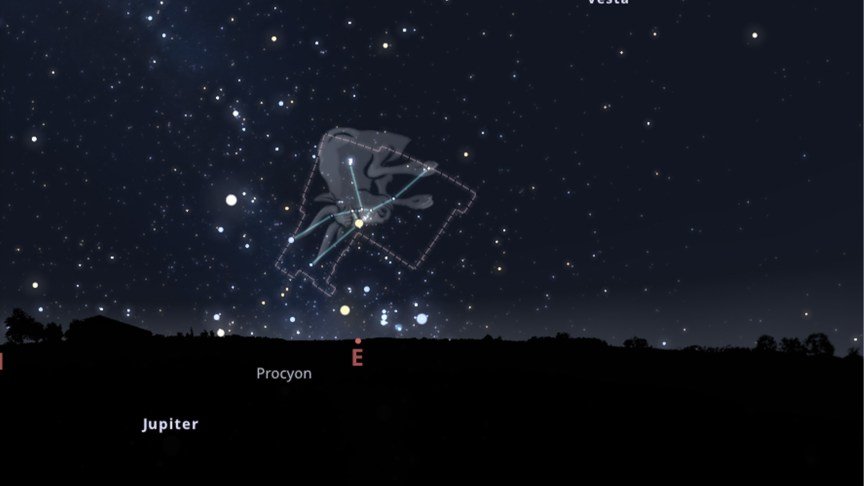
The Southern Taurids have technically been active since Sept. 20, and continue until Nov. 20. This long-running meteor shower peaks during the evening of Nov. 4 and morning of Nov. 5. It’s not a terribly strong meteor shower and should average about five meteors per hour. However, it often tosses bright fireballs, so what it lacks in quantity, it makes up for in quality.
The moon is 22% illuminated that night, which the American Meteor Society calls “favorable conditions” for viewing a meteor shower. You want to get as far away from light pollution as possible to give yourself even better odds, and make sure to dress for the weather. The Southern Taurids will appear to originate from the Taurus constellation, which rises in the east shortly after sunset and moves across the sky before setting in the west right before sunrise.
Nov. 9: The best night for hunting stars
It’s no secret that the full moon is usually the most popular celestial event to happen every month, but skygazers also value the new moon. This is because the moon is a significant source of light pollution, making many stars and planets, such as Uranus and Neptune, harder to see. With the new moon on Nov. 9, it’ll be the darkest night of November — and perfect for stargazing and night-sky photography.
Nov. 9 also happens to be Carl Sagan Day, an unofficial holiday to honor the visionary astronomer. If you’re stuck inside that night, you can always use the occasion to watch Sagan’s legendary Cosmos series, which is available for free on the Internet Archive or through various user uploads on YouTube.
Nov. 14-25: A four-planet alignment
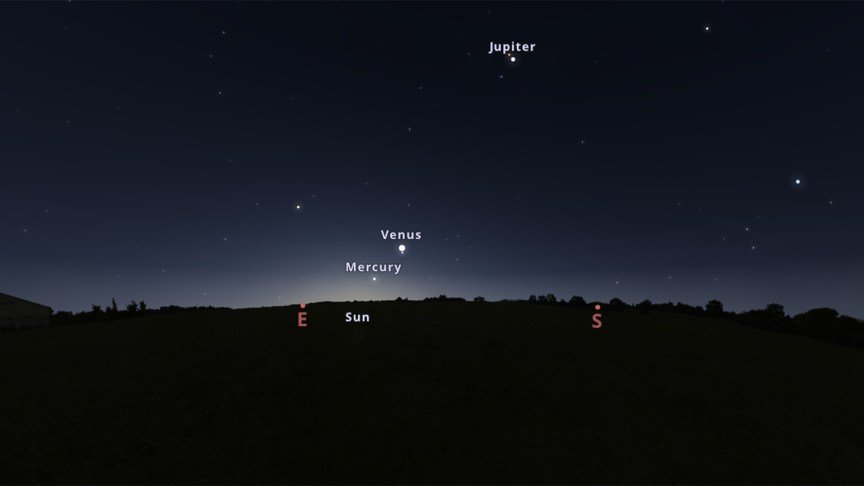
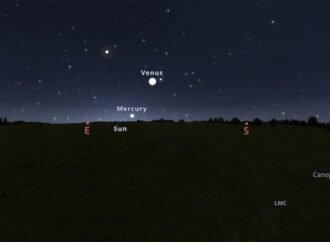
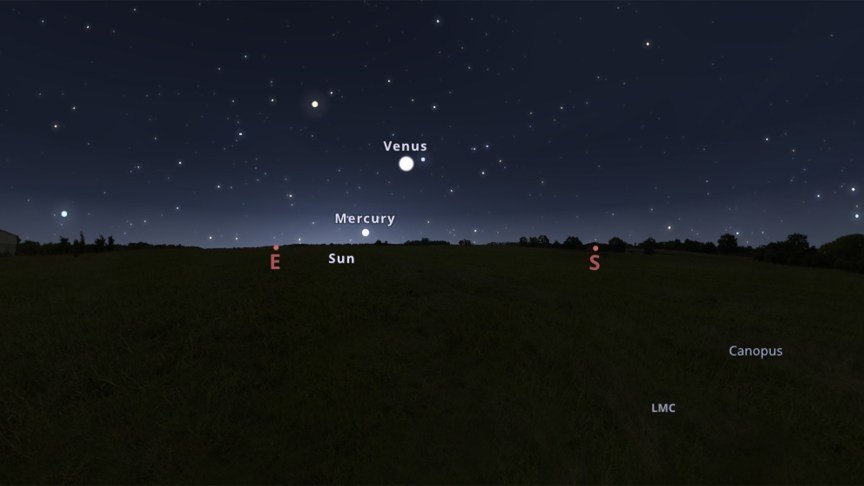
Most of the planets are visible in the night sky almost every night in November, but on Nov. 14 there’ll be a fun little planet parade. It’ll take place just before sunrise, so it’s mostly for early risers. Mercury, Venus, Mars and Jupiter are set to line up nicely, making them easy to spot. This is especially true for Jupiter and Mars, which should be right next to each other that night.
The show will start around Nov. 14 and will last until around Nov. 25, depending on your location. The tricky part is catching Mercury in the sky before the sun comes up. It’s only about a 30-minute window since the sun closely follows Mercury up over the eastern horizon. The single best day to view it is Nov. 20, when Mercury is at its western elongation — as far from the sun as it can get.
Uranus is also visible at this time, bringing the number of visible planets to three. Saturn and Neptune are below the horizon. Uranus is on the other side of the sky, however, so it’s not technically part of the alignment.
Nov. 11-12: Northern Taurids peaks
If you miss the Southern Taurids, you only have to wait a week to catch a glimpse of the Northern Taurids meteor shower. This is another long-lasting meteor shower that started on Oct. 20 and runs until Dec. 10. It peaks on the evening of Nov. 11 and the morning of Nov. 12. The American Meteor Society notes that the moon is only 5% illuminated on Nov. 11, giving viewers even better conditions than during the Southern Taurids.
It is otherwise virtually identical to the Southern Taurids. The shower appears to originate from the same constellation, Taurus, which rises and sets at almost exactly the same times as it did a week earlier. The Northern Taurids promise about five meteors per hour under optimal conditions, with an increased chance of fireballs. Both showers are even fueled by the same comet, 2P/Encke. It’s the space equivalent of a sitcom rerun airing just one week later.
Nov. 16-17: Leonids peaks
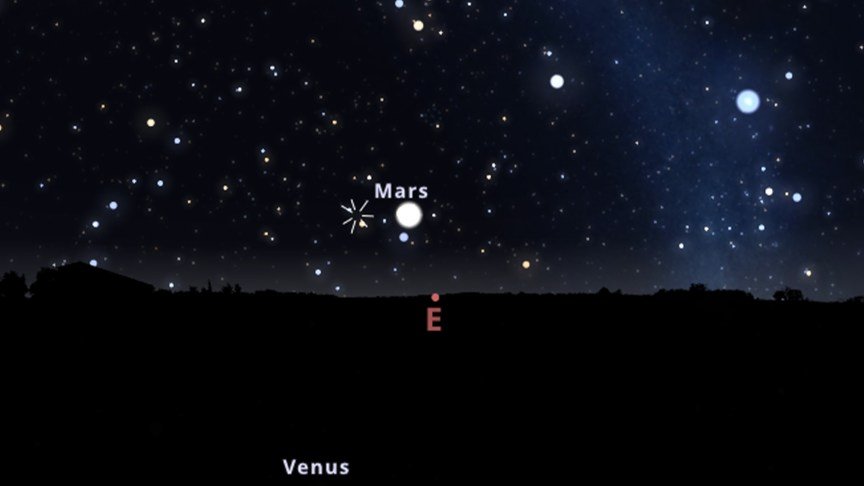
Leonids is usually the most active meteor shower in November. It starts on Nov. 6 and runs until Nov. 30, making it shorter than both Taurids meteor showers. It peaks on the evening of Nov. 16 and the morning of Nov. 17.
The good news is that the meteor shower is very easy to find. Meteors from it will appear to originate from the Leo constellation, which is right next to Mars and Jupiter, which are visible in the night sky.
The bad news is that this part of the sky doesn’t rise until around midnight, making this a meteor shower for night owls. It should produce about 15 meteors per hour under optimal conditions, though you can expect slightly fewer because the 41%-illuminated moon will create enough natural light pollution to obscure fainter meteors.
The Leonids have produced exceptional meteor storms in the past, with hundreds of meteors per hour. That isn’t expected to happen in 2026, but the odds aren’t zero. They may improve after the comet loops around the sun again in 2031.
Nov. 23-24: Supermoon
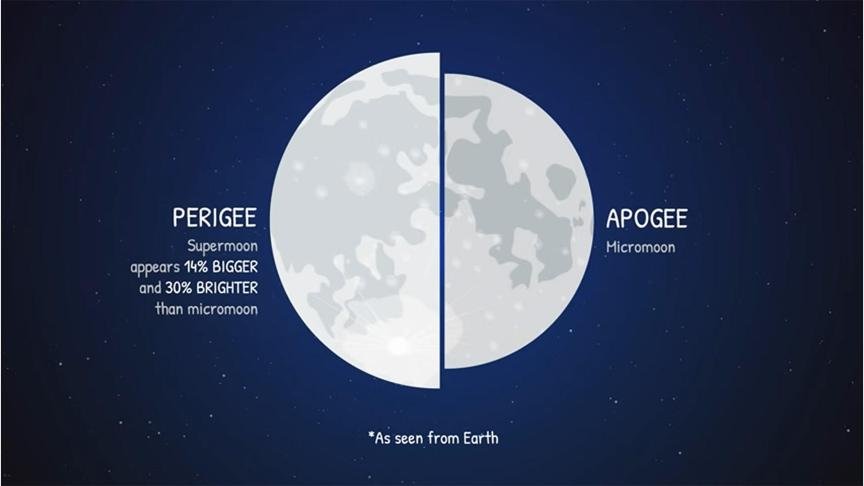
A micro moon is noticeably smaller and less bright than a supermoon or even a regular full moon.
NASA/JPL-Caltech
November’s Beaver Moon takes place just two days before Thanksgiving. It is also the first of a string of four consecutive supermoons that will close out 2026 and begin 2027. This happens when the moon is within 90% of perigee — its closest point to Earth. The phenomenon makes the moon appear about 7% larger than a regular moon and 14% larger than a minimoon — and noticeably brighter than both.
Per The Old Farmer’s Almanac, the Beaver Moon reaches its peak illumination on Nov. 24 at 9:53 a.m. ET, which is after sunrise for most people in the US. That means the best time to see it is either the night before (Nov. 23) or the evening after (Nov. 24). The moon remains over 90% full from Nov. 22-27. If you plan on going skygazing, avoid those days like the plague, since the moon creates a ton of light pollution.
Nov. 30: Another moon, Mars and Jupiter dance party
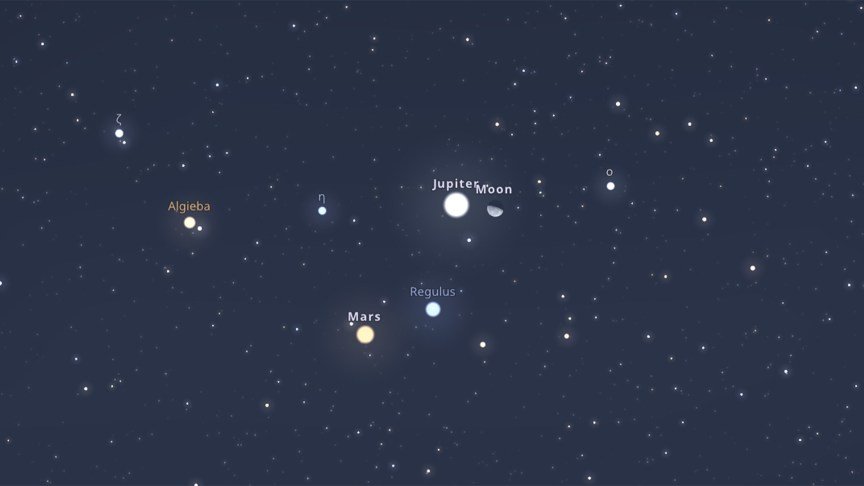
It’s not often that the same event happens twice in a single month, but it turns out Jupiter, Mars and the moon just can’t seem to get enough of each other. The trio closes out the month the same way it started: hanging out very close together in the night sky. And yes, Regulus will once again tag along.
Unlike the prior meetup, this one only lasts for one night before the moon dashes away. Since all four of them are visible with the naked eye and the moon is still mostly full, people shouldn’t have any trouble finding them. Eagle-eyed stargazers may see Algieba nearby as well. It’s the second brightest star in the Leo constellation (behind Regulus), and it’s also visible without binoculars or a telescope.
All month: Constellations and asterisms
The constellations continue their summer-to-winter shakeup. Prominent constellations in the sky include Taurus, Pegasus, Capricornus, Aquila, Pisces and Aries. Mainstays such as the Big Dipper and Little Dipper are still out there, but can be difficult to see if you live too far south. As a rule, we recommend using a sky map or a tool such as Stellarium to pinpoint each object so you can find it.
There are also some lesser-known asterisms to seek out, such as the Pleiades (the Seven Sisters), the Great Square of Pegasus and the Circlet of Pisces. The Summer Triangle is still visible, while the Winter Triangle becomes much easier to spot as it rises above the horizon earlier in the evening.

See full bio
For more tech updates, stay tuned to our blog.