Explanation: Have you ever seen the full moon rise? This colorful image was photographed last weekend in Sicily, just outside the town of Nicosia, in Italy. It is a composite photograph that shows the Moon rising as the sky turns darker. Lower clouds are reflecting the colors of antitwilight, while ash and gas from Mount
NASA has awarded Modulate Space Corporation a contract to develop key elements of a 5G communications system for use on the lunar surface with built-in Wi-Fi 6, for NASA’s Glenn Research Center in Cleveland. This accelerated effort is organized into two primary work areas that together will develop a scalable, standards-based communications capability designed to
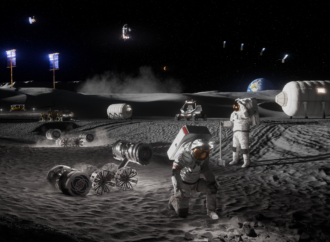
Editor’s note: This release was updated on Sept. 30, 2026, to correct the name of the DISCO payload. NASA selected three new scientific investigations and their payload suites to advance our knowledge of the Moon and help pave the way for building humanity’s first lunar outpost, Moon Base. The suite of science instruments and technologies
Humans won’t be the only ones aboard future NASA missions. At Johnson Space Center in Houston, Texas, researchers on the agency’s Dexterous Robotics Team are working on the next generation of advanced robots to aid crews during their increasingly uncharted journeys to the moon and possibly even Mars. But while job-killing automation is an increasing
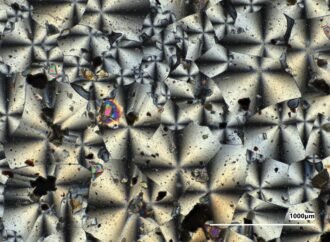
Photos taken using a microscope reveal the colorful, kaleidoscope-like crystal structure of a new NASA-made material that could be used for manufacturing during future space missions. Developed at NASA’s Glenn Research Center in Cleveland, the material could be created directly on the Moon or Mars, allowing NASA to pack fewer supplies — saving weight and
In this Aug. 27, 2026, image, an Alta-X drone flies an advanced guidance and navigation system known as the Safe and Precise Landing – Integrated Capabilities Evolution (SPLICE) experiment near NASA’s Armstrong Flight Research Center in Edwards, California. Researchers at NASA’s Johnson Space Center in Houston developed SPLICE, which successfully completed simulated lunar descent and