
Pakistan’s Gateway to Global News, Tech Updates, and Emerging AI Trends.
Prizes
- Home
- Prizes

NASA Awards First Prize in Phase 2 of Agency’s LunaRecycle Challenge – NASA0
- & Crowdsourcing News, and Crowdsourcing Program, Centennial Challenges, Challenges, Prizes, SCIENCE, Science / Health, Science Mission Directorate, scientists, Space, Space Communications & Navigation Program, Space Launch System (SLS), Space Technology Mission Directorate, Space Telescope, space-x-ipo, SpaceX
- August 28, 2026
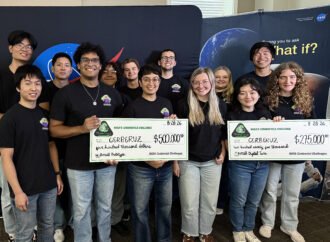
NASA named a team from the Massachusetts Institute of Technology (MIT) as the first prize winner for Phase 2 of the agency’s LunaRecycle Challenge, which focused on developing solutions for reducing waste during missions to the Moon or deep space by recycling common materials, like fabrics, plastics, foam, and metals. The Composites for Extraterrestrial Recycling By Engineering the Reuse and Upcycling of Zotek (CERBERUZ) team, comprised of undergraduate, graduate, and doctoral students at MIT, received a total of $775,000 in awards. The technology grinds mixed trash into a fine powder,
READ MORENASA Invites Media to LunaRecycle Challenge Finale Event in Alabama – NASA0
- and Crowdsourcing Program, Centennial Challenges, Challenges, Marshall Space Flight Center, Prizes, SCIENCE, Science / Health, Science Mission Directorate, scientists, Space, Space Communications & Navigation Program, Space Launch System (SLS), Space Telescope, space-x-ipo, SpaceX
- August 25, 2026
NASA will announce the winners of the final phase of its LunaRecycle Challenge on Friday, Aug. 28, at The University of Alabama (UA) Lee Styslinger College of Engineering in Tuscaloosa, Alabama. Launched in 2024, the challenge incentivizes the invention of new recycling systems that could support non-metabolic waste management efforts for future lunar missions. Media
READ MORENASA TechLeap Prize: Orbital Clarity Challenge – NASA0
- & Crowdsourcing News, and Crowdsourcing Program, Center of Excellence for Collaborative Innovation (CoECI), Challenges, CoECI News, Get Involved, Opportunities to Contribute to NASA Missions & Get Involved, Prizes, SCIENCE, Science / Health, Science Mission Directorate, scientists, Space, Space Communications & Navigation Program, Space Launch System (SLS), Space Telescope, space-x-ipo, SpaceX
- August 19, 2026
The Orbital Clarity Challenge — the sixth in the NASA TechLeap Prize series — is a collaborative effort between NASA’s Heliophysics Division, Flight Opportunities program, and Center of Excellence for Collaborative Innovation. The Heliophysics Division studies space weather, including how it heats and expands Earth’s outer atmosphere during intense solar activity, creating orbital drag through atmospheric density changes. The
READ MORE
NASA Student Aviation Challenge Focuses on Nation’s Infrastructure – NASA0
- & Crowdsourcing News, Aeronautics, and Crowdsourcing Program, Center of Excellence for Collaborative Innovation (CoECI), Challenges, CoECI News, General, Get Involved, Opportunities to Contribute to NASA Missions & Get Involved, Prizes, Research and Technology Mission Directorate, SCIENCE, Science / Health, Science Mission Directorate, scientists, Space, Space Communications & Navigation Program, Space Launch System (SLS), Space Telescope, space-x-ipo, SpaceX, Transformative Aeronautics Concepts Program, University Innovation
- August 18, 2026
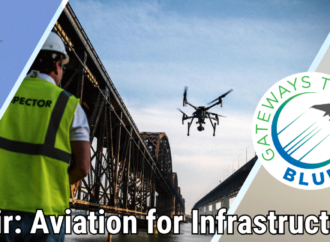
NASA’s next Gateways to Blue Skies competition invites collegiate teams to imagine innovative new ways aircraft could inspect land-based infrastructure, such as bridges and tunnels, to improve safety, reliability, and costs by 2035 or sooner. Infrastructure is the foundation of the nation’s strong economy, global competitiveness, and daily quality of life. When that infrastructure is
READ MORENASA Challenge Tests Wheel Designs for Moon Base Mobility – NASA0
- and Crowdsourcing Program, Center of Excellence for Collaborative Innovation (CoECI), Challenges, Johnson Space Center, Prizes, SCIENCE, Science / Health, Science Mission Directorate, scientists, Space, Space Communications & Navigation Program, Space Launch System (SLS), Space Technology Mission Directorate, Space Telescope, space-x-ipo, SpaceX
- August 17, 2026
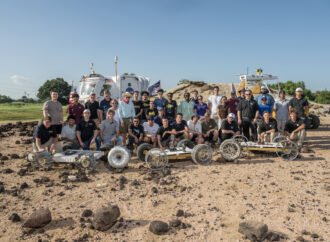
As NASA prepares to establish the Moon Base, advancing surface mobility will be key to helping crews and robotic systems travel farther across the lunar surface. To help advance that capability, the Rock and Roll with NASA Challenge invited public innovators to design and build next-generation lunar rover wheels. Five teams from 128 submissions and 49 countries advanced to the final phase of the
READ MORENASA Competition Invites Students to Help Imagine a Future Enabled by Lunar Technologies0
- & Crowdsourcing News, and Crowdsourcing Program, Challenges, Get Involved, Langley Research Center, Lunar Surface Innovation Initiative, Opportunities to Contribute to NASA Missions & Get Involved, Prizes, Research and Technology Mission Directorate, SCIENCE, Science / Health, Science Mission Directorate, scientists, Space, Space Communications & Navigation Program, Space Launch System (SLS), Space Technology Mission Directorate, Space Telescope, space-x-ipo, SpaceX
- August 14, 2026
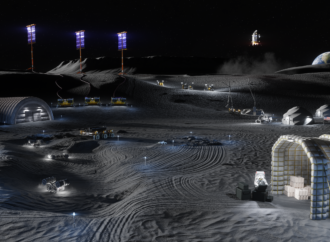
NASA is asking U.S.-based collegiate teams to submit bold, original concepts to the 2027 edition of a student challenge focused on aerospace innovation that could help the agency envision a future on the Moon shaped by new technology. The latest NASA Revolutionary Aerospace Systems Concepts – Academic Linkage (RASC-AL) competition invites student teams to explore new operations paradigms and advance the technologies needed to
READ MORE
NASA Student Aviation Challenge Focuses on Nation’s Infrastructure - NASA
- & Crowdsourcing News, Aeronautics, and Crowdsourcing Program, Center of Excellence for Collaborative Innovation (CoECI), Challenges, CoECI News, General, Get Involved, Opportunities to Contribute to NASA Missions & Get Involved, Prizes, Research and Technology Mission Directorate, SCIENCE, Science / Health, Science Mission Directorate, scientists, Space, Space Communications & Navigation Program, Space Launch System (SLS), Space Telescope, space-x-ipo, SpaceX, Transformative Aeronautics Concepts Program, University Innovation
- August 18, 2026
NASA TechLeap Prize: Orbital Clarity Challenge - NASA
- & Crowdsourcing News, and Crowdsourcing Program, Center of Excellence for Collaborative Innovation (CoECI), Challenges, CoECI News, Get Involved, Opportunities to Contribute to NASA Missions & Get Involved, Prizes, SCIENCE, Science / Health, Science Mission Directorate, scientists, Space, Space Communications & Navigation Program, Space Launch System (SLS), Space Telescope, space-x-ipo, SpaceX
- August 19, 2026

Latest Posts
-
NASA Awards First Prize in Phase 2 of Agency's LunaRecycle Challenge - NASA
- & Crowdsourcing News, and Crowdsourcing Program, Centennial Challenges, Challenges, Prizes, SCIENCE, Science / Health, Science Mission Directorate, scientists, Space, Space Communications & Navigation Program, Space Launch System (SLS), Space Technology Mission Directorate, Space Telescope, space-x-ipo, SpaceX
- August 28, 2026
-
-
NASA TechLeap Prize: Orbital Clarity Challenge - NASA
- & Crowdsourcing News, and Crowdsourcing Program, Center of Excellence for Collaborative Innovation (CoECI), Challenges, CoECI News, Get Involved, Opportunities to Contribute to NASA Missions & Get Involved, Prizes, SCIENCE, Science / Health, Science Mission Directorate, scientists, Space, Space Communications & Navigation Program, Space Launch System (SLS), Space Telescope, space-x-ipo, SpaceX
- August 19, 2026
-
NASA Student Aviation Challenge Focuses on Nation’s Infrastructure - NASA
- & Crowdsourcing News, Aeronautics, and Crowdsourcing Program, Center of Excellence for Collaborative Innovation (CoECI), Challenges, CoECI News, General, Get Involved, Opportunities to Contribute to NASA Missions & Get Involved, Prizes, Research and Technology Mission Directorate, SCIENCE, Science / Health, Science Mission Directorate, scientists, Space, Space Communications & Navigation Program, Space Launch System (SLS), Space Telescope, space-x-ipo, SpaceX, Transformative Aeronautics Concepts Program, University Innovation
- August 18, 2026

Top Authors
-
matechpros@gmail.com
ADMINISTRATOR
-
OWS
ADMINISTRATOR

