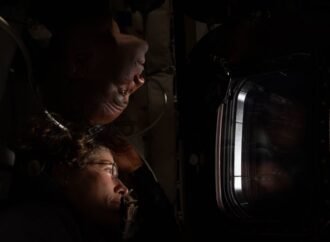
When NASA’s Artemis II mission put humans at the far side of the moon for the first time in 44 years, it often felt like we were there in the capsule with astronauts Victor Glover, Christina Koch, Jeremy Hansen and Reid Wiseman. That’s almost entirely due to the frequent transmission of imagery from the flight,
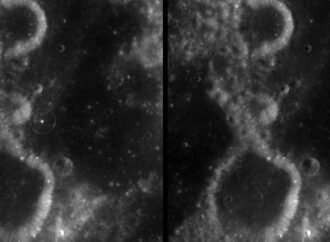
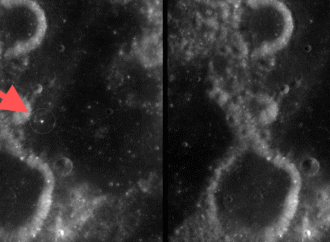
The moon has more than 2 million craters on its surface, but the overwhelming majority of the big ones happened long before humans ever started looking at it. That means when someone notices a new big crater, it’s a pretty big deal, and that’s exactly what happened when NASA’s Lunar Orbiter found a brand-new crater
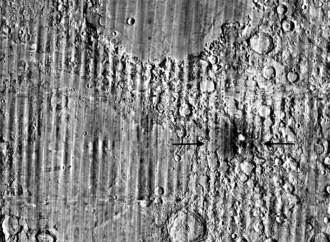
The moon may look desolate and calm, but a lot happens on that dusty landscape. With zero atmosphere, space rocks of all sizes regularly bombard the lunar surface. Most of the debris is microscopic, but astronomers estimate around 140 coffee table-sized asteroids and comets also slam into our moon every year. When they do, the
It started as a routine data-quality check. But as Robert Wagner, a scientist with NASA’s Lunar Reconnaissance Orbiter (LRO), scanned a giant Moon map on his computer screen, an unusually large bright spot circled by a dark halo caught his eye, as it implied that surface material in that area had been shaken up. “I
NASA will host an International Observe the Moon Night celebration from 5:30 to 8 p.m. CST on Saturday, Sept. 19, at the U.S. Space & Rocket Center, the official visitor center for NASA’s Marshall Space Flight Center in Huntsville, Alabama. International Observe the Moon Night celebrates the Moon, the science behind it, and its connection
In April, the world watched as four humans circled the Moon for the first time in over 50 years with NASA’s Artemis II mission. On Saturday, Sept. 19, the public is invited to look up again with NASA events across the country, including the International Observe the Moon Night celebration held at NASA’s Goddard Space