NASA’s Power to Explore Student Challenge kicked off Tuesday, Nov. 17. The science, engineering, technology, and mathematics (STEM) challenge invites kindergarten through 12th grade students in the United States to learn about space nuclear power systems and illustrate how these nuclear “batteries” could help power their lunar exploration vision. Students are also invited to write
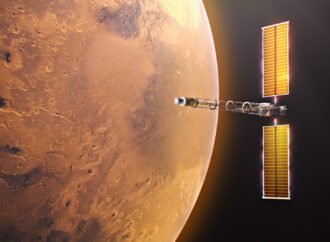
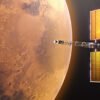
Destined for Mars and beyond, NASA’s Space Reactor-1 (SR-1) Freedom will be humanity’s first fission-powered spacecraft to travel outside Earth’s orbit. Announced during NASA’s “Ignition” event, this mission will demonstrate nuclear electric propulsion in deep space, and progress is underway on its key element: the nuclear power module. To expedite development of the spacecraft, NASA
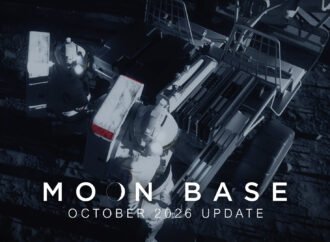
As NASA works to build the Moon Base, crewed and robotic lunar rovers will play a crucial role during early development through technology demonstrations, astronaut transport, terrain mapping, scientific investigations, and resource prospecting. Data from these early missions will inform future mobility systems and infrastructure needed for astronauts to live and work on the Moon.
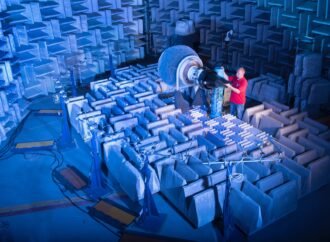
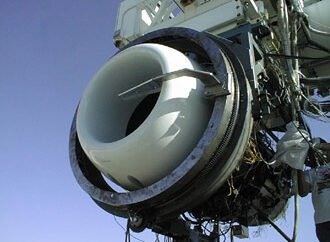
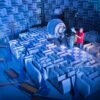
Research teams at the NASA Glenn Research Center perform experiments in world-class facilities such as the 9- by 15-Foot Low-Speed Wind Tunnel (9 x15 LSWT), the Aero-Acoustic Propulsion Laboratory (AAPL), the Small Hot Jet Acoustic Rig (SHJAR), the Nozzle Acoustic Test Rig (NATR), the DGEN AeroPropulsion Research Turbofan (DART), and the Acoustical Testing Laboratory (ATL).
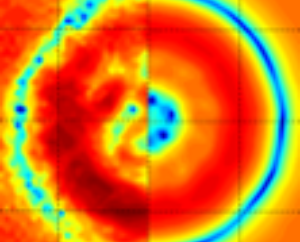
Research teams at NASA’s Glenn Research Center are involved in developing theory and software to predict the noise from aircraft engines. This software helps engineers to design and analyze new and improved aircraft propulsion systems. Copies of our software can be requested from NASA’s Software Catalog. Development of jet noise prediction codes is multifaceted. Since
To measure airflow and sound, research teams at the NASA Glenn Research Center use special instrumentation like particle image velocimetry, hot wire anemometry, Raman spectroscopy, microphones in phased arrays or continuously rotating rakes. The global aviation noise reduction community relies on data from NASA GRC experiments to validate theory and noise prediction software. Hear an