
Pakistan’s Gateway to Global News, Tech Updates, and Emerging AI Trends.
Armstrong Flight Research Center
- Home
- Armstrong Flight Research Center

NASA Glenn’s Legacy Forged Through Decades of Flight Research0
- Aeronautics, Armstrong Flight Research Center, General, Glenn Research Center, NASA Aircraft, NASA History, SCIENCE, Science / Health, Science Mission Directorate, scientists, Space, Space Communications & Navigation Program, Space Launch System (SLS), Space Telescope, space-x-ipo, SpaceX
- August 18, 2026
Many of NASA’s most important aerospace breakthroughs that began in the laboratory were ultimately proven in the sky. For decades, experts at NASA’s Glenn Research Center in Cleveland conducted flight tests — piloting aircraft into targeted environments such as icing clouds and carefully defined atmospheric routes. This approach allowed them to collect measurements directly in flight, providing critical data
READ MORENASA’s 737 Reveals New Paint – NASA0
- Armstrong Flight Research Center, Artemis, Johnson Space Center, NASA Aircraft, SCIENCE, Science / Health, Science Mission Directorate, scientists, Space, Space Communications & Navigation Program, Space Launch System (SLS), Space Telescope, space-x-ipo, SpaceX
- August 13, 2026
NASA’s 737 aircraft was painted this week in Oklahoma as it progresses with modifications for use as a reduced gravity test aircraft for the agency. NASA’s Armstrong Flight Research Center in Edwards, California, took ownership of the aircraft from the United States Air Force in June. The aircraft will perform lunar-gravity parabolic flights to validate
READ MORE


NASA uses subscale aircraft to accelerate flight innovation – NASA0
- Aeronautics, Armstrong Flight Research Center, Flight Innovation, SCIENCE, Science / Health, Science Mission Directorate, scientists, Space, Space Communications & Navigation Program, Space Launch System (SLS), Space Telescope, space-x-ipo, SpaceX
- July 15, 2026
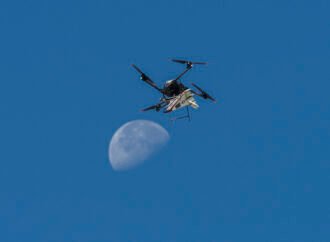
Testing new aerospace concepts in flight remains one of NASA’s most effective ways to advance knowledge and reduce risk. The Dale Reed Subscale Flight Research Laboratory at NASA’s Armstrong Flight Research Center in Edwards, California, supports this mission by using small, autonomous, remotely piloted aircraft as cost-effective platforms to mature innovative ideas, accelerate learning, and
READ MORENASA jets turn red, white and blue – NASA0
- Aeronautics, Armstrong Flight Research Center, Flight Innovation, NASA Aircraft, SCIENCE, Science / Health, Science Mission Directorate, scientists, Space, Space Communications & Navigation Program, Space Launch System (SLS), Space Telescope, space-x-ipo, SpaceX
- July 14, 2026
In honor of America’s 250th birthday, two of NASA’s most iconic aircraft received a new coat of red, white and blue paint ahead of a flyover over Washington on July 4, 2026, with other NASA aircraft. An F-15 and an F/A-18 at NASA’s Armstrong Flight Research Center in Edwards, California, were recently repainted in patriotic
READ MORENASA’s X-59 Aircraft Flies Supersonic for First Time0
- Aeronautics, Armstrong Flight Research Center, Low Boom Flight Demonstrator, NASA Aircraft, Quesst: The Flights, SCIENCE, Supersonic Flight
- June 5, 2026
NASA’s experimental X-59 aircraft marked a major milestone Friday, June 5, when it flew faster than the speed of sound for the first time, setting the stage for demonstrating its quiet supersonic capabilities later this year. NASA test pilot Jim “Clue” Less took off and landed at Edwards Air Force Base in California, reaching a top speed of approximately Mach 1.1 (713 mph) and altitude of 43,400 feet. The X-59’s flight began at 11:08 a.m. PDT and lasted 81 minutes, with the team focusing on flying qualities at both subsonic and then
READ MORE


NASA Glenn’s Legacy Forged Through Decades of Flight Research
- Aeronautics, Armstrong Flight Research Center, General, Glenn Research Center, NASA Aircraft, NASA History, SCIENCE, Science / Health, Science Mission Directorate, scientists, Space, Space Communications & Navigation Program, Space Launch System (SLS), Space Telescope, space-x-ipo, SpaceX
- August 18, 2026
Latest Posts
-
Passion Meets Precision at NASA’s Flight Research Lab - NASA
- Aeronautics, Armstrong Flight Research Center, Flight Innovation, People of Armstrong, People of NASA, SCIENCE, Science / Health, Science Mission Directorate, scientists, Space, Space Communications & Navigation Program, Space Launch System (SLS), Space Telescope, space-x-ipo, SpaceX
- September 16, 2026
-
NASA Glenn’s Legacy Forged Through Decades of Flight Research
- Aeronautics, Armstrong Flight Research Center, General, Glenn Research Center, NASA Aircraft, NASA History, SCIENCE, Science / Health, Science Mission Directorate, scientists, Space, Space Communications & Navigation Program, Space Launch System (SLS), Space Telescope, space-x-ipo, SpaceX
- August 18, 2026
-
-

Top Authors
-
matechpros@gmail.com
ADMINISTRATOR
-
OWS
ADMINISTRATOR

