Three startups are providing the fireworks for the Department of Energy’s Fourth of July celebrations as it meets a major nuclear milestone. They have fired up new reactors as part of a pilot program aimed at boosting what Energy Secretary Chris Wright calls “America’s nuclear renaissance” to develop and deploy the next generation of atomic
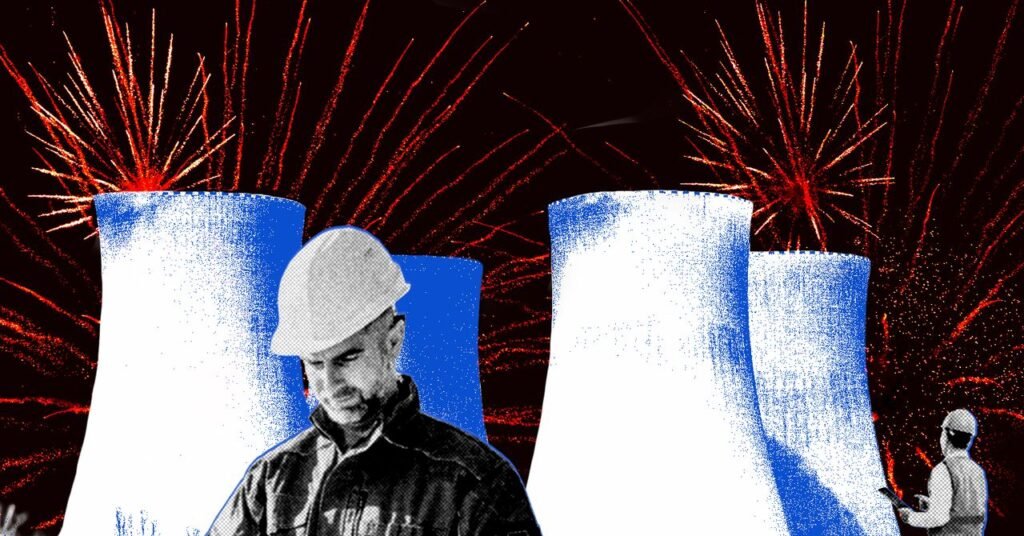
Three startups are providing the fireworks for the Department of Energy’s Fourth of July celebrations as it meets a major nuclear milestone. They have fired up new reactors as part of a pilot program aimed at boosting what Energy Secretary Chris Wright calls “America’s nuclear renaissance” to develop and deploy the next generation of atomic energy.
Other companies in the pilot program have signaled that they can reach criticality (a term used to describe a nuclear reactor that undergoes a chain reaction, a key step in energy delivery) shortly after July 4, following the deadline set by President Donald Trump in an executive order last year. But experts say that while the pilot is a good look for the industry, there is still a long way to go before new reactor designs become commercial realities.
“These prototypes mean everything and nothing,” says Adam Stein, director of the Breakthrough Institute’s Nuclear Energy Innovation program. “They do a lot for companies that reach criticality, but even for those companies, they are not commercial products. They are test reactors.”
For decades, the American nuclear landscape has been dominated by large light water reactors, which use water to move heat and sustain the nuclear reaction. The dream of building smaller reactors with different, more innovative designs has long remained out of reach, thanks in part to a slow regulatory environment and the huge upfront cost required for small companies to develop new reactor designs.
“For a long time the industry was considered stagnant: it was always 10 years away from having a nuclear reactor,” Stein says. The pilot program “demonstrates that that’s not true by intentionally moving faster. It changes the narrative and it changes the perception. That means a lot to the investment community.”
A growing number of investors and tech figures in Silicon Valley see smaller nuclear reactors, which can provide 24/7 carbon-free energy to power data centers and other operations, as part of a new golden age of technology. The tech world has leaned heavily on the Trump administration to reduce regulations and accelerate the development of smaller nuclear designs. The administration has responded with a series of actions, including creating the pilot program through an executive order last year. In classic Trumpian style, the executive order, issued in May 2025, set an aggressive timeline for at least three reactors to be critical, coinciding with the country’s 250th anniversary celebrations on July 4.
In February, the Energy Department quietly reduced a number of environmental and safety regulations for reactors operating under its purview, including those being built as part of the pilot program. (Similar regulatory cuts are now being worked out at the Nuclear Regulatory Commission, which approves reactors to be sold commercially.) Stein says shortening processes for requirements like environmental impact statements, which can take years, generated “significant time savings” for companies in the program.
The pilot program’s reactor designs have benefited not only from reduced bureaucracy. Several of the companies also rely on help from federally funded national laboratories. Valar Atomics reached criticality late last year at Los Alamos National Laboratory using a core with the startup’s fuel and key structural components provided by the lab. (The company reached criticality again with a second reactor at a state-funded lab in Utah earlier this month.) Antares Nuclear and Deployable Energy, the other startups in the pilot program that met the July 4 executive order deadline, also achieved criticality in national laboratories.
Matt Loszak, co-founder and CEO of Aalo Atomics, credits the government’s prioritization of developing new reactors for the speed at which his company has been able to move forward. His company is part of the pilot program and has not yet reached the critical point, although he hopes to do so soon.
Check back often for more exciting news!