
My partner and I fell in love with our first home, a 1980s two-story residence in Edinburgh, before we even walked in. Sitting on a network of patios, each with a shared central garden, we walked through the wrought iron gates to see its enormous floor-to-ceiling windows overlooking a patch of trees and immediately thought,
My partner and I fell in love with our first home, a 1980s two-story residence in Edinburgh, before we even walked in.
Sitting on a network of patios, each with a shared central garden, we walked through the wrought iron gates to see its enormous floor-to-ceiling windows overlooking a patch of trees and immediately thought, “Oh, we’ve found our home.”
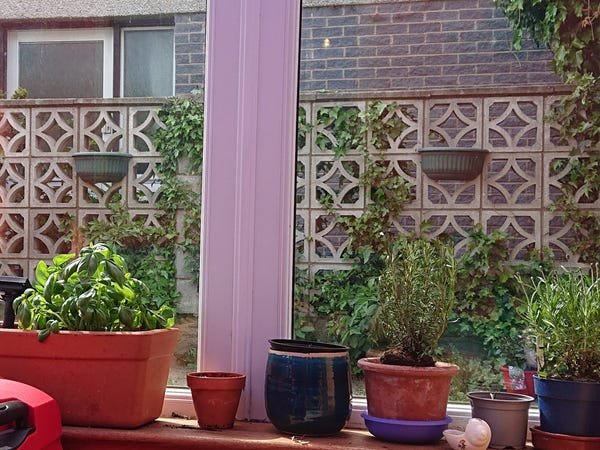
Although it was just over 950 square feet, it had everything on my wish list: a small private garden, an attic, a studio, and even a greenhouse that I could fill with plants.
Sure, it had its flaws and wasn’t that close to the heart of the city, but we didn’t have the finances for perfection, so we were willing to overlook any flaws.
Unfortunately, our dream did not match reality.
Immediately, costs continued to rise.

I was thrilled to have a greenhouse to fill with plants, but it wasn’t worth the cost of caring for an old house. Siobhan Ball
My wife and I knew from the beginning that owning a home would be more expensive for us than living in an apartment, and the older a house is, the more repairs it usually needs.
The problem was that our understanding of an old house was distorted by the experiences we had had living in historic cities like London and Edinburgh.
To us, an “old house” meant the Victorian-era home my grandparents lived in or the 18th-century apartments our friends rented, not something built in the 1980s.
Maybe it’s the millennial in me, perpetually convinced that the ’80s were only 20 years ago, but this place seemed closer to the new construction I’d grown up in than the vision of an “old house” I had in my head.
So, I was surprised at the amount of work and money it took to maintain this almost 50 year old house.
For example, when part of our roof came off after a big storm, we had to replace a bunch of shingles, which made my stomach and bank account hurt.
Other repairs, like fixing the boiler and filling cracks in the walls with plaster, were smaller and less expensive, but it still seemed like something always broke or needed an upgrade.
We also realized that having our own space, rather than living in a building with other people, comes with higher energy costs than we anticipated.
One of our favorite things about living in an apartment was relying on our downstairs neighbors’ heat to be turned up to our unit, so we didn’t need to turn ours up very high. It helped us keep our heating bill down and we missed that luxury when we moved into our house.
Because of the way our house was designed, all the heat warmed the upstairs, but left the downstairs freezing. Fixing these problems would require extensive and expensive renovations.
Again, we knew the costs would fall solely on us, but the frequency of repairs needed on this home made it much more challenging.
The stairs in our two-story house proved to be an exceptional challenge for me.

The shallow, carpeted stairs in the house became my nemesis. Siobhan Ball
The last straw that made us return to an apartment was the lack of accessibility in our home.
My mobility began to deteriorate significantly about six months after we moved, making everything in our suburban neighborhood seem incredibly far away.
Due to a previous diagnosis years earlier, I knew this was a possibility when we bought the house. However, I assumed that the deterioration would occur much more slowly.
Instead, it happened quickly over a few months and suddenly I was stuck in parts of the house unless I had help.
The garden that I was so excited about was left to its own devices, as I couldn’t physically care for it and my wife was too busy to intervene.
Additionally, the stairs, which were shallow and carpeted with tight curves, became my nemesis. The worst part was that I couldn’t avoid them, since the bathroom and kitchen were on separate floors.
Having to navigate these steps several times a day made me fantasize about moving, especially since I knew I would probably need a wheelchair one day and I learned that installing a stairlift would be difficult due to the layout of the house.
So, we thought it was better to take action right away rather than investing more time, money, and work into a place that wasn’t working for us.
In the end, after living there for a little over two years, we decided that although the house seemed almost perfect on paper, it wasn’t perfect for us.
In the end, a single-family home was not the right option for us.

I love that the kitchen and bathroom in our apartment are all on the same floor. Siobhan Ball
Six weeks after selling our house, we ended up buying a modern apartment close to the center of Edinburgh, with public transport within walking distance of our door.
Now, we can’t imagine living anywhere else.
There is still a staircase in my life, but it’s not inside the apartment, so if I’m having an unstable day, I can stay home. And since everything I need is on the same floor, I no longer feel stuck in one area when I’m alone.
Financially, it has been a blessing.
For one thing, our new place is more energy efficient, which means much cheaper utility bills. Although upgrades and repairs inside our apartment will remain our responsibility, the building’s exterior maintenance costs are divided among all other units, so I’ll never have to worry about paying for an entire roof again.
Although we no longer have a garden, we are closer to most of our friends and everything the city has to offer, such as restaurants, cultural events and public transportation. And that has also made us much happier.