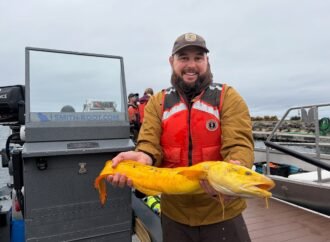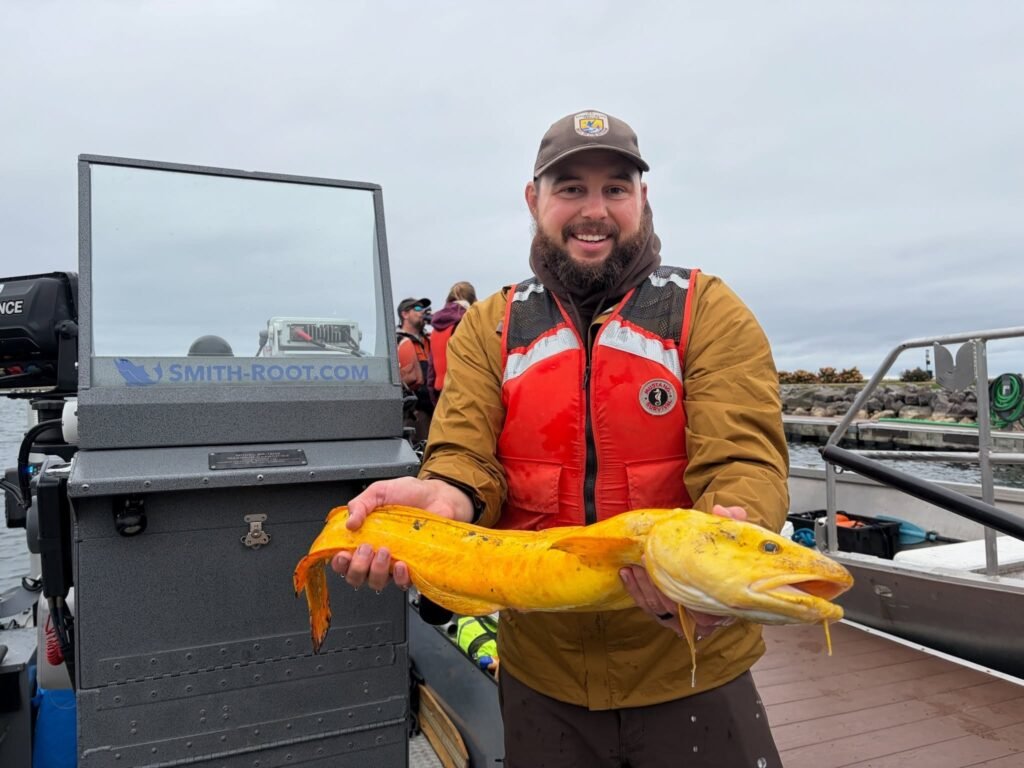
We’ll call him mellow yellow. An “exceptionally rare” yellow-colored burbot (Lota lota) was recently caught by a team of U.S. Fish and Wildlife Service (USFWS) biologists in Oswego Harbor on Lake Ontario in Upstate New York. Fish Biologist Jake Cochran displays the uniquely colored burbot collected in Owego Harbor, NY. Image: Brian Weidel/USGS Burbots are
We’ll call him mellow yellow. An “exceptionally rare” yellow-colored burbot (Lota lota) was recently caught by a team of U.S. Fish and Wildlife Service (USFWS) biologists in Oswego Harbor on Lake Ontario in Upstate New York.
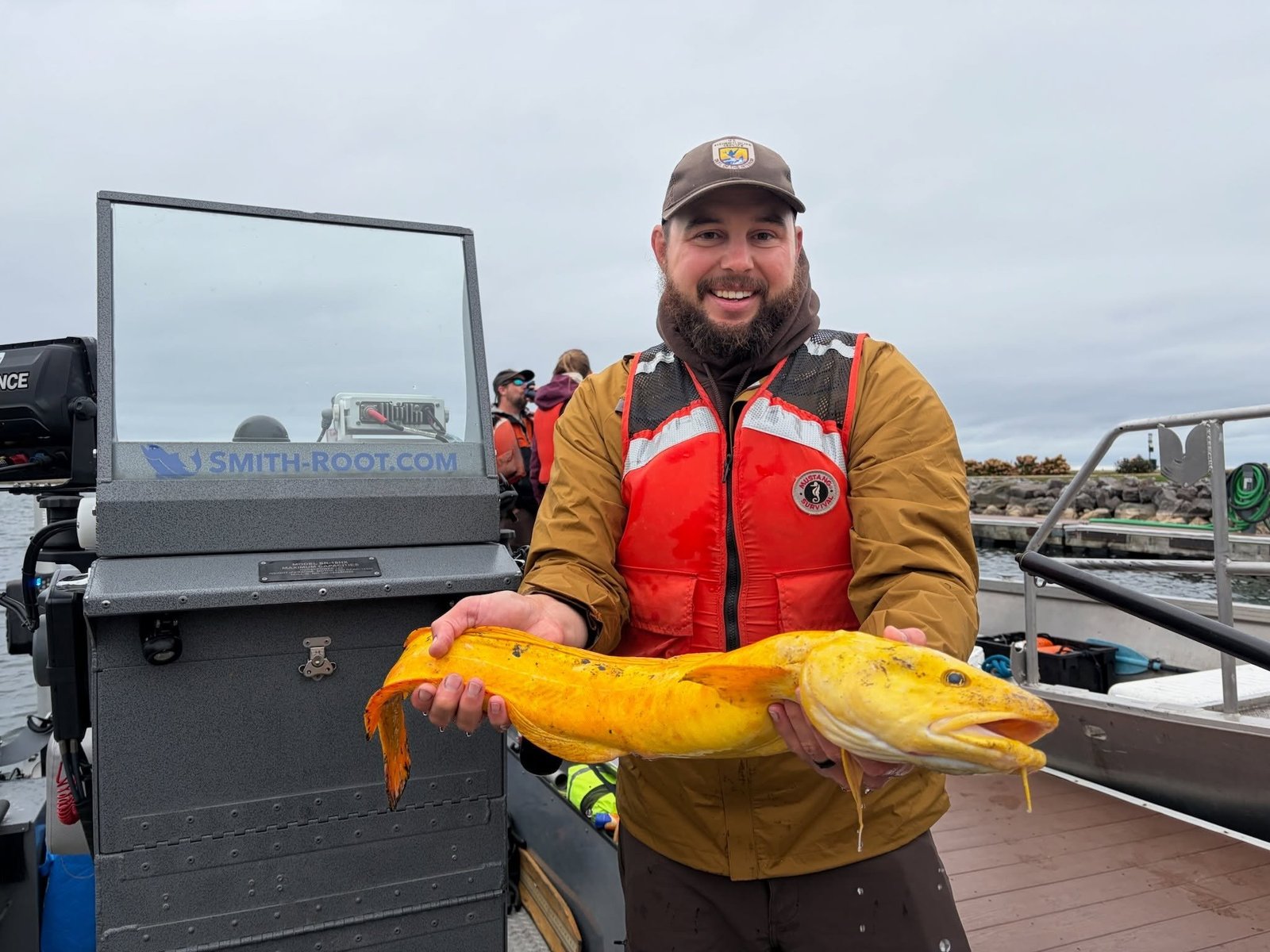
Burbots are long fish that weigh about three to five pounds on average, and live in cold rivers and lakes of North America, Europe, and Asia. To the naked eye, they appear scaleless, but are actually covered with tiny, almost microscopic scales. What they eat depends on their size. Smaller burbots will eat zooplankton, while the bigger burbots prefer to snack on other fish.
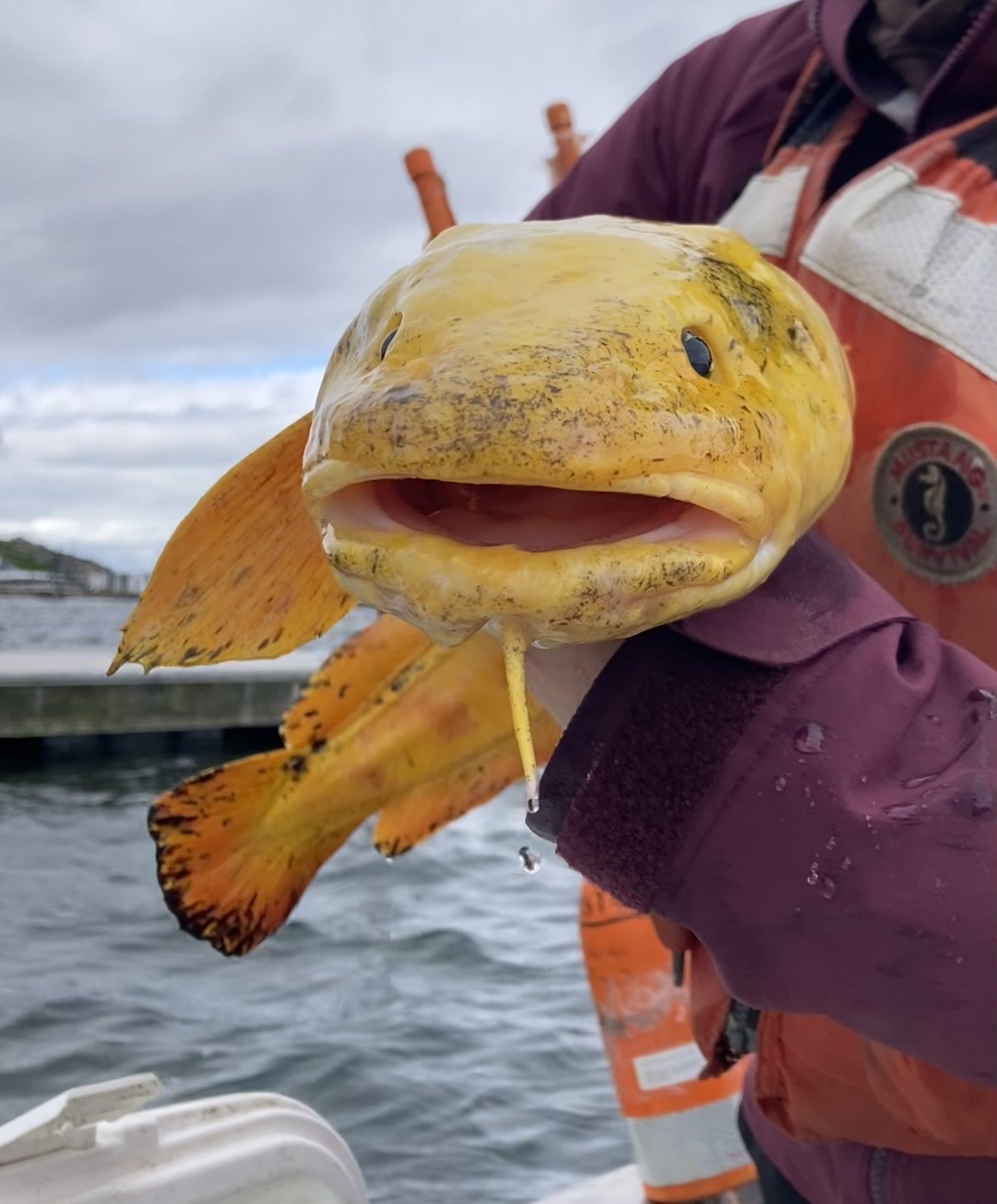
The team caught the brightly colored fish during a routine aquatic invasive species survey. It gets its unique color from a rare genetic condition called xanthochromism. A genetic mutation suppresses the normal pigmentation, and produces a yellow-orange appearance instead of the burbot’s usual grey, olive, or tan coloring. In wild fish, xanthochromism is less common than albinism or melanism, making this fish an “especially unusual capture.”
The burbot is a native species in the Great Lakes, but the USFWS team says the discovery highlights the effectiveness of the Service’s Aquatic Invasive Species Early Detection and Monitoring Program. The program uses a multi-gear fish-surveillance strategy to detect certain non-native species in the harbors, rivers, and embayments of the Great Lakes. Early detection of a watchlist species gives fisheries managers the best opportunity to implement prevention and removal measures if invasive species are detected. Since invasive species are often rare when they first enter new waters, the program uses electrofishing, fyke-netting, gill-netting, and environmental DNA (eDNA) analysis to increase the chances that scientists detect an invasive species.
“The finding is notable because burbot populations in the lake are extremely low, and the species typically inhabit deeper, cooler waters than those found within the harbor,” the USFWS wrote in a statement. “It represents the first documented detection of a burbot during a fisheries survey in Oswego Harbor, although a few angler catches have been reported.”
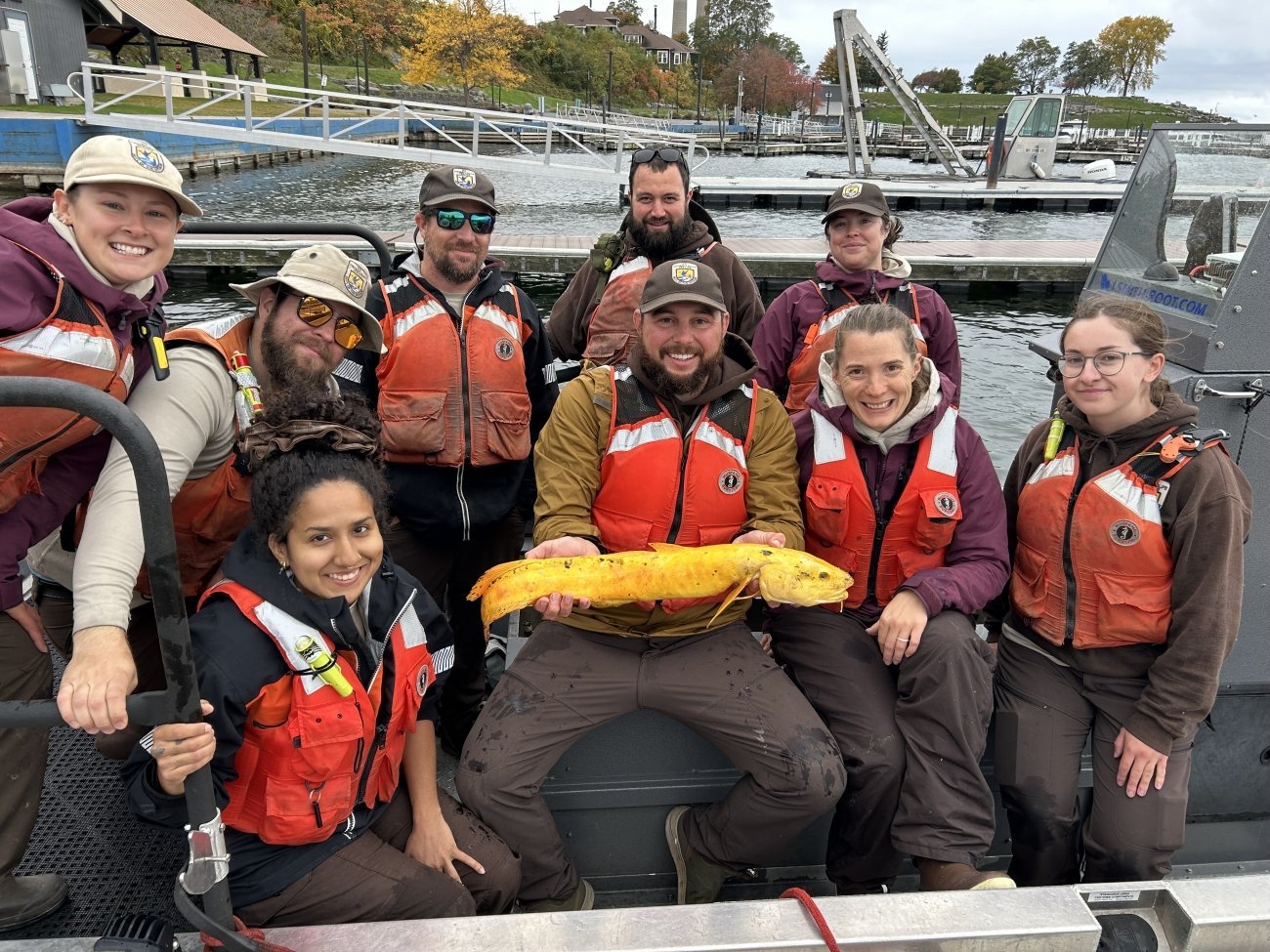
The United States Geological Survey (USGS) fisheries biologists who examined the fish and are familiar with the species also observed that it was very thin and appeared to be in poor health. It was later sent to the Cornell University College of Veterinary Medicine for a health analysis due to the “unexplained factors contributing to the continued suppression of its population”
“The discovery could turn out to be lucky for the burbot too; this exceptionally rare fish may provide valuable insight into the health of the species’ populations throughout the basin that can inform management actions,” the USFWS concluded.

2026 Popular Science Home of the Future Awards
Keep following us for the latest insights.