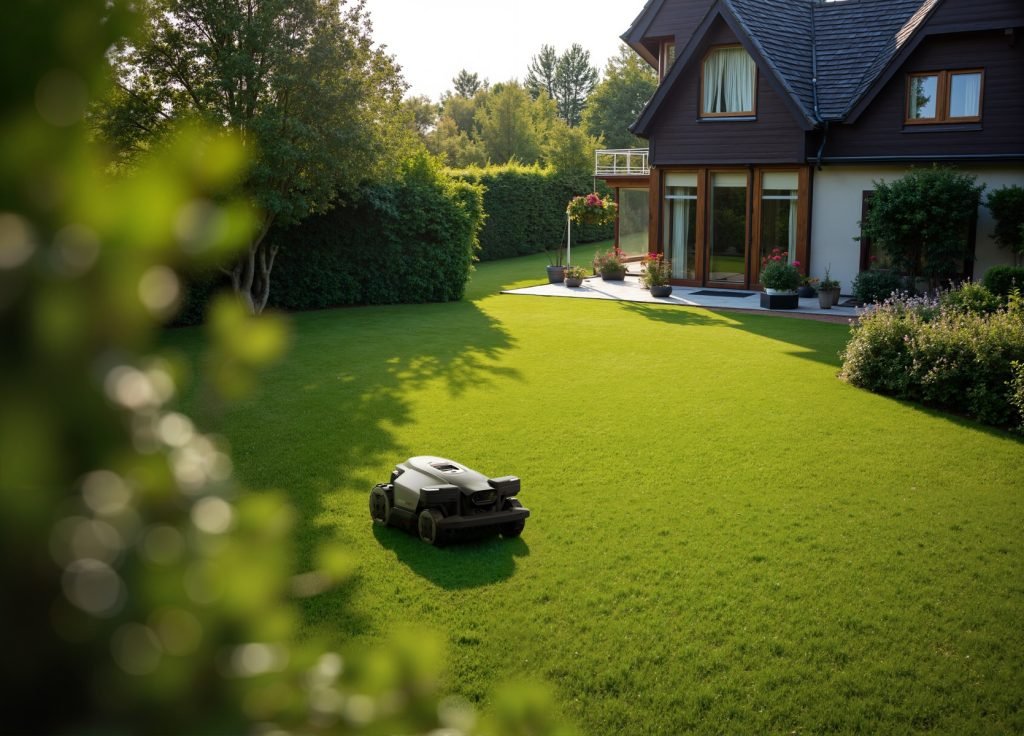
Weekend mowing ranks among the least loved chores on the Australian calendar. Between the heat, the slopes, the thick grass and the sheer size of many suburban and regional blocks, it eats into family time and energy. Roborock is a company better known for its robot vacuums (that we’ve reviewed in the past), has now
Weekend mowing ranks among the least loved chores on the Australian calendar. Between the heat, the slopes, the thick grass and the sheer size of many suburban and regional blocks, it eats into family time and energy.
Roborock is a company better known for its robot vacuums (that we’ve reviewed in the past), has now brought that same hands-off approach outdoors with a full range of robotic lawnmowers designed with local conditions in mind.
The RockMow and RockNeo line-up arrives at Bunnings from 1 September after a local trial program that ran late last year. Six models cover everything from compact courtyards to large acreage-style lawns, with pricing starting at A$1,409 and climbing to A$4,999. All of them skip the traditional boundary wire in favour of camera, RTK and, on the flagship, LiDAR navigation.
Entry-level RockNeo Q series for smaller blocks
The RockNeo Q105 and Q110 form the accessible end of the range. The Q105 is rated for up to 500 m² at A$1,409, while the Q110 stretches to 1,000 m² for A$1,899. Both rely on RTK plus VSLAM navigation, rear-wheel drive and a three-blade cutting system that works between 20 and 60 mm.
Roborock highlights AI auto-mapping, support for up to 15 zones, night mowing and a hedgehog-protection mode that pauses operation during hours when nocturnal wildlife is most active. Rain and frost sensors send the mower home when conditions turn. Connectivity covers Wi-Fi, Bluetooth and 4G, with Alexa and Google Home support.
These models suit typical suburban front and back yards where the priority is simple set-and-forget operation rather than extreme terrain.
Mid-range RockMow S series steps up the cut
The RockMow S108 (800 m², A$1,999) and S115 (1,500 m², A$2,499) add a high-torque motor, protective blade guard, precision electric height adjustment and a ring-light status indicator. Both keep RTK + VSLAM navigation and add pattern cutting plus sliding-disc traction. An edge-mowing kit is standard, aiming for cleaner borders without a second pass with a string trimmer.
Like the Q series, they support multi-zone scheduling, night operation and the wildlife-friendly pause. The extra motor power and electric height control should help with the denser, coarser grasses common across much of Australia.
Flagship RockMow Z series for large and difficult yards
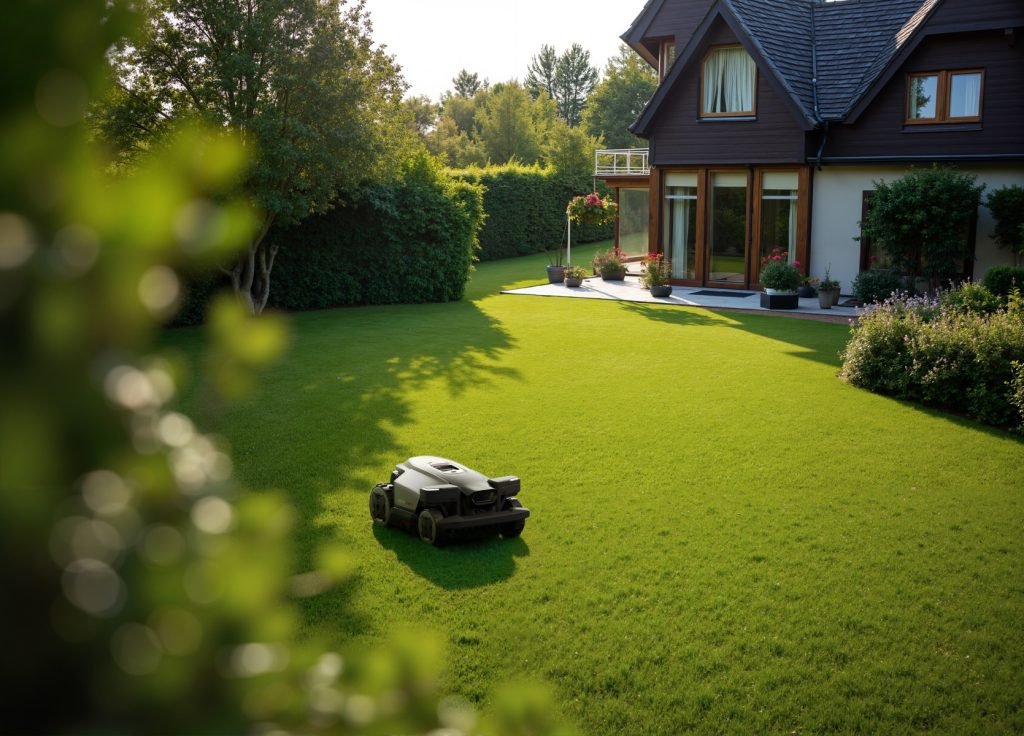
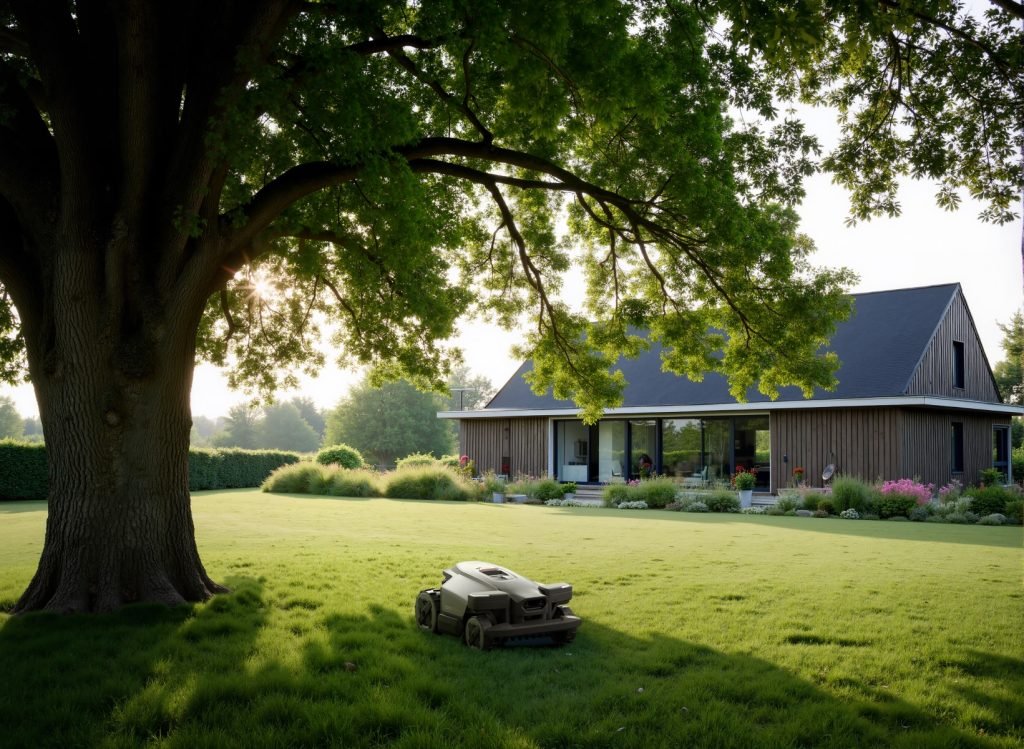
The top end is where Roborock leans hardest into all-terrain capability. The RockMow Z120 LiDAR covers up to 2,000 m² for A$3,499. It replaces the external RTK antenna with onboard 360-degree 3D LiDAR fused with VSLAM, giving it centimetre-level awareness without an extra base station. Four-wheel drive and an 80% slope rating (roughly 39 degrees) let it tackle banks and uneven ground that would stop most rear-wheel-drive machines. A six-blade system cuts a 24 cm path between 20 and 70 mm, with electric height adjustment.
Runtime sits around 80 minutes on a 50-minute charge. Features include AI mapping, 15-zone scheduling, night mowing, rain and frost sensors, and the same wildlife mode. Connectivity remains Wi-Fi, Bluetooth and 4G.
Sitting above it is the RockMow Z150 at A$4,999. Rated for 5,000 m² and delivering a claimed 250 m² per hour, it pairs a larger 10 Ah battery with the same 4WD chassis and 80% slope ability. Charge time is about 70 minutes for up to 130 minutes of mowing. Navigation reverts to RTK + VSLAM rather than LiDAR, but the rest of the feature set matches the Z120, including pattern cutting and hedgehog protection.
Both Z models use a floating cutting deck and active steering system designed to reduce turf damage during turns. An optional PreciEdge module (sold separately) brings the cut within 3 cm of edges and walls.
What matters for Australian conditions
Several design choices look deliberately tuned for local use. The high slope rating and 4WD on the Z series address the undulating blocks common in regional areas and many newer estates. Rain sensors and IPX6 waterproofing suit sudden summer storms.
Night-mowing capability lets the machine work when temperatures are lower and the noise is less intrusive for neighbours. The wildlife pause mode acknowledges the presence of hedgehogs, lizards and other creatures that share our yards.
The absence of a perimeter wire is a genuine practical gain. Installation becomes a matter of placing the charging station, letting the mower map the area, and defining zones in the app. That is a meaningful reduction in setup time and ongoing maintenance compared with traditional robot mowers still sold at Bunnings.
Pricing sits well above the entry-level wire-guided models currently stocked by the hardware chain. Whether the premium is justified will depend on yard size, terrain complexity and how much the owner values true hands-off operation. Roborock’s local trial suggests the company has already stress-tested the machines against Australian grass types and climates, but independent long-term reviews will be the real measure once units reach homes.
Availability is straightforward: the full range lands at Bunnings from 1 September. That gives buyers the familiar in-store support, returns process and click-and-collect convenience that many prefer over pure online specialists.
For households tired of the weekly push-mower ritual, the new Roborock line-up offers a clear step toward set-and-forget lawn care across a wide range of property sizes. The real test will come once the first machines start working Australian grass through the spring growth surge.
For more information, head to Roborock.
.
Check back often for more exciting news!