Los Angeles — A federal judge on Tuesday said he was considering appointing a special master to evaluate claims by the Trump administration that California has some 20,000 noncitizens on its voter rolls and to determine whether counties would be able to separate any ballots belonging to ineligible voters. U.S. District Judge David O. Carter
Los Angeles — A federal judge on Tuesday said he was considering appointing a special master to evaluate claims by the Trump administration that California has some 20,000 noncitizens on its voter rolls and to determine whether counties would be able to separate any ballots belonging to ineligible voters.
U.S. District Judge David O. Carter was overseeing a hearing in a lawsuit filed by the Justice Department, which is seeking to prevent California from counting ballots from thousands of people it alleges are noncitizens.
Carter said it would be too rushed to make a decision without an independent special master who could evaluate the substance of both sides’ claims. He said that could be completed before the state’s Dec. 11 deadline to certify the election results.
It is not clear what would happen if a special master did find a substantial number of noncitizen voters on the federal government’s list or whether it would affect the certification of California’s election results. The 20,000 people on the DOJ’s list constitute only a small fraction of California’s 23 million voters.
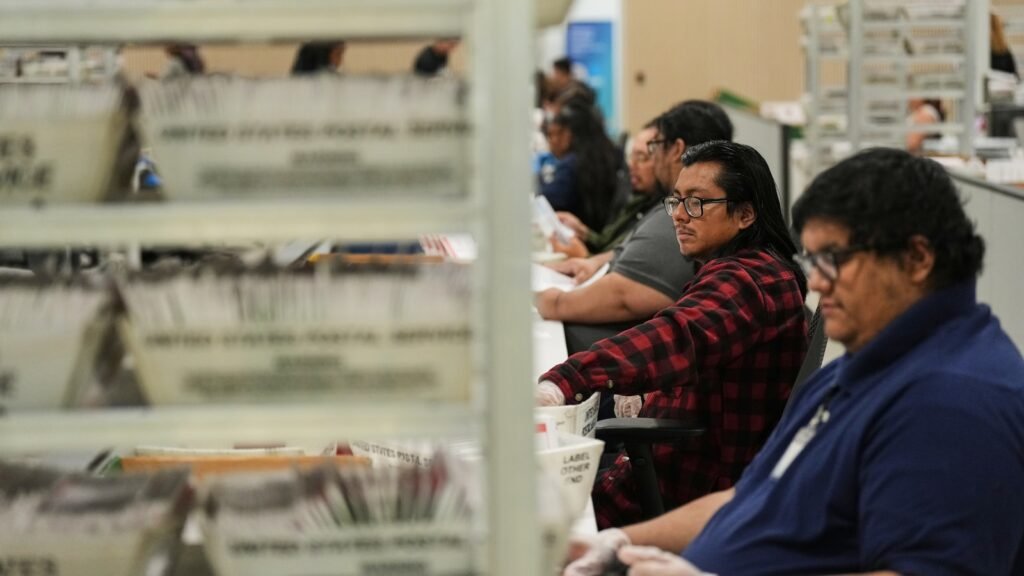
Voting has been well underway for weeks in California in the midterm election that concludes next Tuesday. Alleged voting by noncitizens has been a key focus of President Donald Trump’s administration with control of Congress at stake, though available data indicates occurrences are exceedingly rare.
The Republican administration sued election officials in California in mid-October, accusing them of failing to meet a 48-hour deadline to review its list of 20,000 people it alleged were likely noncitizens on the state’s voter rolls.
The Justice Department made a similar request in Washington state this week for the state to sequester ballots submitted by hundreds of people it suspects are not U.S. citizens. Meanwhile, another lawsuit filed in Alaska last week seeks to delay certification of the vote if the Republican incumbent running for U.S. Senate doesn’t win. All three states have House or Senate races that will help determine the balance of power in the nation’s Capitol.
Although Carter said he was open to appointing a special master, he said he will not issue an official order until Wednesday.
The judge said he wanted to vet the federal government’s list. He emphasized his concerns that siding with the federal government at this stage could mean illegally making substantial changes to election procedure while voting is underway.
But he said the special master also could investigate California’s claims that it could not logistically separate the ballots in time for the election certification deadline in December, an assertion the federal government has contested.
Carter rarely spoke throughout the hearing, but he did express skepticism about why the federal government was suing California rather than seeking to address alleged noncitizen voting through criminal prosecutions. He referenced the federal government’s recent arrest in October of 28 people across California accused of illegally registering to vote.
“You got a remedy for goodness sakes — go out and indict,” Carter said from the bench.
Prosecutors with the federal government argued that the U.S. had an interest in preventing noncitizens from voting in the first place.
“We want to stop the illegal voting,” First Assistant U.S. Attorney Bill Essayli said. “We don’t want to chase it later.”
Carter also seemed to respond to warnings that local county clerks who don’t heed the federal government’s demands could be criminally prosecuted.
“This court believes it would be wise that any threats to state and county election employees cease immediately,” Carter said before abruptly leaving the courtroom.
Essayli argued Tuesday that the Justice Department’s demands would not significantly disrupt the ongoing election.
“We have not asked to void any ballots,” he said. Instead, the government was seeking to work with California officials to “safeguard” the election.
He said testimony would explain how the government’s list of 20,000 names was compiled.
“The case rises and falls on the credibility” of the flagged names, he told the judge, arguing the state has an obligation to investigate before counting those voters’ ballots.
California officials previously argued that once a completed mail ballot is returned, it is separated from the envelope that contains voters’ identification. That would make it impossible to separate ballots that have already been submitted, the state said. More than 3 million ballots have already been returned.
Lawyers for California and Los Angeles County said the federal government has not specified how or when it obtained the voter file, leaving open the possibility the list was inaccurate or outdated. They specifically questioned the government’s reliance on a private, third-party service to determine Social Security numbers used in their effort.
M. Patrick Moore, a lawyer for the Los Angeles County registrar’s office, also argued that the county would cooperate if the federal government wanted to criminally prosecute noncitizens who illegally voted.
“If an individual who is a noncitizen votes, there will be record of that, and the county will provide that record” to the federal courts, Moore said in court Tuesday.
He added that if the federal government believes the election was compromised, there are legal processes for contesting the outcome.
Tuesday’s hearing largely revolved around the reliability of the federal government’s list. Los Angeles County officials found that a small sample of people on it were indeed citizens.
The federal agent who conducted the investigation — which required roughly 800 federal employees who manually checked each name — said in an affidavit that the county’s findings were false. The filing did concede that some names of citizens could have been mistakenly included.
Keep following us for the latest insights.