Updated September 30, 2026 — 3:20pm,first published 11:49am Save You have reached your maximum number of saved items. Remove items from your saved list to add more. AAA A near-miss runway incursion at Sydney Airport has been categorised at the most serious level on an international scale by investigators who uncovered predictions of “elevated fatigue
Updated ,first published
A near-miss runway incursion at Sydney Airport has been categorised at the most serious level on an international scale by investigators who uncovered predictions of “elevated fatigue risks” for air traffic control staff at the time.
The Australian Transport Safety Bureau released four preliminary reports on Wednesday related to six recent incidents at Sydney Airport. They triggered reassurances about safety from the aviation sector, while Transport Minister Catherine King announced a new panel to ensure Airservices Australia, which provides air traffic services, was making changes at Sydney Airport.
The ATSB reports do not make findings or recommendations, but set out the events and operational context in which they took place, bureau commissioner Angus Mitchell said.
“In all six incidents, safety defences operated in some form. Air traffic controllers, pilots, or ground crew acted to prevent more serious outcomes. Nonetheless, we need to understand why those interventions were required,” Mitchell said.
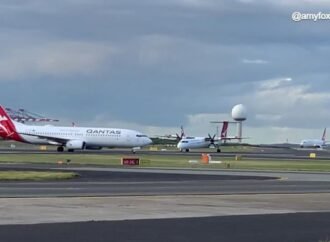
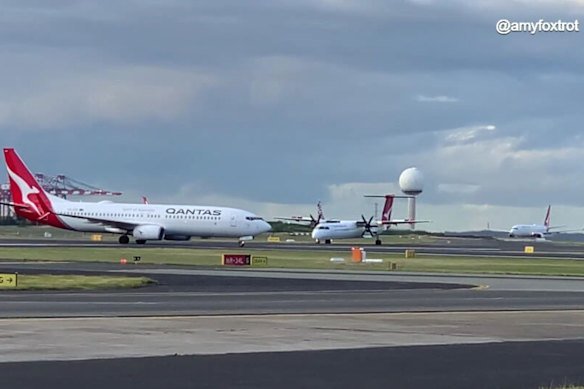
The first incident, involving a Boeing 737 and a Bombardier DHC-8, on the morning of July 27, has been assessed as a “Cat A runway incursion”.
“The most serious level on the international scale, and only the third such incident in Australia since our records began in 2003,” Mitchell said.
Other incidents probed by the ATSB include a Jetstar A320 suddenly braking to avoid a Qatar Airways Boeing 777 on August 9, causing a flight attendant to fracture their wrist. That same day a Qantas Boeing 737 was cleared to cross the runway in front of a Virgin 737 that had just been cleared for take-off.
Then on August 18, a Qantas A321 had to brake to let a Qantas 737 pass in front of it.
Air traffic control staffing levels have been strained globally and emerged as “a recurring line of inquiry” during the investigations at Sydney Airport, Mitchell said.
“I will stress that we have not determined whether staffing resources directly contributed to any occurrence, or whether they were simply underlying conditions that were effectively being managed by Airservices [Australia],” Mitchell said.
“However, our report also notes that Airservices’ own roster modelling predicted elevated fatigue risks for staff at the time of many of the occurrences, in some cases applicable to multiple personnel on the shift.
“Whilst an elevated fatigue risk does not necessarily mean a controller was fatigued, or that fatigue affected performance, we are, however, examining the effectiveness of the measures that were in place to manage this pre-identified risk.”
The release from the ATSB comes at a pivotal time for the aviation sector. The recurring staffing issues and safety incidents with Airservices Australia come as parliament is poised to implement new regulations covering consumer rights.
The repeated safety incidents reported to the ATSB have prompted King to reassure the public, saying the reports “do not draw conclusions about cause or contributing factors” and “it is important that we let the ATSB complete its work”.
King said addressing operational and workforce challenges is critical to ensuring safe, reliable and resilient air traffic control services.
The government on Wednesday announced the creation of the Sydney Airport Air Traffic Control Independent Assurance Panel, which will provide independent assurance to government that Airservices Australia “is implementing timely, enduring measures to improve service stability, reliability and resilience”.
“The panel will ensure Airservices is taking practical and timely action to address challenges including air traffic control workforce planning, recruitment, training, roster resilience and system improvements,” King said.
Retired Air Vice Marshal Ken Robinson has been appointed as chair of the panel.
Qantas noted that during the incidents probed by the ATSB, its pilots were following air traffic control’s direction.
“Australian aviation operates under a highly sophisticated network of safety controls, and we remain confident in those systems,” Qantas Group Head of Operational Safety Captain Mark Cameron said.
CASA said it “considers that Australia’s aviation system and Sydney Airport remain safe”.
“Having reviewed the ATSB’s preliminary reports, CASA remains of the view that none of the incidents indicate an immediate safety risk. If safety action was needed, we would have taken it,” a spokesperson said.
CASA is trying to learn whether “there are underlying operational or system issues that could affect safety” and it noted it would not hesitate to act “if broader safety issues are identified”.
Airservices Australia said the interim reports would be reviewed and the organisation would continue working with the bureau as it finalises its investigations.
“The aviation safety system is designed to manage operational risks through multiple safeguards and, based on the information currently available, the recent occurrences do not indicate an immediate safety risk to the travelling public,” an Airservices spokesperson said.
“We have publicly acknowledged workforce pressures at Sydney and are addressing them through our Sydney Service Resilience Plan.”
Get alerts on breaking news as it happens. Sign up for our Breaking News Alert.
 Jack Gramenz is a breaking news reporter at The Sydney Morning Herald.Connect via email.
 Chris Zappone is a senior reporter covering aviation and business. He is former digital foreign editor.Connect via X, Facebook or email.
From our partners
For more tech updates, stay tuned to our blog.