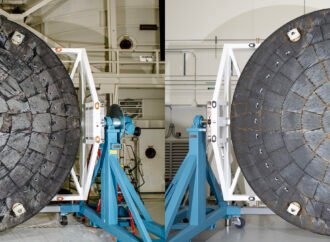
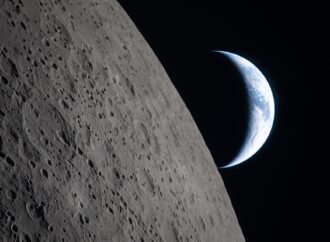
NASA’s Artemis II mission sent four astronauts around the Moon and brought them safely back to Earth, laying a foundation for crewed flights to the Moon’s surface. Additional engineering data analysis of the Orion spacecraft’s heat shield confirmed initial data showing the heat shield performed as expected. In particular, NASA measured whether the thermal protection
NASA will provide an update on its plans to return American astronauts to the surface of the Moon by 2028 at 2 p.m. EDT, Friday, Oct. 23, at the agency’s Kennedy Space Center in Florida. Learn where to watch online: NASA Live Participants in the briefing include: NASA Administrator Jared Isaacman NASA Associate Administrator Amit
The Republic of San Marino became the 76th signatory to the Artemis Accords during a ceremony in the city of Rimini on Friday with NASA and U.S. Department of State officials present. “San Marino joins a growing coalition of like-minded nations committed to the peaceful, transparent, and responsible exploration of space,” said NASA Deputy Administrator
The Republic of Albania signed the Artemis Accords Monday during a ceremony hosted by NASA at the agency’s headquarters in Washington, joining the coalition of like‑minded nations committed to the responsible and transparent exploration of space. “It is my privilege to welcome the Republic of Albania as the 73rd signatory of the Artemis Accords,” said
The Republic of Albania will sign the Artemis Accords during a ceremony at 12 p.m. EDT on Monday, Sept. 21, at NASA Headquarters in Washington, becoming the 73rd country signatory. NASA Deputy Administrator Matt Anderson will host Albania’s Minister for Europe and Foreign Affairs Ferit Hoxha and Ambassador of the Republic of Albania to the
Planning crewed missions to the Moon and Mars involves preparing for the medical realities of long-duration space travel. Factors like cosmic radiation, microgravity, and distance from Earth create unique health considerations for astronauts. To anticipate these needs ahead of time, NASA developed the Integrated Medical Model (IMM). The IMM is a decision-support tool that uses