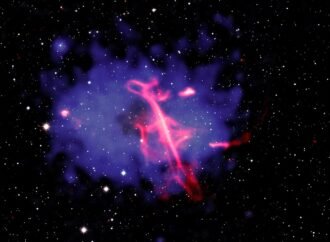
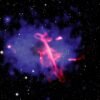
Astronomers have used NASA’s Chandra X-ray Observatory to break down the cause of a remarkable formation of radio waves they have nicknamed the “Treble Clef” because its distinct shape strongly resembles the musical symbol. The researchers discovered the Treble Clef is likely caused by an outburst from a supermassive black hole, followed by a collision
NASA has carried out some notable rescue missions over the past few years, including bringing home the astronauts stranded on the International Space Station last year. More recently, the agency sent up a probe in hopes of saving the Neil Gehrels Swift Observatory, a satellite first launched in 2004 that began falling out of our
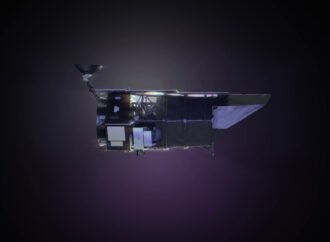
Roman joins an international cohort of teamworking telescopes. Roman will work in tandem with many other NASA-led and international missions to provide the most complete view of our universe yet. Roman’s large panoramas will uncover interesting targets that Hubble could follow up on using infrared, visible, and ultraviolet light to offer a more comprehensive view.
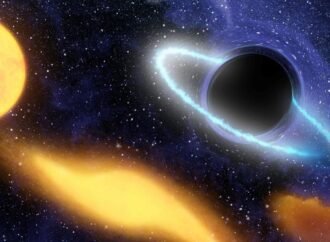
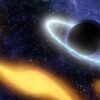
A team of astronomers has just detected the fastest star in the galaxy. Its anomalous speed has a more unsettling explanation: It orbits Sagittarius A*, the supermassive black hole at the center of the Milky Way, the mass of which is equivalent to four million times that of the sun. S301, as astronomers have named
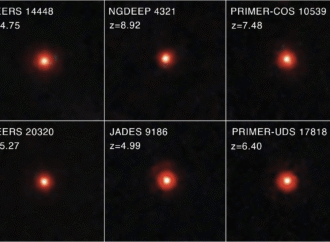
When Soundgarden Wrote “Black Hole Sun,” they may have inadvertently been onto something. In a new paper in Nature, scientists have chronicled a “black hole star” that’s the size of our solar system and glows bright red in the depth of space. The findings are based on observations from the James Webb Space Telescope, which