China is pumping tens of billions of dollars into eight state-owned banks and insurance companies to help shore up the country’s financial system and boost its slowing economy. The cash injection, which is being led by China’s finance ministry, will total 360 billion yuan ($53.6bn; £39.7bn), state news agency Xinhua said on Sunday. The outlet
The Blaze kept their treble hopes very much alive as they beat Somerset in the Women’s One-Day Cup at Trent Bridge. The Nottingham-based side now need just one win from their last two fixtures to guarantee a place in the final back on their home ground on 19 September. But their next test is against
Rothesay County Championship, Division Two, St Lawrence Ground, Canterbury (day four) Kent 238 & 358: Northeast 132; Taylor 4-68 Worcestershire 217 & 84-3: D’Oliveira 103*; Milnes 3-51, Mahmud 3-51 Kent (19 pts) beat Worcestershire (3 pts) by 84 runs Match scorecard Kent moved clear of their closest rivals in the County Championship Division Two promotion
Mark Carney’s Liberal Party won all three parliamentary special elections that were held in Canada on Monday, indicating ongoing public support for the prime minister well into his second year in office and after recent trade tensions with the US. The votes were triggered by the resignations of three MPs. The most notable result saw
Singapore is overhauling its landmark baby bonus scheme, first introduced in 2001, as the city’s fertility rate and number of births fall to record lows. In 2025, births in the Southeast Asian country fell below 30,000 for the first time in its post-independence history, while the fertility rate dropped to just 0.87 per woman, a
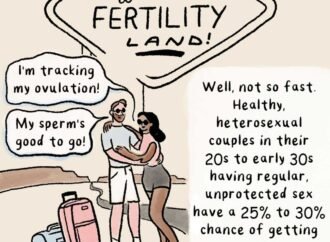
So you’re trying for a baby. Congratulations! By now, you probably know that it’s not always easy to get pregnant. Healthy, heterosexual couples in their 20s to early 30s having regular, unprotected sex have a 25% to 30% chance of getting pregnant in any given month, according to the American College of Obstetricians & Gynecologists.