Using NASA’s Chandra X-ray Observatory, scientists have discovered a new class of objects behaving unlike any they have seen before. Astronomers suggest these newly spotted objects in other galaxies may help solve not one, but two long-standing questions in astrophysics. These mysterious objects give off unusually low-energy X-rays but intense levels of ultraviolet radiation. This
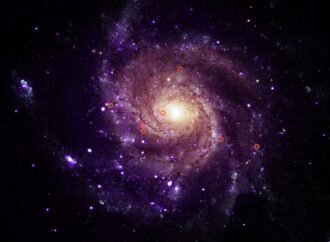
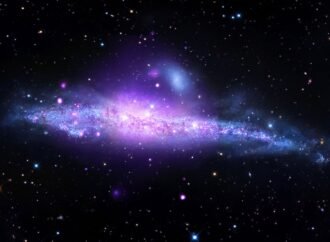
Galaxies are like cosmic gems, each with characteristics including size and shape that make them distinct. A new gallery released today from NASA’s Chandra X-ray Observatory and other telescopes displays a collection of galactic images that showcase this variety. Astronomers put galaxies into three main categories: spirals like our own Milky Way with arms emanating
Like a collage made of layered sheets of colored cellophane, a vibrant new image layers observations of a famous star-forming nebula from NASA space telescopes. The resulting cosmic “craft” reveals new details about the star formation region known as 30 Doradus, or the Tarantula Nebula. Located in the Large Magellanic Cloud, a small neighbor galaxy
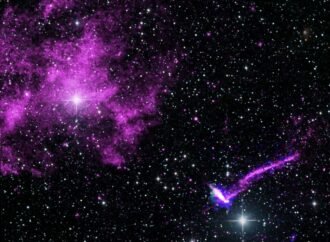
For the first time, scientists have used NASA’s IXPE (Imaging X-ray Polarimetry Explorer) to directly measure the magnetic fields of PSR J1101-6101, a pulsar located within what is often known as the Lighthouse Nebula. The results provide new insight into the structure of some of the most extreme objects in the cosmos, as NASA continues
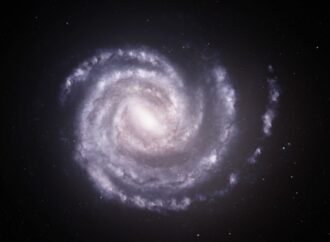
A new result using NASA’s Chandra X-ray Observatory shows that the outer spiral arms in the Milky Way galaxy may reach wider than previously thought. This finding may lead astronomers to adjust their understanding of our home galaxy’s structure. A team of astronomers made this discovery by making precise measurements of distances to dust clouds