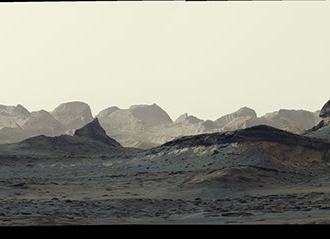
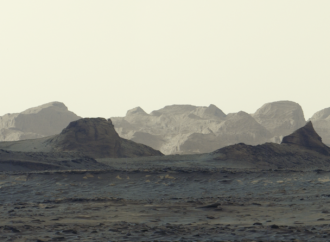
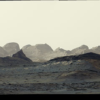
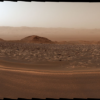
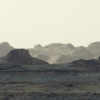
NASA’s Curiosity Mars rover captured this panorama of sunrise illuminating distant, wind-carved features called yardangs on Aug. 11, 2026, the 4,982nd Martian day, or sol, of the mission. Scientists are eager to learn more about how the yardang layer formed. Figure A is a crop zooming in on the distant yardangs. Since 2014, Curiosity has
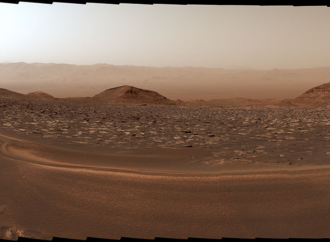
NASA’s Curiosity Mars rover captured this view looking back at the floor of Gale Crater, with the crater’s rim visible in the distance, on Sept. 5, 2026, the 5,006th Martian day, or sol, of the mission. Just nine days prior, on Aug. 26 (Sol 4,996), Curiosity set a mission milestone by reaching 1 kilometer of
A newly released panorama captured by NASA’s Curiosity rover offers the most detailed view yet of distant, wind-carved Martian cliffs, highlighting features the mission’s scientists have long been waiting to see up close. The scene was snapped at 8:30 a.m. local Mars time, showing striking blue hues in the foreground as bright morning light illuminates
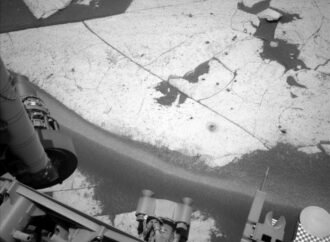
Written by Michelle Minitti, MAHLI Deputy Principal Investigator Earth planning date: Friday, Oct. 1, 2026 The majority of Curiosity plans involve mosaics from Mastcam and ChemCam, chemistry analyses from ChemCam and APXS, images from MAHLI and MARDI, and systematic measurements from REMS, RAD, and DAN. It is only when we stop to drill that we
Written by Lucy Thompson, Senior Research Scientist, University of New Brunswick, Canada Earth planning date: Friday, Sept. 25, 2026 Before we landed, the area of Gale crater that we planned to explore was divided up into rectangular parcels with designated names. The names were chosen after small towns associated with significant geological features. Our selected
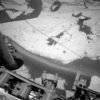
Written by Lucy Lim, Planetary Scientist at NASA Goddard Space Flight Center Earth planning date: Friday, Sept. 18, 2026 Curiosity surprised us at the beginning of the week with a change in rock texture — instead of the finely layered bedrock blocks we’ve been seeing in our recent sulfate unit workspaces, suddenly we were looking