Advanced artificial-intelligence models are transforming mathematics at an astonishing speed. In the past few months, AI-aided proofs — logical arguments that demonstrate why a mathematical result is correct — have been released for hundreds of long-standing maths problems. Mathematicians might need several months to fully understand the underlying arguments and implications of these automatically derived
Mathematicians give credit for insights gleaned through discussion but AI tools are not set up to do this. Credit: Hill Street Studios/Getty OpenAI’s announcement that it used an artificial-intelligence model to solve a major puzzle in fluid dynamics — the Navier–Stokes problem — is likely to change how mathematics is done forever. The claim, made
The Navier–Stokes equations describe the motion of fluids and have many applications, including in aircraft design.Credit: Getty Last Tuesday is likely to go down as the start of an epoch in the history of mathematics. On 8 September, an artificial-intelligence firm announced it had solved one of the Millennium Prize Problems — among the hardest,
The motion of fluids is described by the Navier–Stokes equations, the focus of one of the thorniest problems in mathematics.Credit: Kertlis/Getty For the first time, a truly major open problem in mathematics has been solved by computer, according to OpenAI, which says it has cracked one of the ‘Millennium Problems’ related to the motion of
Mathematician Andrew Wiles completed the proof to Fermat’s last theorem in 1994, more than 350 years after Pierre Fermat proposed the conjecture.Credit: AP Photo/Charles Rex Arbogast/Alamy Fermat’s last theorem, one of the most celebrated mathematical results of the last half-century, has been turned into computer-verified code for the first time, using an advanced prototype of
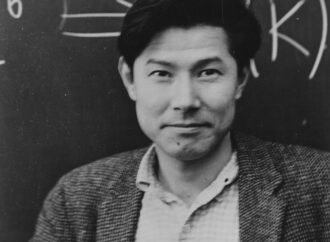
Credit: Smithsonian Institution Archives Heisuke Hironaka, a prominent figure in algebraic geometry, was renowned for his landmark 1964 proof of the “resolution of singularities”. His work provides a way to unravel complicated phenomena in geometric objects, such as cusps, spikes and self-intersections. This fundamental result is a standard ingredient in research across a wide swathe