See Saturn at opposition, catch the Orionid meteor shower, and watch the Moon pass close to the Pleiades, also known as the Seven Sisters. Oct. 4: Saturn reaches opposition, making the ringed planet visible for much of the night Oct. 6: A thin crescent Moon appears close to bright Jupiter before sunrise Oct. 21–22: The
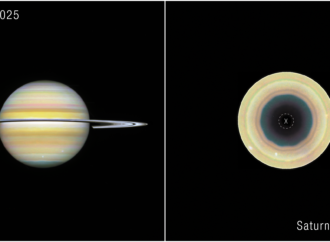
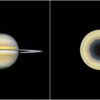
Recent NASA Hubble Space Telescope images show the gas giant Saturn and its southern pole, where astronomers have discovered a 10-sided atmospheric wave. Observations show the decagon extends through multiple layers of Saturn’s atmosphere. Image: NASA, ESA, STScI, Agustin Sánchez-Lavega (UPV), Amy Simon (NASA-GSFC), Michael Wong (UC Berkeley); Image Processing: Alyssa Pagan Recent observations with
Use the Moon to find Antares and the Teapot, spot brilliant Venus, welcome the equinox, and see the Harvest Moon near Saturn and Neptune. Sept. 14-20: Use the Moon to find Antares and the Teapot; dark skies may reveal the Milky Way center Sept 18: Venus reaches peak brilliance for this evening appearance Sept. 22:
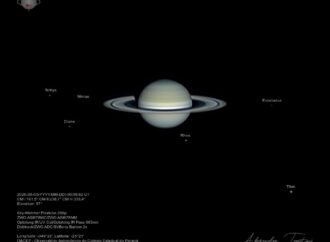
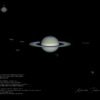
Explanation: How many moons does Saturn have? While the total will likely continue to grow, as of June 2026 the ringed gas giant had 293 confirmed moons. That’s easily more than any other planet of the Solar System, including ruling gas giant Jupiter with a mere 115 confirmed moons. Most of Saturn’s known moons are
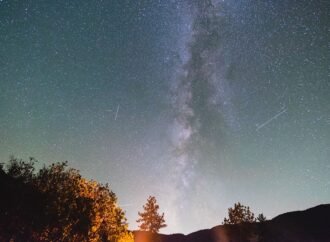
A pre-dawn encounter between the Moon and the planets, the return of a comet, a great opportunity to see the Milky Way and Saturn’s rings from a new angle. July 7: last quarter moon July 11 + 12: Dawn alignment of the Moon, Mars, Saturn and Uranus July 14: New moon; The best dark sky