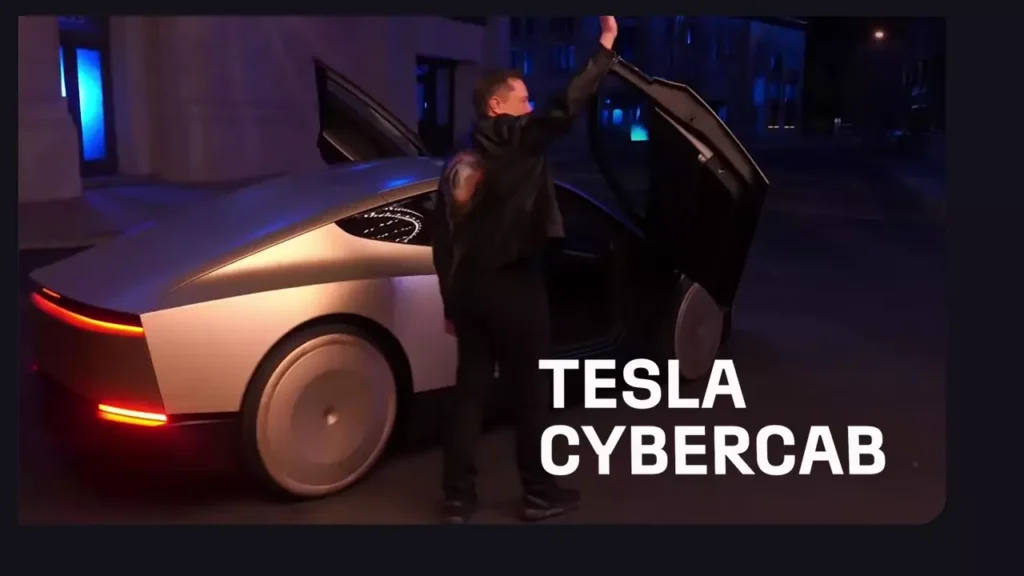
On Thursday, Tesla made its Cybercab robotaxi available to riders in Austin, Texas. Soon after, the National Highway Traffic Safety Administration said it was investigating the launch. Tesla CEO Elon Musk unveiled the Cybercab in October 2024, noting the vehicle would go into production “before 2027.” Production indeed kicked off in April 2026, though Musk
On Thursday, Tesla made its Cybercab robotaxi available to riders in Austin, Texas. Soon after, the National Highway Traffic Safety Administration said it was investigating the launch.
Tesla CEO Elon Musk unveiled the Cybercab in October 2024, noting the vehicle would go into production “before 2027.” Production indeed kicked off in April 2026, though Musk noted that scaling would be “very slow” due to supply chain and validation timelines.
Tesla’s robotaxi service initially launched with Model Y vehicles in Austin last year, though the goal is to eventually make the Cybercab the main autonomous vehicle in the company’s network. This week marks the first time customers, rather than just employees and early testers, can climb aboard the fully autonomous Cybercab via the Robotaxi app. There are currently 45 Cybercabs operating commercially in Texas.
Unlike robotaxis from Alphabet-owned Waymo, which is currently the leader in the autonomous ride-hailing space, Tesla’s Cybercab doesn’t have a steering wheel or pedals. It shares that characteristic with Amazon-owned Zoox, which has deployed its boxy, purpose-built robotaxis in a handful of cities so far.
The Cybercab’s lack of manual controls prompted NHTSA to investigate, with the agency noting the lack of “a brake pedal, gas pedal, steering wheel and mirrors” in its filing. Given that Tesla self-certified its Cybercab, NHTSA now plans to “examine the process and technical data on which Tesla relied when certifying the Cybercab and related issues.” NHTSA said earlier this year that it’s exploring removing the requirement for manual controls in autonomous vehicles.
“NHTSA fully supports the safe development and deployment of automated vehicles. But as the federal regulator, we need to ensure that all of our laws are followed,” NHTSA Administrator Jonathan Morrison said in a Friday statement. “Our approach of balancing innovation with safety oversight will allow the United States to maintain its global leadership in AV innovation.”
As noted by TechCrunch, NHTSA also probed Zoox’s autonomous efforts during its testing phase due to the lack of traditional controls, like a steering wheel and pedals. Zoox eventually launched its ride-hailing service for members of the general public in September 2025, beginning in Las Vegas. It obtained federal regulatory approval to start charging for rides in July. Along with invite-only robotaxi rides in San Francisco, Zoox has also deployed its robotaxis for limited service in Austin and Miami.
A key aspect that sets Tesla’s robotaxi apart from competitors is that it relies solely on cameras for navigation, rather than the more standard combination of cameras, radar and lidar. That could make some riders uneasy, especially with 71% of US adults saying they wouldn’t be comfortable riding in a driverless car, according to a Pew Research Center survey from July. Tesla’s self-driving vehicles — as well as those from competitors — have been involved in a handful of crashes since hitting public roads.
Musk has also said that individuals will eventually be able to own a Cybercab, which could be used to earn passive ride-hailing income by joining the robotaxi network. He’s stated the car will cost “below $30,000,” but hasn’t shared any recent updates on that strategy. Tesla released an interest form for anyone who’d like to be “considered for future Robotaxi opportunities,” which includes an option for “Cybercab fleet vehicle purchasing.”

See full bio
Keep following us for the latest insights.