After it was teased yesterday, today we wake to a LOT more details on Tesla’s Full Self-Driving V15. It’s no longer coming soon, it’s starting to roll out today! (in the US). Tesla has started rolling out V15, and says it ‘upgraded every part of the end-to-end driving network’, as part of the full published
After it was teased yesterday, today we wake to a LOT more details on Tesla’s Full Self-Driving V15. It’s no longer coming soon, it’s starting to roll out today! (in the US).
Tesla has started rolling out V15, and says it ‘upgraded every part of the end-to-end driving network’, as part of the full published release notes.
It’s very clear, that a full version number bump is warranted here, this isn’t another point release. V15 is the big architectural jump, the one that brings the software running in its Robotaxis, to customer cars.
A teaser that became a rollout overnight
If you saw Tesla’s cryptic “XV” teaser, you weren’t imagining things. That’s 15 in Roman numerals. At the time I asked why now, what was significant about yesterday, if the release was some time away.. it turns out that was because the launch had really started, led by this post from Tesla.
At that point there was no build number and no owner rollout, and Elon Musk was saying V15 would go to wide release next month as part of Tesla’s annual Holiday Update.
Then things started to escalate, quitckly.
Tesla released a new video and launch details, followed by further detail in release notes for FSD v15 and insights from the team that worked on it.
The December timing for a wide release is still in play, but V15 is expected to land on the first customer cars in hours, likely thge same Early Access Program users we’re familiar with, followed by broader deployment, pending confirmation there’s no issues.
It’s important to remember, Tesla has actually been testing v15 in their robotaxis’ for months now (with the old UI), so clearly they reached a point with the data they were confident to ship to customers.
Before this, the newest FSD build on customer cars was V14.3.13, which most recently shipped in software update 2026.44.1.
Bigger model, same software as the Robotaxis
The core of V15 is scale. Musk has said for months that V14 wasn’t the large model, and that V15 would be, with roughly 10 times the parameter count of the version it replaces. Tesla hasn’t published the actual parameter numbers, so treat the 10x figure as Musk’s claim rather than a spec sheet.
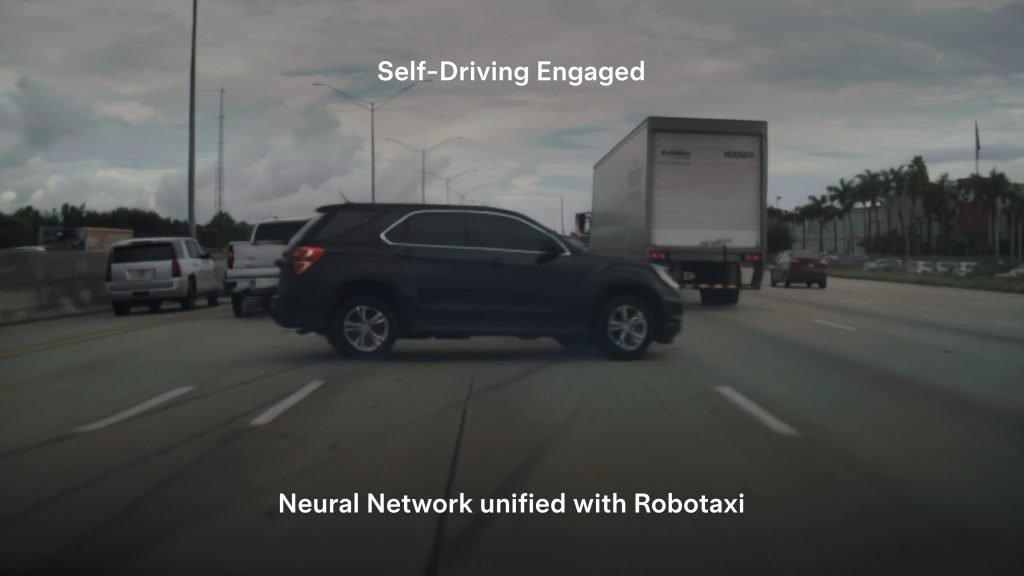
On Tesla’s most recent earnings call, Elluswamy said the software for the Cybercab and the Model Y Robotaxis is the same, and that Tesla would soon release that same software to customers as part of V15.
He also said customer cars would still need to join Tesla’s geofences and fleet management before any of them could run without a driver, which Tesla suspects is around the second quarter of next year.
A larger model doesn’t automatically mean a better drive on every road.
Owners will judge V15 on the usual things: phantom braking, hesitation at intersections, lane discipline, speed choices, and how confidently it handles unprotected turns. On paper, though, this is the biggest change to FSD since V12 moved to end-to-end neural networks.
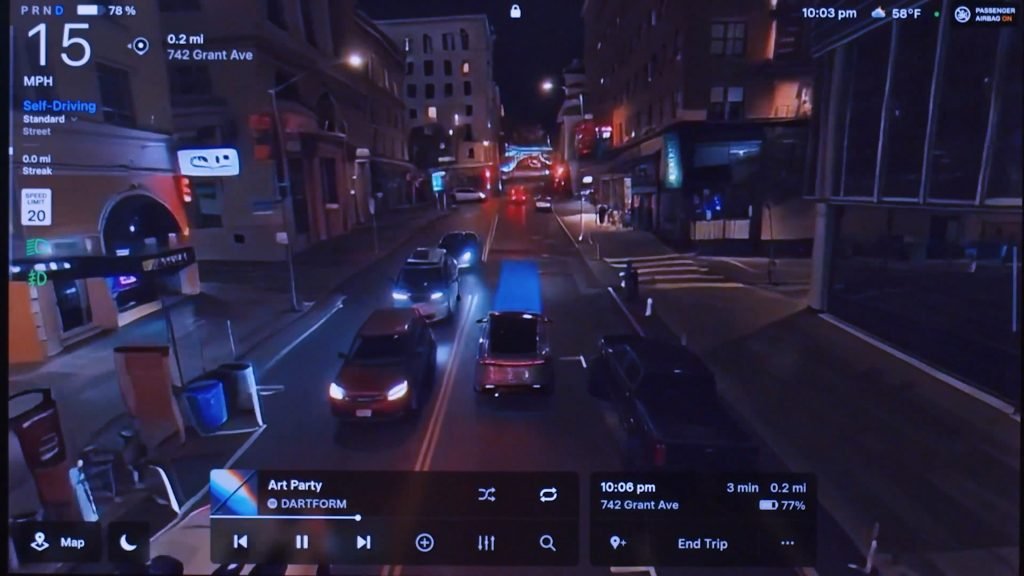
Tesla Reality View is real innovation
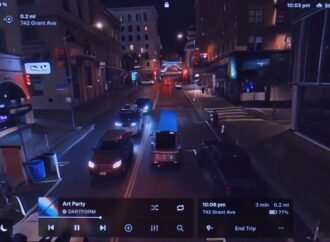
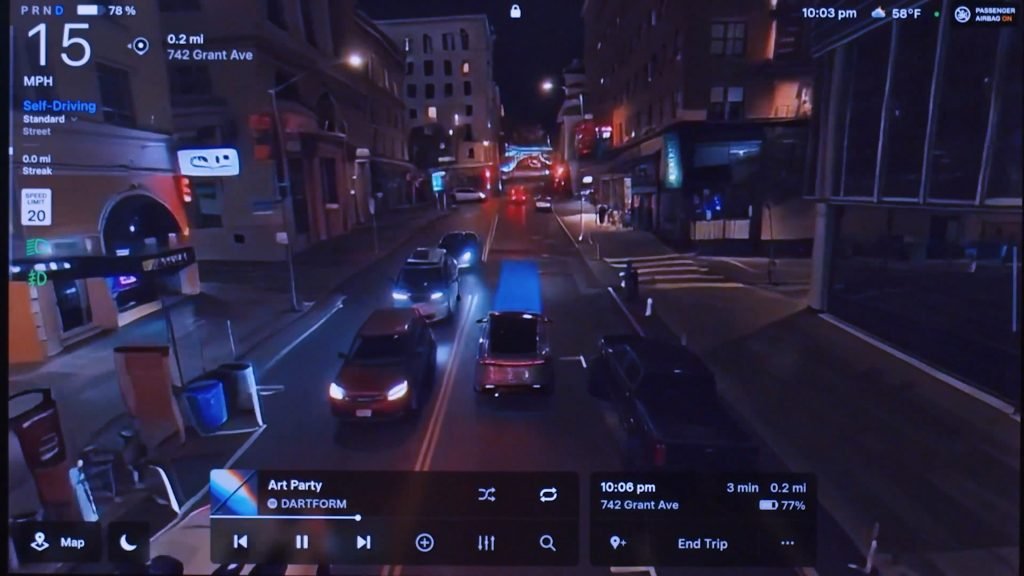
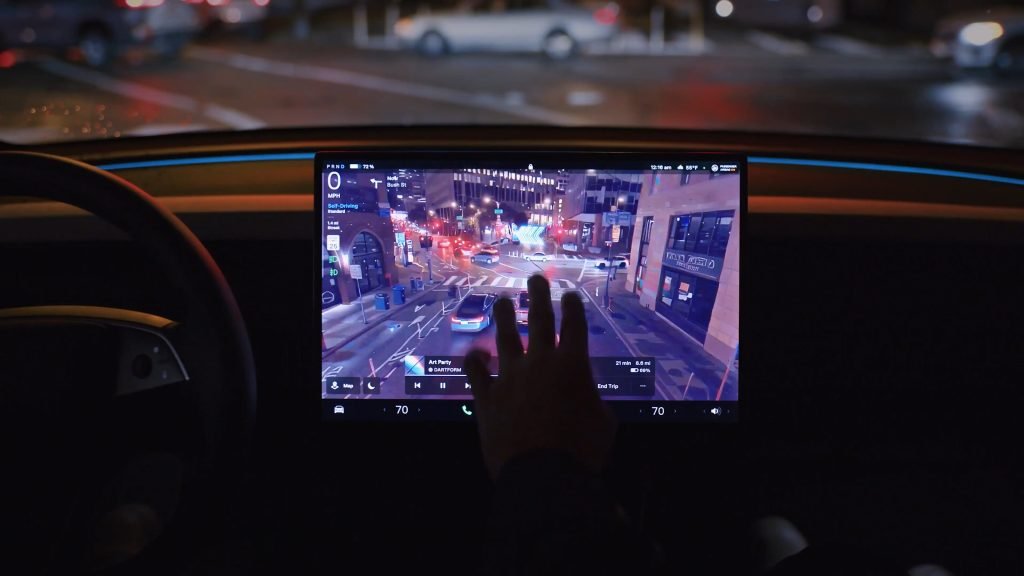
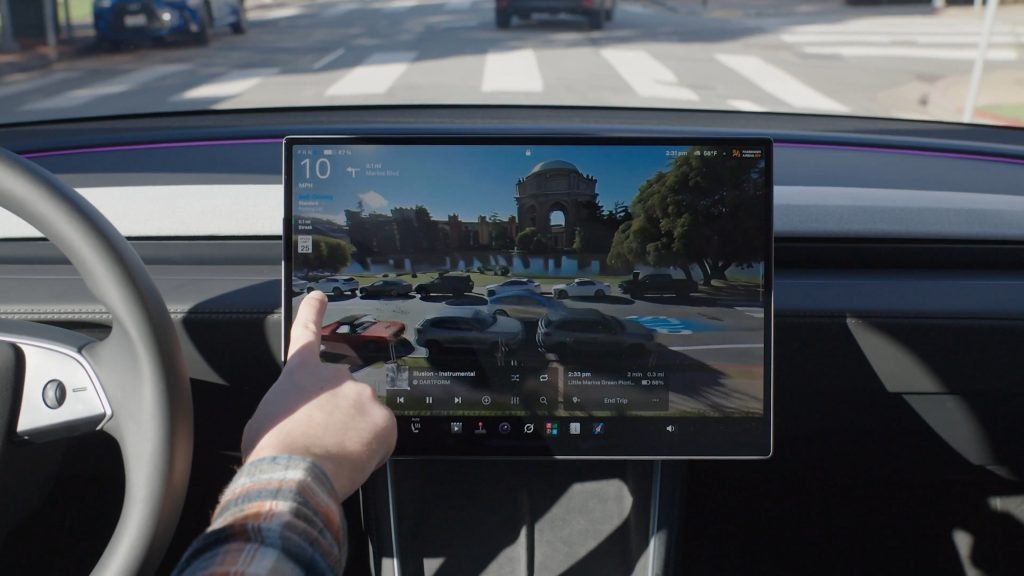
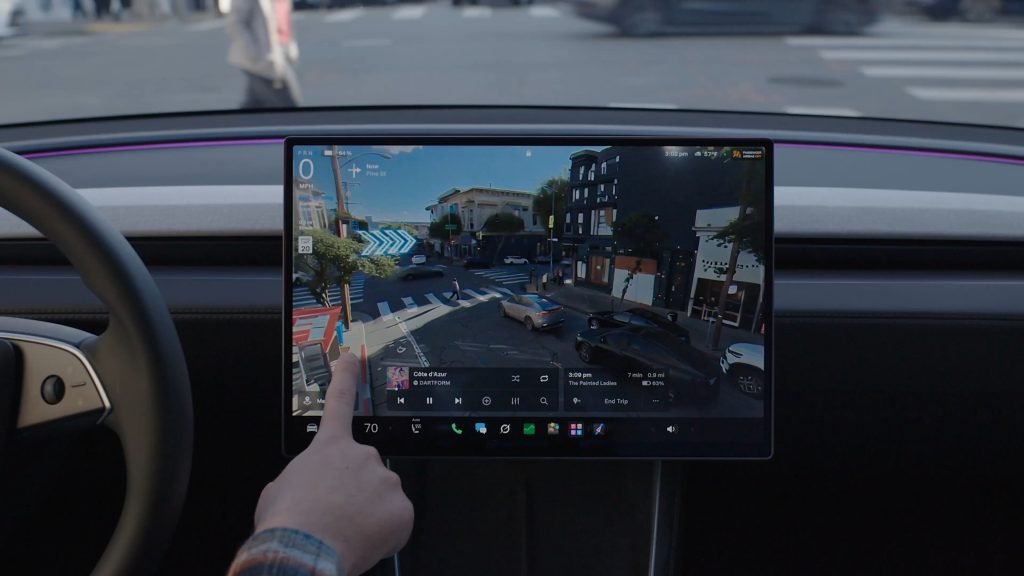
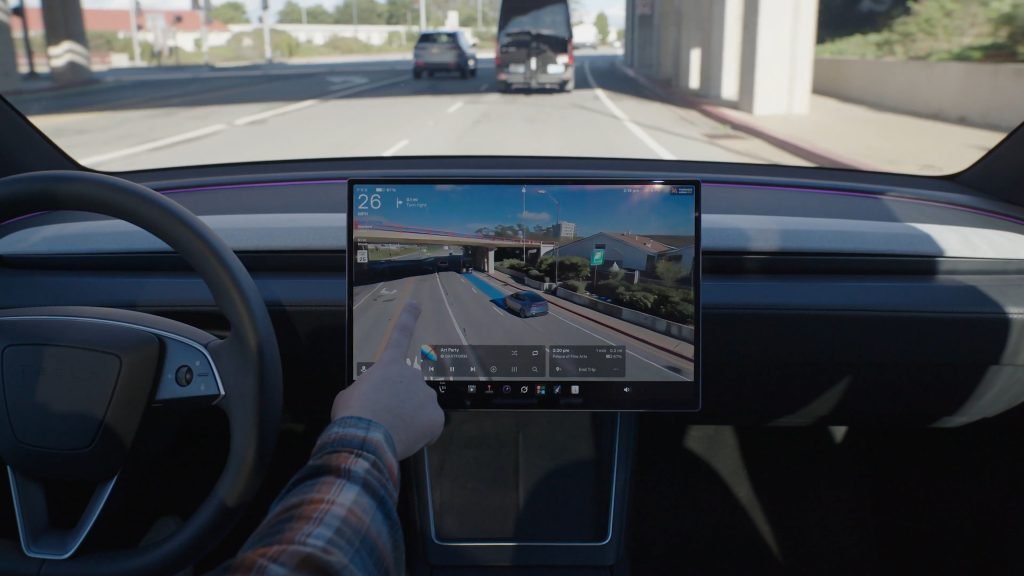
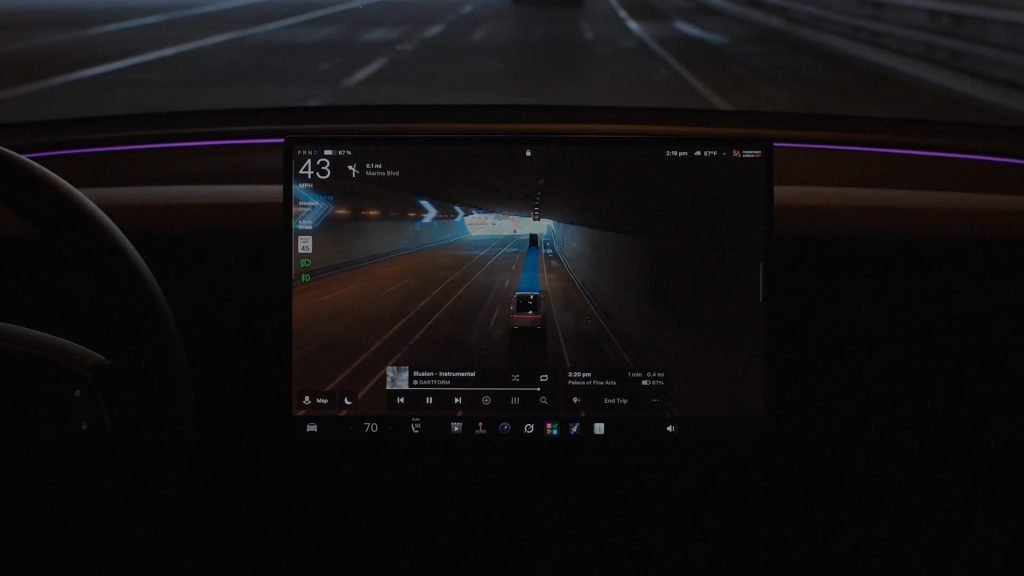
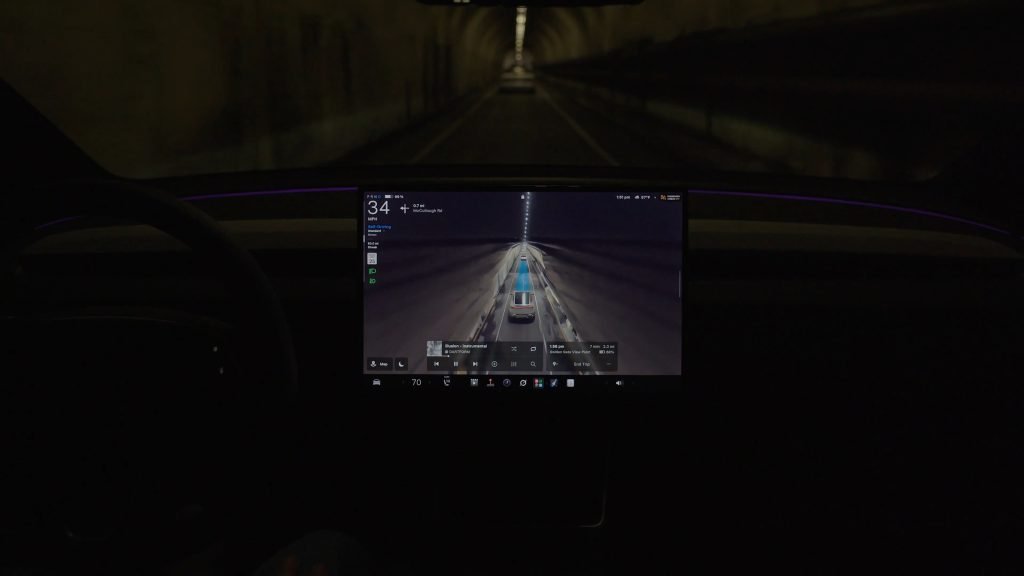
The most obvious and most dramatic change is how the car shows you the drive. A new Tesla Reality View is a real-time generative visualisation that streams a view from a virtual camera above the car, so the screen shows a rendered version of the street rather than the familiar grey blocks and lane lines.
From the video, and the release notes, we see Reality View replacing all of the separate model signals with a single end-to-end visualisation, and uses less total compute to do it.
Upcoming navigation turns appear in the view itself, and you can choose a fullscreen visualisation, the map, a split view, or a quiet mode for a calmer cabin. Musk also says you can tap any point in the view to send the car there.
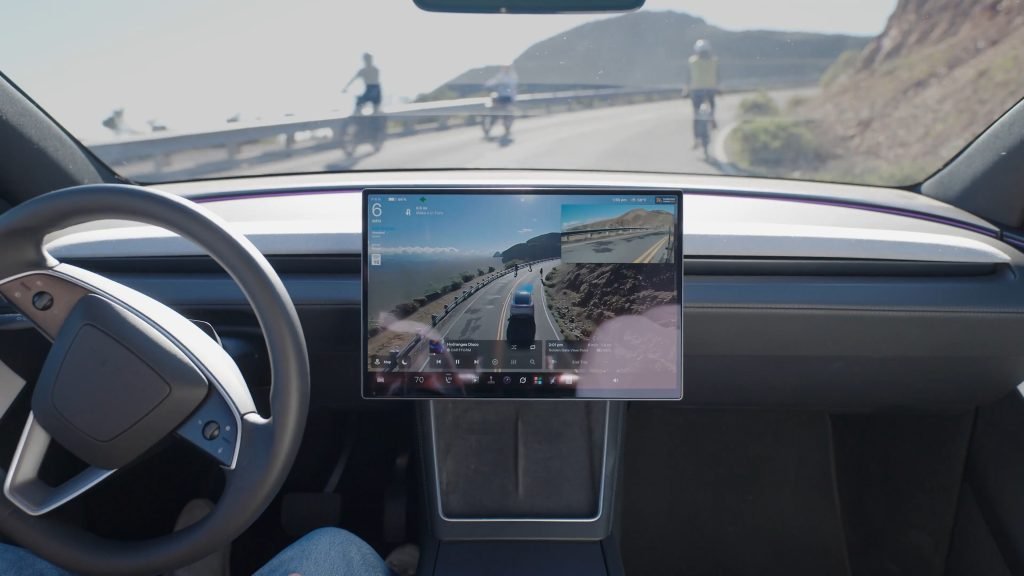
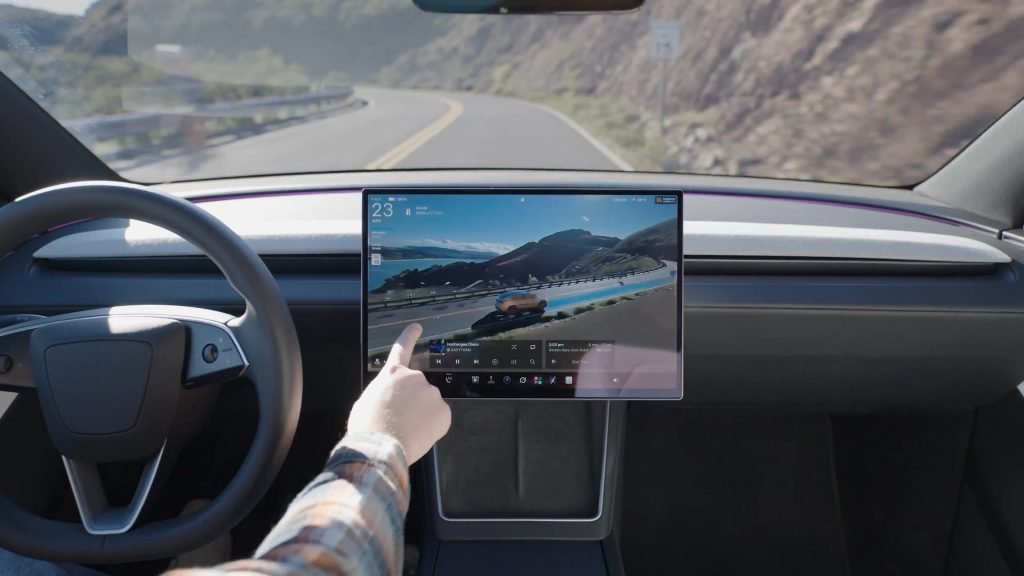
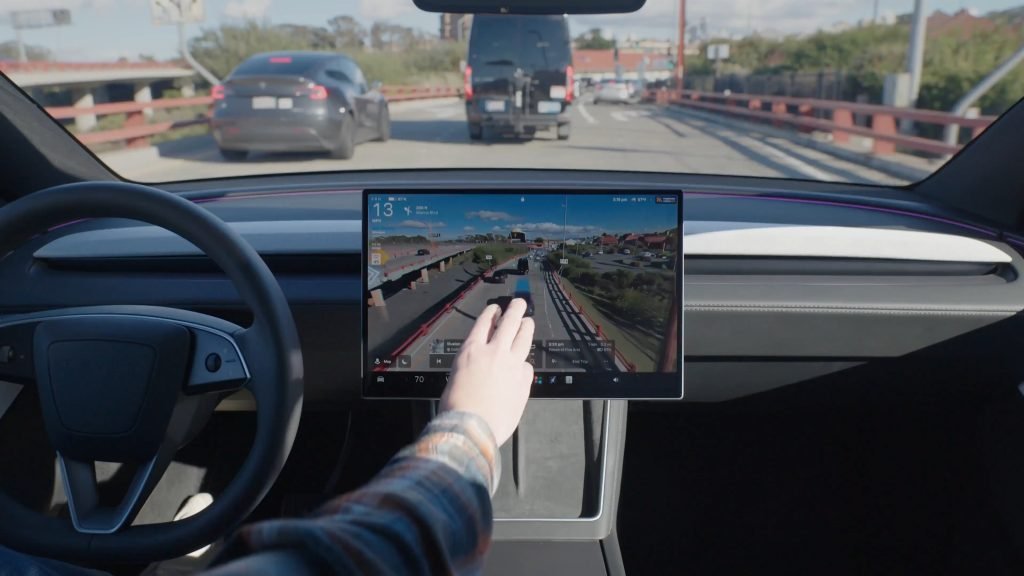
AI Lead at Tesla, Ashok Elluswamy says it’s more than eye candy and that this new visuallisation, actually uses less compute.
The arrows show the turns FSD plans to take, and pins show where it intends to park. I like this. The hardest part of supervising FSD has always been working out what the car is about to do, and anything that makes its intent obvious earlier should make supervising it easier.

What’s new in V15
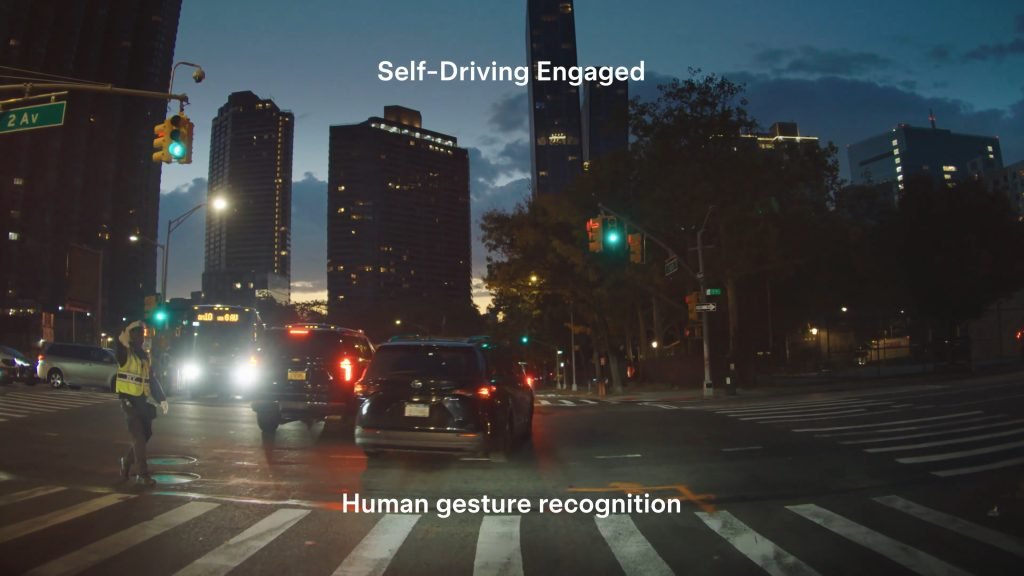
Beyond the visualisation, the release notes cover a long list of driving and convenience changes:
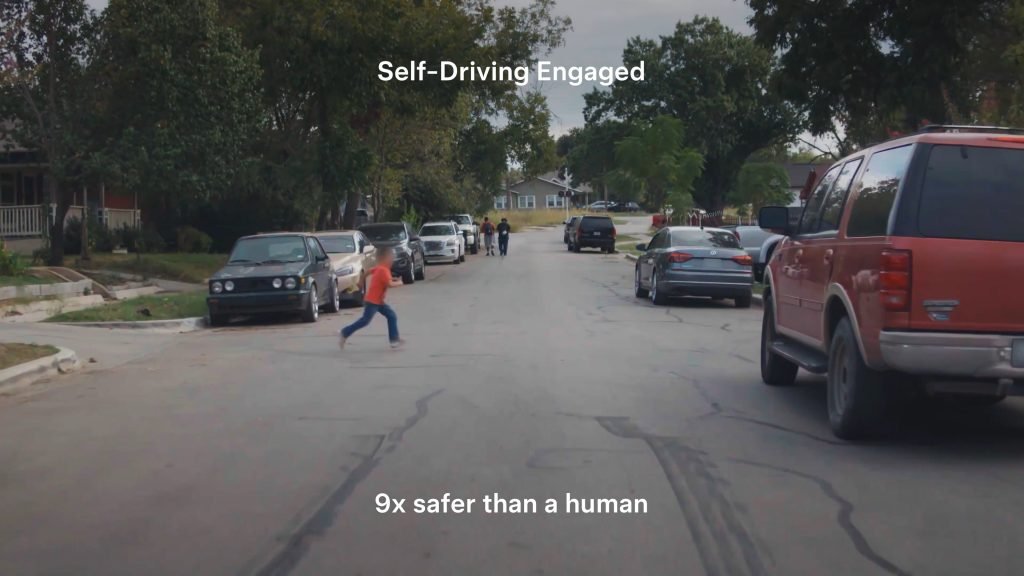
- Safety: an upgraded vision encoder, shared between FSD, Robotaxi and Optimus and trained on millions of internet videos, which Tesla says improves the critical intervention rate by 25x
- Navigation: an end-to-end learned model based on route preferences from the fleet, used for the start and end of each trip for now, with later V15 releases extending it to the whole route
- Parking: better parking spot selection using your own parking history, with the map now showing multiple parking options at your destination
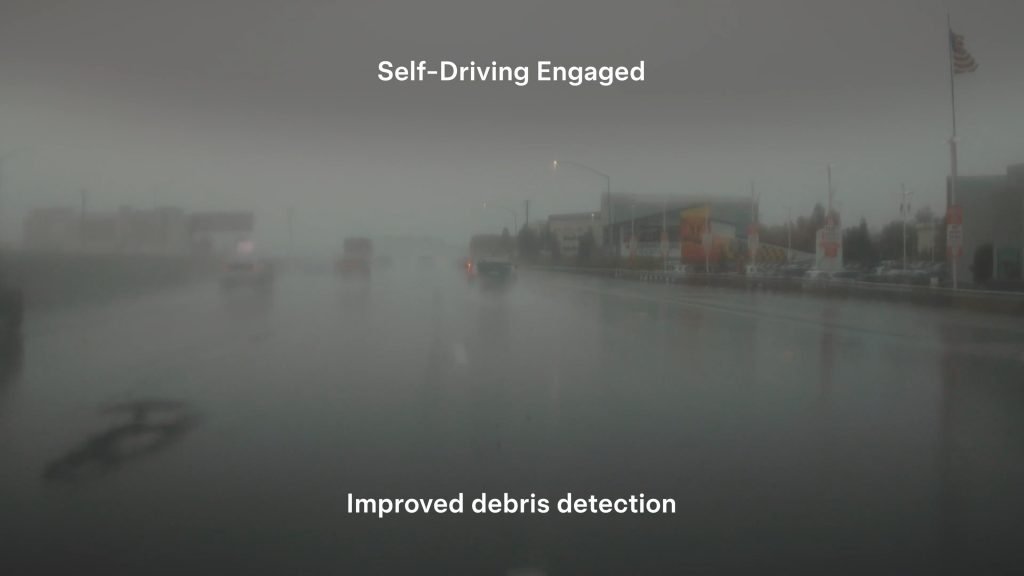
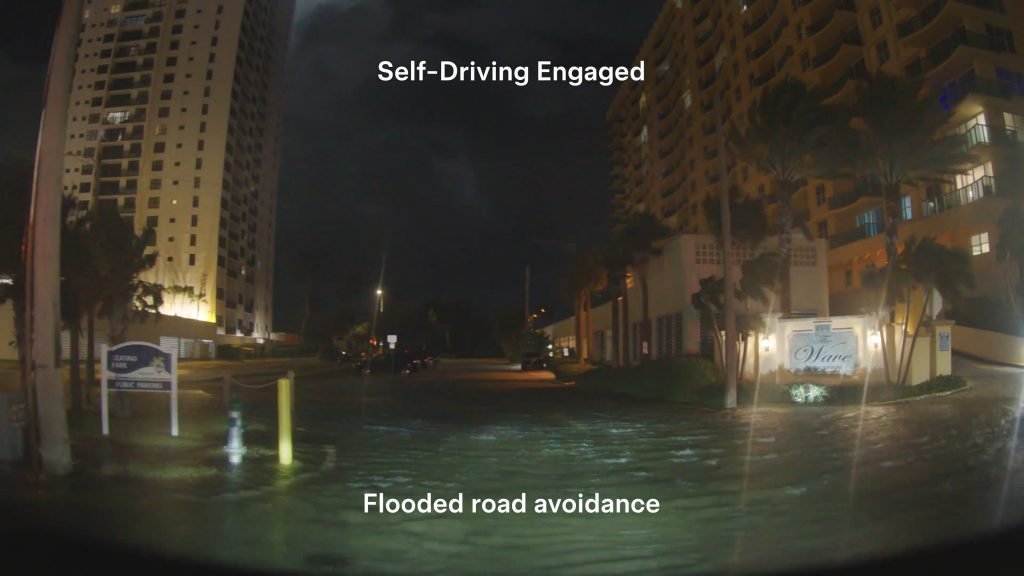
- Detection: better detection of road signs, small animals, road debris, chains, potholes and road details, plus avoidance of deep standing water
- Speed: improved speed handling for each driver profile, in school zones, around speed limits and in bad weather
- Driver monitoring: camera-based attention monitoring now works in more situations with hats and sunglasses, and is less strict in the higher-speed driver profiles
- Speed Camera Slowdown: FSD can now slow down when it detects a speed camera, and if you cancel the slowdown twice at the same camera, the car remembers that spot and won’t slow there again
- Bike Rack Mode: you can now use FSD with a bike rack or similar hitch accessory fitted, with the car pulling over near your destination rather than reversing
- Autoshift: now unified with FSD’s own gear predictions
- Turn signals: quieter, and they fade out after a few clicks
Some of these will land differently here. Speed camera slowdown is a feature Australian drivers will immediately understand, although it’s worth asking why a car that reads speed limit signs properly would need it. Speed is enforced very loosely in the US and very tightly in Australia, so it’ll be interesting to see how this plays locally after the new bits arrive down under.
Bike Rack Mode will be welcomed by anyone with a towbar rack on the back of a Model Y.
The detection changes target FSD’s best-known weak spots, from misread speed signs to potholes, which Musk has promised to avoid for years.
The driver monitoring change cuts both ways: fewer nags for people wearing sunglasses is great, but relaxing monitoring at higher speeds is an odd choice for a system that still needs a human ready to take over.

The 25x claim needs context
Tesla’s claim of being 25x better handling of safety-critical cases is drawn from Tesla’s new vision encoder improves the critical intervention rate by 25x.
That’s the right metric if you’re measuring progress towards driving without supervision, but Tesla has only shared the multiplier, not the underlying numbers.
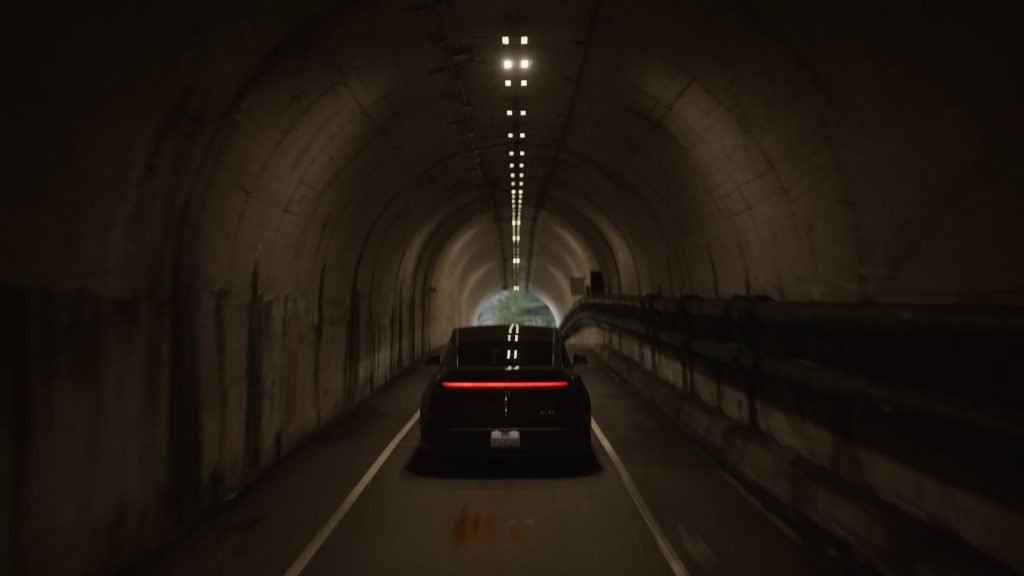
If this pans out to be as successful as it seems on the surface, this should all but remove critical interventions, taking us much closer to autonomy being solved. When you consider that Tesla ships this software on a vehicle without a steering wheel and pedals (and recently expanded to Dallas from launching in Austin), its clear Tesla has satisified themselves it’s ready.
What software build?
Tesla hasn’t named a software build for V15, and at the time of writing I can’t find a V15 build logged by the public software trackers like @Teslascope and @Teslaf.
We’ll know as soon as the early first wave starts to recieve it, with most turning to X to share the news of a new release and usually to reveal the release notes, today Tesla took the lead on that one.
Expect the rollout to start first in North America on AI4 vehicles before expanding, with the biggest question for me being how well does V15 accommodate differences in different countries (like Australia).
Typically our builds have been customised and taken longer, is there a chance where V15 is one build to rule them all? And what of HW3 owners like myself, are we now waiting for a V15 Lite build?
Why V15 matters
FSD updates usually improve one behaviour at a time. V15 is being positioned differently: a generational change to the underlying model, the visualisation, navigation and parking, all at once, built on the same software Tesla runs in its Robotaxis.
If first-wave owners find the driving matches Tesla’s claims, especially on safety-critical moments, V15 could be the version that finally makes the Robotaxi-to-customer-car story feel real. If it doesn’t, the gap between the launch video and the daily drive will be just as telling.
For now, the facts are simple. V15 is rolling out, it has started with a first wave, the wide release is still to come, and Australia has no date. I’ll be watching for a build number, tracker data and the first detailed owner drives, and I’ll update you as Tesla confirms local timing.
For more information, head to Tesla and if you’re buying a new Tesla, make sure you use a referral link –https://ts.la/jason45054
{For more tech updates, stay tuned to our blog.|Keep following us for the latest insights.|Check back often for more exciting news!}