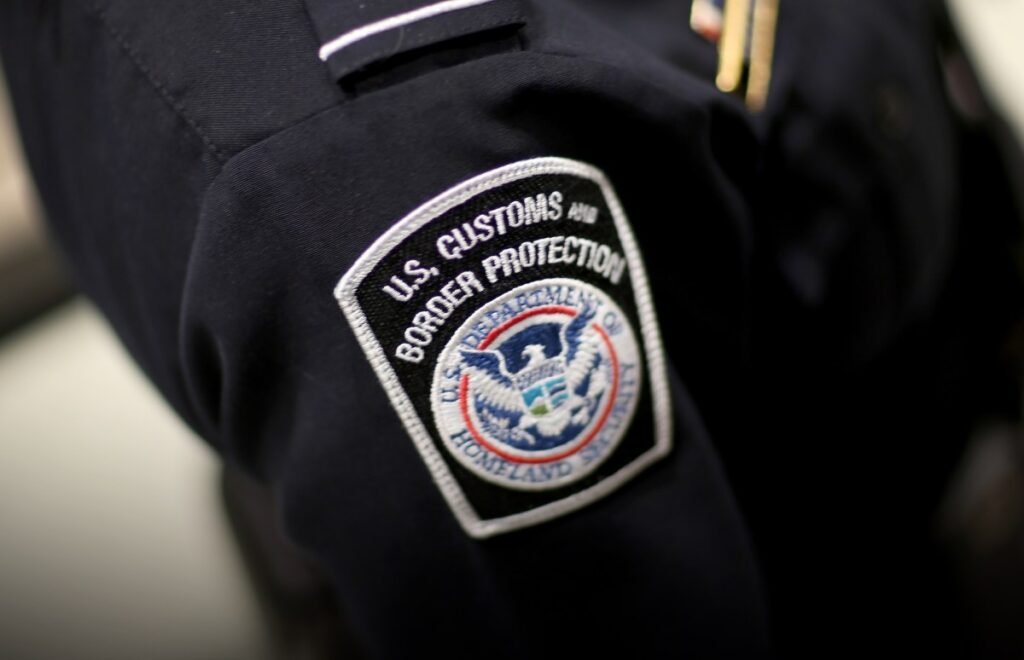
The US Department of Justice is prosecuting an American for allegedly providing US border authorities with a password that deleted the contents of his phone, according to an indictment and media reports. This is believed to be the first known case in the United States where federal prosecutors have charged someone for allegedly destroying data
The US Department of Justice is prosecuting an American for allegedly providing US border authorities with a password that deleted the contents of his phone, according to an indictment and media reports.
This is believed to be the first known case in the United States where federal prosecutors have charged someone for allegedly destroying data using a “duress” password built into a phone’s software.
According to The Guardian, which covered the story earlier this week after the first court hearing on Monday, Atlanta resident Samuel Tunick is fighting the charges. Tunick’s lawyers said it was illegal for U.S. Customs and Border Protection to seize his phone when he returned to the U.S. last year and that any evidence, including the alleged deletion of his phone, should be thrown out.
The case centers on a feature included in GrapheneOS, a custom Android operating system that runs in place of software on most modern Google Pixel devices. Tunick’s lawyers confirmed that GrapheneOS was running on his phone.
The software feature allows the device owner to set a passcode that deliberately erases the contents of that device if entered instead of the user’s unlock code.
Tunick’s case also raises questions about what constitutional rights can be invoked at the border, which the U.S. government has long asserted is not U.S. soil until a person is authorized to enter.
The government’s indictment, which contains a typographical error (“United States Code”), accuses Tunick of allegedly providing a passcode to border agents that caused the phone to “wipe digital content” before the device was confiscated.
Tunick’s attorneys filed a motion to suppress the evidence, claiming the stop and seizure was illegal. The motion said that U.S. border authorities took Tunick for secondary inspection at Atlanta’s Hartsfield-Jackson Airport as he returned from abroad on Jan. 24, 2025, but that he was repeatedly denied access to an attorney and not informed of his legal rights.
Tunick’s lawyers accused the government of demanding access to his phone under the pretext of searching for images of child exploitation, but without providing evidence to justify their suspicions. His suppression motion argued that the government was instead investigating him for his association with a long-standing environmental movement called Defend the Atlanta Forest, which opposes the development of a sprawling law enforcement training campus in Atlanta dubbed “Cop City.”
The motion said border agents claimed they did not need a warrant to search Tunick’s phone because he had not yet crossed the U.S. border. The US government has long claimed that it can search and seize people’s devices without a search warrant or court order until they are allowed entry into the United States.
When Tunick provided his password and authorities entered it, “the screen went blank, flashed several times, and the phone appeared to reboot.” Authorities confiscated his phone anyway, before telling him he was free to leave and could enter the United States.
Prosecutors later charged Tunick under a federal statute that makes it illegal to knowingly destroy or damage property to prevent authorities from seizing it. Tunick has pleaded not guilty.
Matthew Dodge, an assistant federal public defender on Tunick’s legal team, told TechCrunch that it was incredibly rare to see the federal statute used in an indictment.
Security experts also said they had never seen charges filed this way before.
Bill Budington, a senior technologist at the Electronic Frontier Foundation, and Runa Sandvik, a digital security expert who works to protect at-risk people as the founder of security consultancy Granitt, told TechCrunch that they had not seen similar cases involving the use of duress passwords.
“I have never seen this before, although I have discussed the potential scenario with activists and journalists over the years,” Sandvik said. “I think this case serves as a reminder that authorities can argue that you knowingly destroyed data, so it’s best not to have that data with you when you cross certain borders.”
“With a little advance planning, you can always download the data you need once you arrive at your destination,” Sandvik said.
The Electronic Frontier Foundation has guides on how to protect your data and security at the US border and explains what rights you have.
The federal court in Atlanta overseeing the case is expected to rule on Tunick’s motion to suppress later this year. A Justice Department spokesperson did not respond to TechCrunch’s request for comment.
When you buy through links in our articles, we may earn a small commission. This does not affect our editorial independence.
Check back often for more exciting news!