
The US military has been attacking Iran for days, and although most of the attacks have occurred at night, it carried out the latest round of attacks in the middle of the day. US forces have resumed combat operations against Iran after the collapse of a shaky ceasefire following repeated setbacks and deadlocks in negotiations,
The US military has been attacking Iran for days, and although most of the attacks have occurred at night, it carried out the latest round of attacks in the middle of the day.
US forces have resumed combat operations against Iran after the collapse of a shaky ceasefire following repeated setbacks and deadlocks in negotiations, triggered by Iranian aggression and US retaliatory strikes.
US operations target military facilities and capabilities, particularly those that threaten civilian shipping and key waterways, namely the strategic Strait of Hormuz. President Donald Trump said earlier this week that the attacks would continue to intensify in the coming days.
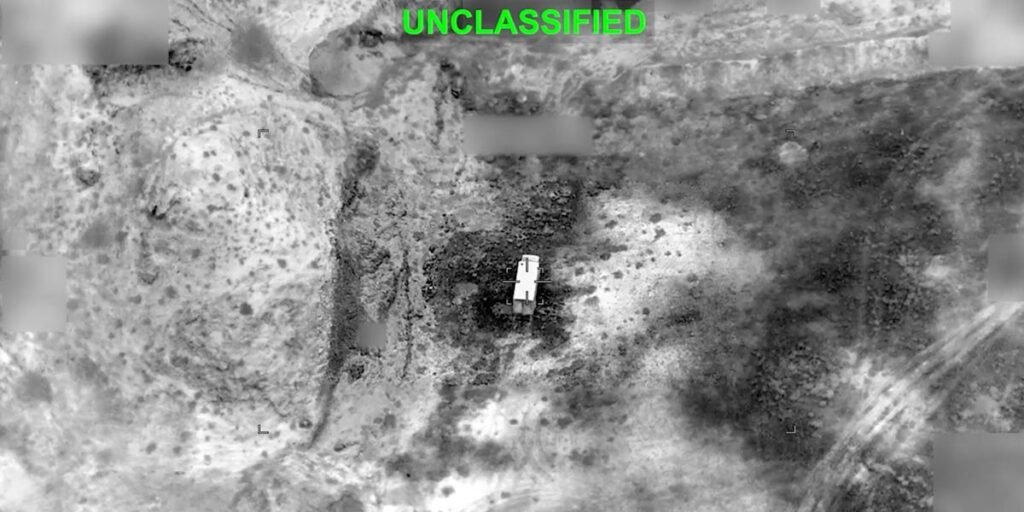
On Wednesday, US Central Command, the combatant command that oversees the Middle East, said its forces had completed a round of strikes against Iran that began at 6 a.m. ET, about 1:30 p.m. local time. It was over in an hour and a half.
“CENTCOM launched precision munitions against coastal defense systems and cruise missile storage and launch sites on Greater Tunb Island during the 90-minute wave. The strikes further degraded Iran’s ability to attack commercial shipping in the Strait of Hormuz,” the command said.
Greater Tunb Island is located in the Persian Gulf, just west of the Strait of Hormuz. Iran seized it in 1971 from what would later become the United Arab Emirates.
A video released by CENTCOM showed one of Wednesday’s attacks on Iran. The command did not identify the specific target or the ammunition used.
Trump declared a ceasefire last Wednesday, effectively ending a fragile agreement that had failed to completely stop exchanges of fire between the United States and Iran. That night, the United States attacked targets in Iran in what it said was an effort to degrade Tehran’s ability to threaten civilian shipping.
The attacks that followed from Saturday to Tuesday took place late or in the middle of the night in Iran. Now, the United States also attacks during daylight hours.
“We’re going to hit them very hard tonight,” Trump told Fox News on Tuesday. “We’re going to hit them really hard the next night.” The president has said the strikes will continue until he determines they are “enough.” He also warned that future targets could include power plants and bridges.
The United States has said its new attacks on Iran are a response to Tehran’s attacks on ships passing through the strait. In addition to the attacks, US forces have also resumed their blockade of the strait.
While many attacks have been conventional, others have been experimental. Earlier this week, CENTCOM announced that it had used naval drones in combat for the first time, launching them against what appeared to be an unguarded ship and submarine maintenance facility in Iran. The uncrewed Corsair surface ships impacted the port, causing a massive explosion.
Iran has also been firing missiles and drones at US allies across the Middle East, including Bahrain and Kuwait.
Adm. Brad Cooper, commander of CENTCOM, said in a statement that “over the past seven days, Iran has intentionally targeted civilians throughout the region by attacking seven commercial ships, resulting in nearly a dozen civilian crew members killed, missing or injured.” He added that “Iranian forces have also launched dozens of missiles and drones toward neighboring Gulf countries.”
Iran’s paramilitary Revolutionary Guard threatened on Wednesday to halt all energy exports from the Middle East over the blockade, and Tehran has vowed to continue its response to the US attacks.