Flipkart, the Walmart-owned Indian e-commerce giant, is preparing to challenge India’s food-delivery duopoly of Zomato and Swiggy. It is entering a fiercely competitive market that has defeated even previous attempts by Amazon and Google to break in. The Bengaluru-based company is testing its food-delivery service internally and has expanded the trial from a few hundred
Flipkart, the Walmart-owned Indian e-commerce giant, is preparing to challenge India’s food-delivery duopoly of Zomato and Swiggy. It is entering a fiercely competitive market that has defeated even previous attempts by Amazon and Google to break in.
The Bengaluru-based company is testing its food-delivery service internally and has expanded the trial from a few hundred employees to upwards of 8,000, according to two people familiar with the matter. It has also deployed a dedicated fleet of riders through its logistics arm, Ekart, separate from the riders who handle its quick-commerce deliveries, as it prepares for a public launch.
The employee-only service appears as a separate tab on Flipkart’s main shopping app, alongside its Minutes quick-commerce offering and travel bookings, TechCrunch has learned. It draws on restaurants listed through ONDC, a government-backed network that connects online buyers and sellers across different platforms, as well as restaurants that Flipkart signed up directly.
Riders wearing jerseys bearing the “Eat-in by Minutes” branding have also begun fulfilling orders on the streets of Bengaluru, the southern Indian city where Flipkart is headquartered.
As Flipkart expands its food-delivery operations, it is entering a market that the brokerage firm Bernstein estimates is growing 18% to 20% a year. Online delivery, though, still accounts for just over 15% of India’s broader food-services industry. Zomato, owned by Eternal, and Swiggy together serve an estimated 85 million to 95 million paying customers a year, per Bernstein. That figure shows how dominant the two are, and how much room newcomers have to grow online food ordering in the world’s most populous country, which has more than a billion internet subscriptions.
Flipkart is not the only company trying to shake up India’s food-delivery market. Ride-hailing company Rapido, which has already given Uber and its Indian rival Ola a tough fight, has been expanding Ownly, its food-delivery service that charges restaurants zero commission. Meanwhile, Swiggy has launched Toing, a separate app aimed at customers looking for cheaper meals. Both moves reflect growing pressure on the industry’s existing pricing model and the commissions that restaurants pay.
“Monopoly is bad, but duopoly is more pathetic,” said Sagar Daryani, president of the New Delhi-headquartered National Restaurant Association of India, which represents over 500,000 restaurants nationwide. “What one does, the other follows suit.”
Daryani argued that restaurants have long needed alternatives to the two dominant platforms.
Flipkart is not the first deep-pocketed company to try breaking into India’s food-delivery market. In 2020, Amazon launched a food-ordering service in Bengaluru, but it shut the service down two years later. Google’s Areo app, which offered food ordering alongside other services, also failed to gain traction. Uber also left the market in 2020, selling its Uber Eats business in India to Zomato.
Daryani sees one important difference between Flipkart and the companies that tried food delivery before it. Zomato and Swiggy built their businesses around delivering meals before expanding into quick commerce. Flipkart is doing the reverse, using its established e-commerce business and growing quick-commerce operations as a springboard into food delivery.
“Flipkart’s quick commerce benefit will get passed on to food delivery, so it will be leaner, more efficient,” Daryani told TechCrunch.
Restaurants are also hoping that new entrants will bring down the cost of selling meals online. Daryani, also co-founder and CEO of the dumpling chain Wow! Momo Foods, said Flipkart has proposed a base commission of about 10%, compared with the 20% to 25% that restaurants typically pay Zomato and Swiggy.
Commissions are only part of the expense, though. Once advertising, discounts, and other promotional costs are factored in, restaurants can end up spending 40% to 50% of an order’s value on the established platforms, Daryani told TechCrunch. He expects Flipkart to keep that total cost closer to 15% to 16%, which could mean restaurants keep more money from each order.
Nonetheless, getting restaurants on board is one thing and winning over customers is another. Bernstein estimates that new entrants could save customers just ₹20 to ₹30 (around 20–30 cents) per order by operating more efficiently, which may not be enough to draw customers away from Zomato and Swiggy. The two incumbents could also offer deeper discounts to keep them.
Flipkart is not planning to stay in Bengaluru for long. The company has told restaurants that it expects to launch its food-delivery service publicly by the end of October and to expand to five or six cities by the end of this year, Daryani told TechCrunch.
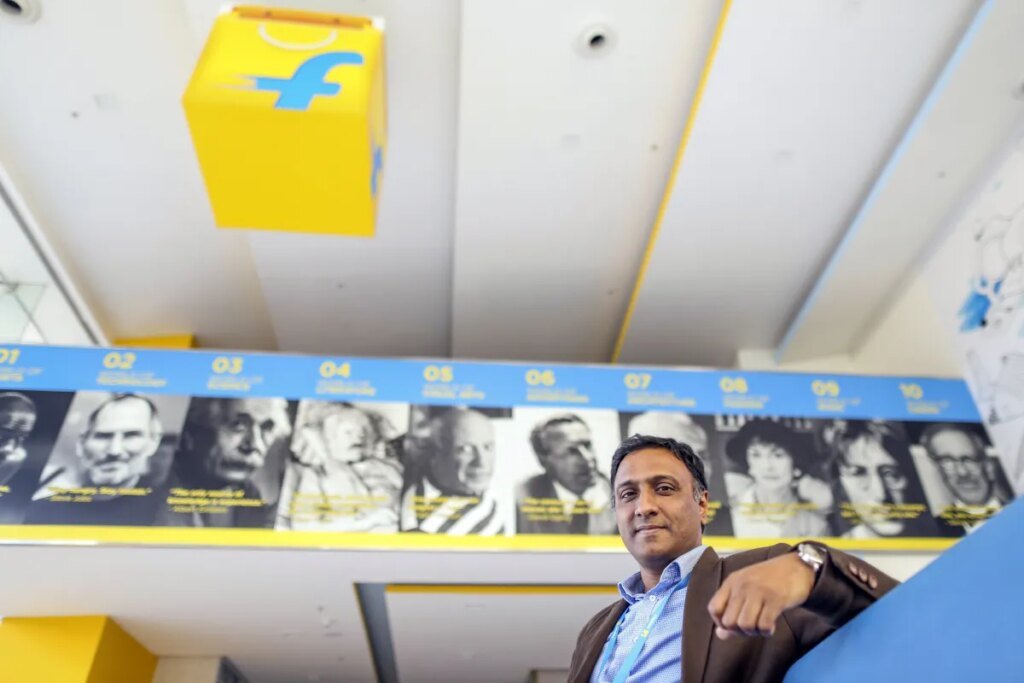
The food-delivery push also comes as Flipkart’s long-awaited stock-market listing remains uncertain. Chief Executive Kalyan Krishnamurthy (pictured above) recently declined to give a timetable for an IPO, even as the company continues to expand into businesses that could bring customers back to its app more frequently.
Flipkart’s expansion comes as competition in India’s e-commerce market intensifies. Quick-commerce platforms that started by delivering groceries in minutes now sell even the latest iPhones and other discretionary purchases, putting them in more direct competition with Flipkart and Amazon.
Flipkart did not respond to a request for comments.
When you purchase through links in our articles, we may earn a small commission. This doesn’t affect our editorial independence.
Check back often for more exciting news!