One in five reptile species and two in five amphibian species are threatened with extinction1,2, according to the International Union for Conservation of Nature (IUCN). In Central America, for instance, numbers of variable harlequin frogs (Atelopus varius) have fallen by more than 80% since the 1980s. In the Seychelles, the population of giant bronze geckos
One in five reptile species and two in five amphibian species are threatened with extinction1,2, according to the International Union for Conservation of Nature (IUCN). In Central America, for instance, numbers of variable harlequin frogs (Atelopus varius) have fallen by more than 80% since the 1980s. In the Seychelles, the population of giant bronze geckos (Ailuronyx trachygaster) has dropped to an estimated few thousand individuals, with the species occupying an area of less than 10 square kilometres. Habitat loss, invasive species, disease and climate change are mainly to blame. But another factor is on the rise and must be tackled urgently: the global pet trade.
‘Exotic’ wild animals are becoming ever more desired as pets. This trade — parts of which are legal, parts illegal — harms many animals but is having a disproportionate impact on reptiles and amphibians. These animals typically attract less funding and attention for conservation3 and research4 than do ‘charismatic’ birds and mammals, and are less effectively protected by laws and regulations1,5. Many are silent in transit, easy to hide in parcels. Some can fetch thousands of dollars. And illegally traded species can be difficult to distinguish from those traded legally6.

GDP and beyond: why treating nature as capital cannot save the planet
From a niche business in the 1990s, the global reptile and amphibian pet industry has ballooned. The trade in reptiles alone is worth US$2.5 billion today, with millions of reptiles and amphibians imported into North America and Europe from around the world each year7,8. Species such as the ball python (Python regius) and the common leopard gecko (Eublepharis macularius) are now commonly sold in pet shops, marketed as requiring little space and care and serving as the beginning of a lifelong pursuit of rare species by some hobbyists. Influencers promote reptiles and amphibians as cool pets on social media.
But more than 50% of reptiles and 40% of amphibians that are traded as pets and for other purposes have been taken directly from the wild9,10. This practice harms wild populations. The ploughshare tortoise (Astrochelys yniphora) in Madagascar is one of the world’s most endangered tortoises, mainly because of poaching for the pet trade.
Imported animals can also cause problems at their final destination. Some carry undetected pathogens. The salamander chytrid fungus (Batrachochytrium salamandrivorans), for example, has caused mass die-offs of native fire salamanders (Salamandra salamandra) in western Europe after being introduced through the pet trade11. And animals that escape can wreak havoc — Burmese pythons (Python bivittatus), for instance, are associated with declines in bobcat, raccoon and opossum populations in the United States12.
What’s more, poor welfare is common. Snakes are often kept in small drawers that prevent climbing, burrowing and other natural behaviours. These conditions are associated with behavioural abnormalities, chronic stress and altered brain development13.
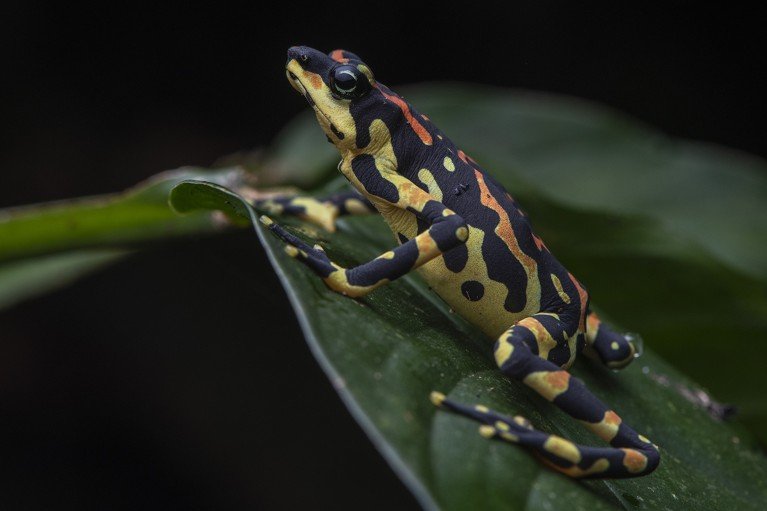
A variable harlequin frog (Atelopus varius) in Costa Rica.Credit: Anton Sorokin/Nature Picture Library
Legal gaps enable the unsustainable trade in these species. National policies are typically reactive, with species able to be traded legally — often with no restrictions — until evidence builds that doing so harms wild populations. There is little consistency between countries, making it hard to monitor the legal trade and combat illegal trade across borders.
Yet, this year, there are unprecedented opportunities for reform. A forthcoming independent analysis will reveal how the European Union can help to stymy harmful imports of reptiles and amphibians, complementing a 2025 report for the European Commission (EC) on options for criminalizing the illegal trade in wildlife (see go.nature.com/4cskhc1). And in October, a United Nations Convention against Transnational Organized Crime (UNTOC) meeting in Vienna will provide a crucial opportunity to strengthen the international response to wildlife trafficking.
The EU, UNTOC and governments around the world should act to protect the reptiles and amphibians harmed by the pet trade, replacing current policies with proactive ones that require proof that an animal has been legally and sustainably sourced.
Grey legal ground
Currently, both national and international laws around animal trading rely mostly on species being individually studied, monitored, identified and listed before any trade restrictions apply. This is especially problematic for amphibians and reptiles, new species of which are described more often than is the case with mammals and birds14.
Environmental treaties are paralysed — here’s how we can do better
At the highest level, the Convention on International Trade in Endangered Species of Wild Fauna and Flora (CITES) regulates trade in thousands of threatened or potentially threatened species. Species included in CITES appendices I and II require specific permits to be traded between countries. Permits are granted only when the exporting country has determined that the trade is legal and that it will not be detrimental to the survival of the wild population. For species in Appendix I, the importing country must also make a sustainability determination and confirm that the import is not for mainly commercial purposes.
However, CITES covers just 1,206 reptile species (9.5% of all reptile species) and 384 amphibian species (4.2% of all amphibian species). Adding species to appendices I and II is a slow and often politicized process that can be undermined by trade interests. New species are listed only after a two-thirds majority of parties to the treaty has agreed to the addition.
At the national level, nearly 90% of UN member states criminalize some offences against wildlife — such as collecting from the wild or exporting protected wildlife without permits. But national legislation typically safeguards only a limited set of species. Because newly discovered reptile and amphibian species are especially sought-after as pets, existing policies struggle to keep up.
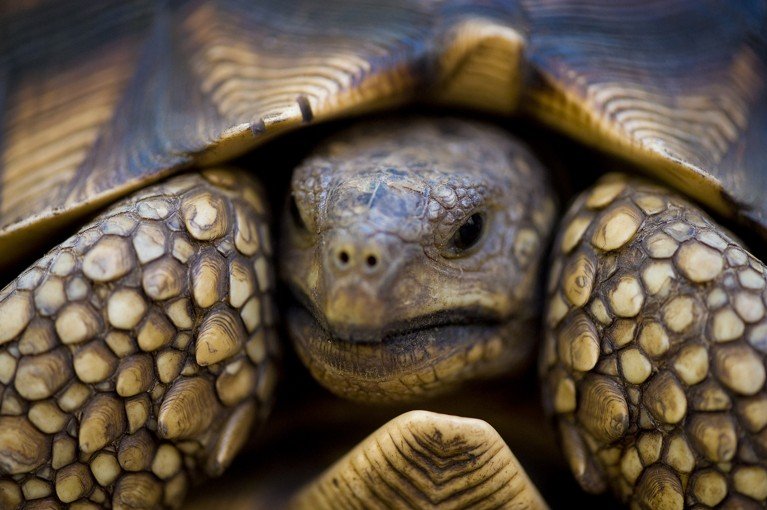
Madagascar’s ploughshare tortoise (Astrochelys yniphora) is critically endangered.Credit: Inaki Relanzon/Nature Picture Library
And because many countries do not regulate trade in species that are not listed under CITES, even if a species is protected by law in its country of origin, it — or its offspring — can usually be sold legally once outside that country’s borders. This undermines the conservation efforts of source countries.
For wildlife-related offences, fewer than half of countries impose maximum penalties of at least four years in prison — the threshold for a ‘serious crime’ under UNTOC. Below that threshold, UNTOC’s strongest tools to ensure international cooperation, such as extradition and mutual legal assistance between states, do not usually apply.
Harrowing trends: how endangered-species researchers find hope in the dark
Enforcement is also often compromised by scarce resources, corruption and lack of political will. People engaging in the illegal wildlife trade are unlikely to be prosecuted and financial penalties are typically far below profits — meaning that fines can be factored into the costs of doing business15. Animals caught in the wild are frequently ‘laundered’ into legality — given false ‘captive-bred’ documentation in error, or by corrupt officials, complicit breeders and unscrupulous traders at different points along the supply chain.
Together, these challenges mean that even countries with robust protections for native species struggle to see them implemented properly. For example, Ecuador prohibits the export of all species of Galapagos iguana (Conolophus spp. and Amblyrhynchus cristatus) for commercial or personal purposes. Nevertheless, these species continue to be traded internationally, often falsely declared as captive-bred. Despite a near-complete ban on exports of Australian wildlife, 170 endemic reptile and amphibian species have still been found in the global trade16.
Last year, the IUCN World Conservation Congress in Abu Dhabi adopted a motion to create a global task force to develop guidelines for managing the wildlife pet trade. This is a welcome move, but the guidelines will not be legally binding. More-robust legislation is needed to ensure any such trade is sustainable, legal and safe.
Scrutinize exports and imports
For more tech updates, stay tuned to our blog.