
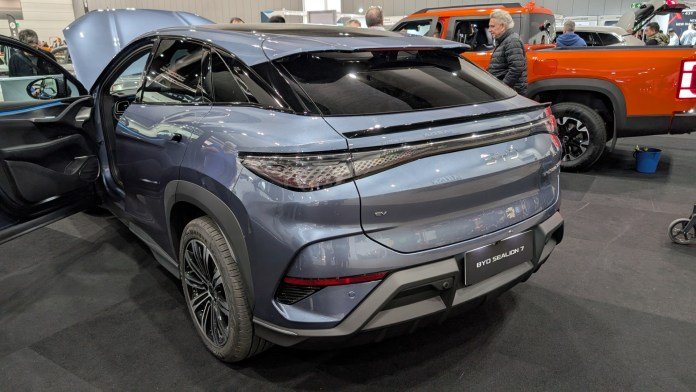
The Australian automotive market has reached a significant milestone this March, with electric vehicle sales hitting a record market share despite a cooling in the broader industry. As the conflict in the Middle East continues to destabilise global oil markets, the resulting uncertainty at local petrol bowsers is visibly shifting buyer behaviour. While total new
The Australian automotive market has reached a significant milestone this March, with electric vehicle sales hitting a record market share despite a cooling in the broader industry. As the conflict in the Middle East continues to destabilise global oil markets, the resulting uncertainty at local petrol bowsers is visibly shifting buyer behaviour.
While total new vehicle sales for the month dipped slightly to 105,058 units, battery electric vehicles (BEVs) saw an unprecedented leap. A total of 15,839 EVs were delivered to Australian driveways in March 2026, representing a 14.6% share of the total market.
This is a massive increase compared to the same month last year, when electric vehicles accounted for only 7.5% of sales. The near-doubling of market share in just twelve months suggests that the transition to electric mobility is moving well beyond early adopters.
The missing piece of the monthly puzzle
It is important to recognise that these VFACTS figures, while authoritative, do not yet tell the complete story for the month. The Electric Vehicle Council (EVC) typically releases a separate, more detailed delivery report that includes granular data for brands like Tesla and Polestar.
Because some manufacturers report differently, the final number of electric vehicles hitting the road this month is likely even higher than the initial 15,839 units recorded. Once the EVC data is finalised and combined with the VFACTS industry summary, the true scale of the March surge will be fully realised.
Leading the charge on the leaderboard
The manufacturer standings for March show a fascinating shift in brand loyalty as Australians look for more efficient ways to get around. Toyota remains the overall market leader with 16,574 sales, though its dominance is being challenged by brands with aggressive electric portfolios.
BYD has made an incredible jump to secure the third spot overall in Australia, recording 7,217 sales for the month. This result places it ahead of established names like Mazda and Ford, reflecting a massive surge in demand for the brand’s diversified electric range.
The BYD Sealion 7 has proven to be the standout success story of the quarter, officially cracking the top 10 most popular models in the country.
With 1,970 sales in March, the Sealion 7 saw a staggering 243.8% increase in volume compared to the previous year.

Affordability and the new entry points
A primary driver of this month’s record result is the arrival of genuinely affordable electric options that are finally challenging petrol equivalents on price. For the first time, Australians can drive away in a brand-new electric car for under A$30,000.
The 2026 BYD Atto 1 is now Australia’s most affordable electric vehicle, with the Essential variant priced from approximately A$27,097 drive-away. This price point puts it in direct competition with popular light petrol hatchbacks that have traditionally dominated the entry-level market.
Other brands are also pushing the value envelope, with the GAC Aion UT launching from A$30,990 drive-away and the MG4 EV Urban arriving at A$31,990 drive-away. This trend toward sub-A$35,000 electric vehicles is removing the final financial barrier for many Australian households.

A deeper look at EV price points
The diversity of electric options under A$45,000 drive-away has expanded rapidly, giving buyers more choice across different body styles and ranges.
- BYD Atto 1: Priced from A$27,097 drive-away.
- GAC Aion UT: Priced from A$30,990 drive-away.
- MG4 EV Urban: Priced from A$31,990 drive-away.
- BYD Dolphin: Priced from A$32,698 drive-away.
- GWM Ora Lux: Priced from A$33,990 drive-away.
- BYD Atto 2: Priced from A$34,207 drive-away.
- Hyundai Inster: Priced from A$35,990 drive-away.
These vehicles often offer lower running and maintenance costs compared to their petrol rivals, making the whole-of-life cost even more attractive. For many, the decision to go electric is now being driven as much by the bottom line as it is by the environment.
Month-on-month growth and shifting momentum
The total vehicle market has shown steady growth throughout the first quarter of 2026, rising from 87,092 sales in January to 105,058 in March. However, the real story is in the year-on-year comparisons where electric power is clearly winning the momentum race.
While the broader market shrank by 3.3% compared to March last year, electric vehicle share nearly doubled from 7.5% to 14.6%. This suggests that even as overall consumer spending tightens, buyers are prioritising the long-term savings offered by electrification.
The Hyundai Kona is another model benefiting from this shift, recording 2,316 sales in March to take the fifth spot overall. This represents a solid 15.2% increase over the same month in 2025, highlighting the strong demand for electrified mid-sized SUVs.
The story of hybrids as a market bridge
While full electric vehicles are the focus of much of the hype, hybrids continue to perform a vital role for thousands of Australian families. Toyota’s position as the market leader is largely built on its vast hybrid range, which allows buyers to reduce fuel costs without needing a plug.
Models like the Nissan X-Trail and Mitsubishi Outlander also saw strong results in March, with 2,438 and 2,318 sales respectively. The X-Trail, in particular, saw a 25.3% increase in volume, driven by consumers looking for a “halfway house” between petrol and full electric.
Hybrids are currently acting as a psychological and practical bridge for those who may not yet have access to reliable home or public charging. Until the charging network expands significantly into regional areas, this segment will likely remain a massive part of the Australian landscape.
The anomaly of the ICE market in 2026
Despite the record EV share and soaring fuel prices, there is a clear anomaly in the data: over 85% of new vehicle sales remain non-BEV. The top two vehicles in the country are still the diesel-powered Ford Ranger (4,452 sales) and Toyota Hilux (4,167 sales).
This highlights a significant gap in the current electric market, particularly when it comes to light commercial vehicles and utes. While the first electric utes are starting to arrive, such as the KGM Musso EV from A$60,000 drive-away, they have not yet reached the volume needed to challenge the diesel incumbents.
“It is too early to determine whether this represents a structural shift in the market. More consumers are considering EVs due to the disruption to fuel supply caused by conflict in the Middle East, along with the review into the fringe benefits tax concession for EVs”
Tony Weber, chief executive, Federal Chamber of Automotive Industries.
Policy and infrastructure challenges ahead
The rapid surge in EV adoption brings with it a new set of challenges that Australian governments and the industry must address. The Federal Chamber of Automotive Industries has noted that public charging must keep pace with the record number of vehicles hitting the road.
“A long-term shift to EVs will require Australian governments to sharpen their focus on public charging infrastructure, particularly in regional areas and locations where home charging is not practical.”
Tony Weber, chief executive, Federal Chamber of Automotive Industries.
Ensuring that infrastructure remains a priority will be critical to ensuring that the current surge leads to sustainable, long-term growth. Without a reliable network, the momentum seen in March could be hindered by a lack of confidence among regional and long-distance drivers.
What to expect for the rest of 2026
As we look toward the second quarter, all eyes will be on whether fuel prices remain at these record levels and how that continues to influence buyers. Manufacturers are also ramping up supply to meet upcoming National Vehicle Efficiency Standard (NVES) targets, which could lead to even more aggressive pricing.
With more than 100 electric models now available in the Australian market, the power of choice has never been stronger for local consumers. The combination of falling vehicle prices and rising petrol costs has created a “perfect storm” that is making the electric switch easier than ever.
March 2026 may well be remembered as the month when electric vehicles officially moved from the margins into the mainstream of the Australian automotive industry.
For those considering a new EV for their next car, you should consider attending the Melbourne Motor Show this weekend, said to be Australia’s Biggest Ever Motor Show and set to feature some new EVs.
Sales data via https://www.fcai.com.au/



















Leave a Comment
Your email address will not be published. Required fields are marked with *