
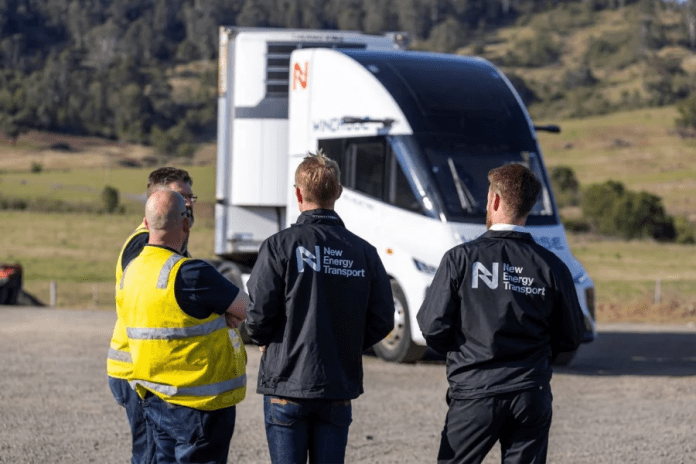
The transition to renewable energy in Australia is often discussed in the context of passenger vehicles and household solar. However, one of the biggest challenges for our net-zero targets remains the heavy lifting done by the trucking industry. New Energy Transport is looking to change that narrative with their ambitious Wilton Project. Located south-west of
The transition to renewable energy in Australia is often discussed in the context of passenger vehicles and household solar. However, one of the biggest challenges for our net-zero targets remains the heavy lifting done by the trucking industry.
New Energy Transport is looking to change that narrative with their ambitious Wilton Project. Located south-west of Sydney, this initiative represents a significant step toward decarbonising the backbone of our economy.
The project is designed as a large-scale, zero-emission heavy road freight depot. It aims to provide the infrastructure necessary to move away from the diesel-reliant systems that have dominated Australian roads for decades.
A strategic location for a green future
Choosing Wilton as the site for this first-of-its-kind facility is no accident. Its proximity to Sydney and major transport corridors makes it a vital node for freight moving through the state.
The facility will serve as a blueprint for how we handle logistics in a world without fossil fuels. It isn’t just about charging batteries; it is about rethinking how supply chains operate from the ground up.
By establishing a dedicated hub, New Energy Transport is addressing the ‘range anxiety’ often associated with heavy electric vehicles. Drivers and fleet operators need certainty that they can recharge and return to the road efficiently.

Building a network across the nation
The Wilton Project is intended to be the first in a proposed network of electric freight hubs. This network would eventually enable zero-emission transport between all major Australian cities.
Connecting Sydney, Melbourne, and Brisbane with high-capacity charging infrastructure is the holy grail for green logistics. This first site at Wilton acts as the proof of concept for that broader national vision.
If successful, this network will significantly reduce our national reliance on imported diesel. This shift not only helps the environment but also strengthens our domestic fuel security and economic resilience.
Government backing and economic impact
The Federal Government has highlighted the Wilton Project as a key component of building a more resilient economy. It aligns with broader goals to modernise Australian industry through strategic investment.
Treasurer Jim Chalmers recently noted the importance of these types of projects in securing our economic future. The shift to renewables is being framed as an opportunity for growth rather than just a regulatory hurdle.
“This would be the first in a proposed network of electric freight hubs enabling zero emission freight transport between major cities, reducing our reliance on diesel freight and imported fuels.”
Jim Chalmers, Treasurer, Australian Government.
By supporting projects like this, the government is signaling to investors that Australia is ready for large-scale green infrastructure. This creates a ripple effect, encouraging more private capital to flow into the transport sector.

Resilience in the face of global instability
Recent years have shown how vulnerable our supply chains are to global oil price spikes and shipping disruptions. Transitioning to a local, electricity-based freight system provides a buffer against these external shocks.
Charging trucks with energy generated from Australian wind and solar means we are no longer at the mercy of international fuel markets. It keeps the cost of moving goods more predictable for businesses and consumers alike.
The Wilton Project is as much about sovereignty as it is about sustainability. It ensures that our trucks keep moving even when global oil supplies are constrained or volatile.
The technology behind the hub
To support heavy-duty electric trucks, the Wilton facility will require massive amounts of power. This involves sophisticated grid connections and potentially on-site battery storage to manage peak loads.
These aren’t your standard EV chargers found at the local shopping centre. We are talking about high-output systems designed to get a massive rig back on the road in a fraction of the time.
The project also explores how digital integration can optimise charging schedules. By using data to manage when and how trucks charge, the hub can reduce its impact on the local electrical grid.
Challenges for the heavy transport industry
Moving to electric freight isn’t without its hurdles, as the weight of batteries can often impact the total payload a truck can carry. However, advancements in battery density are quickly narrowing the gap between diesel and electric performance.
There is also the matter of upfront costs, as electric trucks currently command a premium over their internal combustion counterparts. Infrastructure like the Wilton Project helps lower the total cost of ownership by providing reliable, affordable energy.
As more hubs are built, the economies of scale will begin to kick in. This will make it easier for smaller transport companies to make the switch, not just the massive logistics giants.

Environmental benefits for local communities
Beyond the global impact on carbon emissions, the Wilton Project offers local benefits. Electric trucks are significantly quieter than diesel engines, which is a win for residents living near transport routes.
The elimination of tailpipe emissions also means better air quality for the Sydney basin. Reducing particulate matter and nitrogen oxides from heavy transport is a major public health advantage.
By moving the freight industry toward zero emissions, we are creating cleaner, quieter corridors for everyone. This project shows that industrial progress doesn’t have to come at the expense of local liveability.
Pricing and availability for the sector
While the Wilton Project is currently a flagship development, the broader market for electric heavy vehicles is expanding in Australia. We are seeing more manufacturers bring their electric line-ups to our shores.
For fleet operators, the investment in electric is becoming more attractive as diesel prices remain high. While a heavy electric truck can cost upwards of A$400,000 depending on the specifications, the long-term savings in maintenance and fuel are substantial.
The availability of charging at hubs like Wilton will be the catalyst for many companies to place their first orders. It provides the “refuelling” certainty that has been the missing piece of the puzzle until now.
A vision for 2030 and beyond
The goal is to see a fleet of zero-emission vehicles traversing the Hume Highway and beyond by the end of the decade. The Wilton Project is the foundation upon which that future is being built.
As we look toward 2030, the success of this first hub will likely determine the speed of the rollout elsewhere. It is an exciting time for Australian transport technology and infrastructure.
We are watching the birth of a new era in Australian logistics. It is an era defined by innovation, sustainability, and a commitment to keeping our country moving without the carbon footprint.
For more information, head to https://www.newenergytransport.com.au/ and https://newenergy.com.au/



















Leave a Comment
Your email address will not be published. Required fields are marked with *