SALT LAKE CITY — Reviewing actions from his first term that were reversed, President Donald Trump announced Monday that he will shrink the Bears Ears and Grand Staircase-Escalante national monuments in Utah. The Republican’s actions undo proclamations by his predecessors that deemed sites worthy of preservation under the Antiquities Act, a 1906 law that gives
SALT LAKE CITY — Reviewing actions from his first term that were reversed, President Donald Trump announced Monday that he will shrink the Bears Ears and Grand Staircase-Escalante national monuments in Utah.
The Republican’s actions undo proclamations by his predecessors that deemed sites worthy of preservation under the Antiquities Act, a 1906 law that gives presidents power to protect areas of cultural, historical or scientific interest.
Trump took similar steps during his first term, but many were reversed by his successor, President Joe Biden.
The back-and-forth underscores how national monuments have become a flashpoint over public land management. Trump is not the first president to reduce the size of monuments.
Here’s a look at US national monuments and the presidents who created or reshaped them:
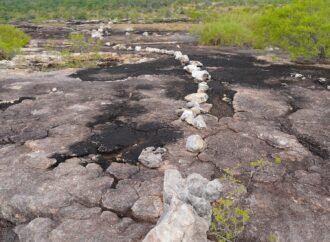
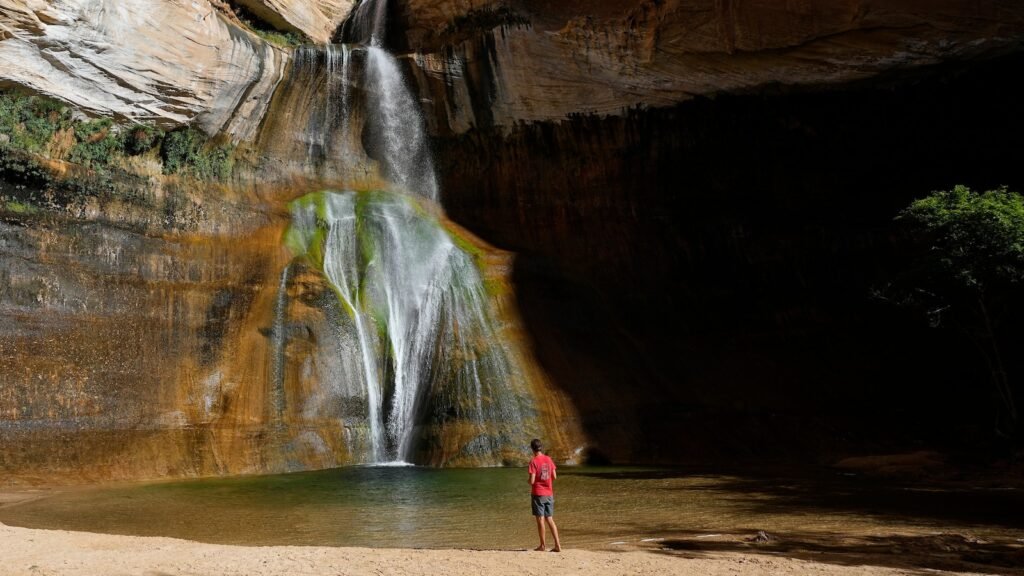
Trump made only a handful of Antiquities Act proclamations during his first term, including two that reduced the size of the Bears Ears and Grand Staircase-Escalante monuments. Utah’s extensive monuments include impressive natural features and sites sacred to some Native American tribes. Grand Staircase-Escalante also has large coal reserves, while the Bears Ears area has uranium.
Trump also dedicated the 340-acre (138-hectare) Camp Nelson National Monument in Kentucky, a Union Army hospital and recruiting center for African-American troops during the Civil War.
Biden’s first use of the law was to restore the size of Bears Ears and Grand Staircase Escalante. He cited his spiritual, cultural and prehistoric legacy.
Biden established 10 new monuments, including the site of a 1908 race riot in Springfield, Illinois, and a monument honoring Mamie Till-Mobley and her son, Emmett, a black Chicago teenager who was tortured and murdered in 1955 after being accused of whistling at a white woman in Mississippi. He also established monuments in the mountains of California and at a sacred Native American site near the Grand Canyon.
Proponents of the reductions say the protective limits stretch too far and make it difficult to extract essential minerals. Trump framed the measure as returning land to the people during a signing event at the White House on Monday.
The order was applauded by Utah officials, who have long argued that the state should be in charge of managing its own lands.
“The question has never been whether to protect them, but how to best protect them,” said Gov. Spencer Cox, a Republican. His office assured that lands left outside the modified boundaries “remain protected under existing federal and state laws.”
But some conservationists and citizens of local tribal nations warned that the order opens the door to mining interests while disrespecting tribal co-stewardship. Bears Ears is jointly managed through an agreement between tribal nations and federal agencies.
“Our connection to this place cannot be erased with the stroke of a pen,” said Davina Smith-Idjesa, a citizen of the Navajo Nation and co-chair of the Bears Ears Intertribal Coalition.
Environmental groups have argued that the Antiquities Act is a one-way street that allows presidents to create, but not undo, monuments. But there is a history of presidents taking actions similar to Trump’s.
Since 1912, presidents have issued more than a dozen proclamations diminishing monuments, according to a National Park Service database.
In Washington state, Woodrow Wilson reduced the area of Mount Olympus National Park (now Olympic National Park) by about half. Harry Truman did the same with the Santa Rosa Island National Monument.
Dwight Eisenhower was most active in undoing his predecessors’ proclamations when he diminished six monuments, including Arches in Utah, Great Sand Dunes in Colorado and Glacier Bay in Alaska, which have since become national parks.
Unlike national parks, which are established by Congress, most of the more than 100 national monuments were created by presidents.
They are governed by one or more agencies, such as the National Park Service, the Bureau of Land Management, or the National Oceanic and Atmospheric Administration.
A designation provides broad protections not only for important geologic features or artifacts, but also for the surrounding landscape, prohibiting drilling, mining, and new construction. Supporters of reducing the size of Utah monuments said the protective boundaries stretched too far and hampered the extraction of critical minerals.
The United States Forest Service was established in 1905 and has jurisdiction over about 300,000 square miles (775,000 square kilometers) of land, including 154 national forests and 20 national grasslands in 43 states.
Under federal law, forest lands are managed for renewable resources, including timber, drinking water, wildlife habitat, livestock forage, and recreation. But many forests cover valuable minerals and private companies can lease plots for the extraction of non-renewable resources such as oil, gas and coal.
Some forests contain specially designated wilderness areas where human activities are restricted. Even bicycles and hang gliders are not allowed because they are mechanical.
National parks have some of the strictest rules against development under a 1916 law known as the Organic Law. The law says that the fundamental purpose of parks is to conserve their landscape, nature, history and wildlife.
President Theodore Roosevelt signed the Antiquities Act after a generation of lobbying by educators and scientists who wanted to protect sites from commercial artifact looting and random collecting by individuals. It was the first law in the United States that established legal protections for cultural and natural resources of historical or scientific interest on federal lands.
On September 24, 1906, Roosevelt used it to designate a national monument at Devils Tower, a giant rock hill in eastern Wyoming that later gained fame as the focus of the movie “Close Encounters of the Third Kind.”
For Roosevelt and others, science was behind the safeguarding of Devil’s Tower. Scientists have long theorized how lava, once molten, cooled and formed the enormous columns that make up this geological wonder. Narratives among Native American tribes, who still hold ceremonies there, detail their formation.
All but three presidents have used the law to protect unique landscapes and cultural resources.
___
Brown reported from Billings, Montana.
Keep following us for the latest insights.