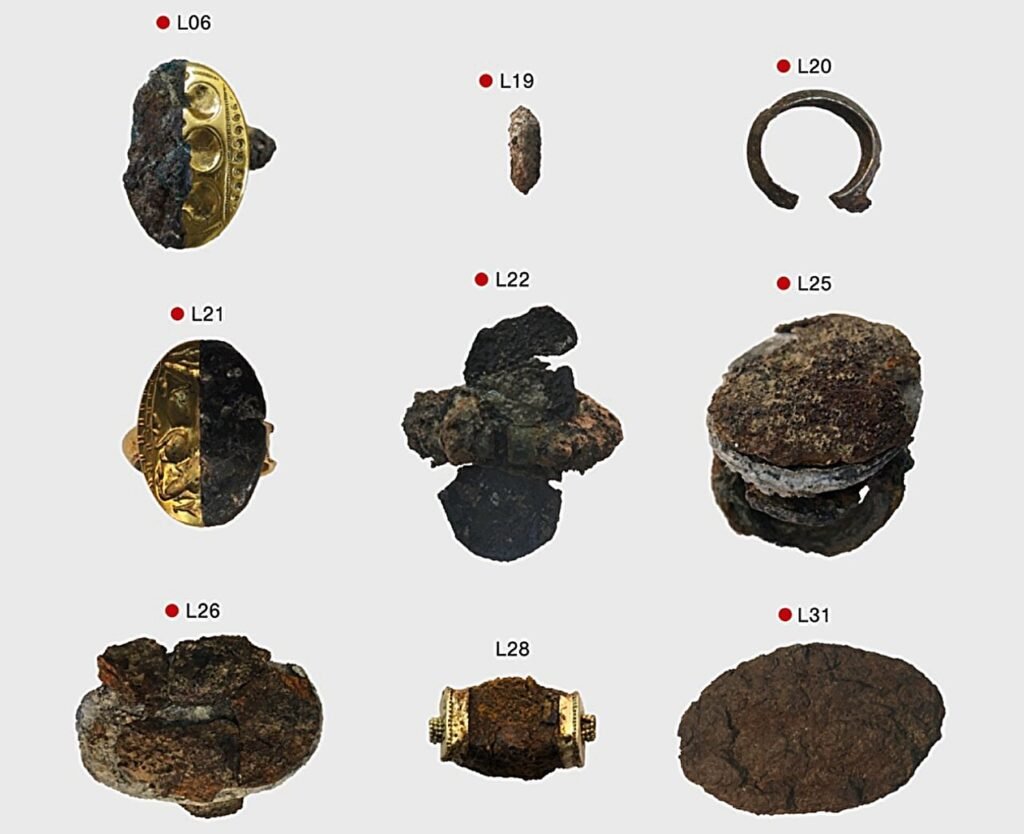
In August 2026, an analysis of iron from ancient Greek tombs revealed surprising results. The objects surveyed included weapons and jewelry from around 3,000 to 4,000 years ago. Most of them were fashioned from regular old iron ore, but around 10 rings were made of iron from outer space—aka from meteorites that crash-landed on Earth.
In August 2026, an analysis of iron from ancient Greek tombs revealed surprising results. The objects surveyed included weapons and jewelry from around 3,000 to 4,000 years ago. Most of them were fashioned from regular old iron ore, but around 10 rings were made of iron from outer space—aka from meteorites that crash-landed on Earth.
It seems that, among the upper classes of Bronze Age Greece, rings fashioned from this out-of-this-world metal were all the rage. Before people learned how to extract iron from ore by melting it at super-high temperatures—a process called smelting—the only source of metallic iron was the occasional space rock. This material, known as meteoric iron, is rare worldwide, but especially in Greece, where approaching meteors usually disappear into the sea rather than make landfall.
Researchers believe that the Greek meteoric rings were actually imported from Egypt: a land with a special relationship to this metal from the skies.
Egyptians had meteoric iron early, but smelted iron came late
Meteoric iron can be identified because it’s purer than the iron ore that naturally occurs on Earth, with a higher proportion of nickel mixed into it. Because meteoric iron “already arrives on Earth in metallic form,” says Victoria Almansa-Villatoro, a professor of Egyptology at Yale University, “it’s very malleable” and can be shaped more easily than unrefined ore.
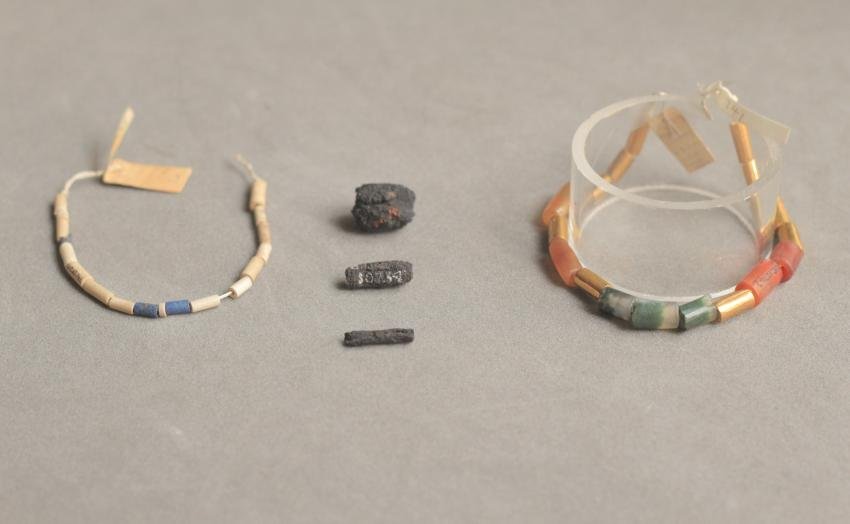
The Egyptians started working with this rare material early. “The oldest meteoric iron objects in the world come from Egypt,” says Almansa-Villatoro: Nine small beads, excavated from a site called Gerzeh along the bank of the Nile about 20 miles south of Cairo, are the oldest artifacts discovered made from space rocks. They are dated to around 3,200 BCE, more than a thousand years older than the 10 meteoric iron rings found in Greece.
Not only are the Gerzeh beads older than any other meteoric iron objects, they are much, much older than widespread iron smelting in Egypt. Almansa-Villatoro explains that “Egypt was relatively late in comparison with other Near Eastern civilizations to start smelting iron.” By the time the Egyptians were producing iron on a large scale in the 500s BCE, ancient people in Anatolia and other regions had been doing it for about five hundred years.
A major reason for this late adoption was Egypt’s natural resources. Iron smelting forges burned a lot of wood charcoal, and Egypt had no large forests. For centuries, the Egyptians relied on bronze, which cost less fuel to produce. It wasn’t until major changes in political and trade networks, including pressure to match the iron arsenals of foreign enemies like the Assyrians, that the Egyptians finally made the shift.
While early iron weapons and armor were not automatically better than bronze ones, iron proved easier to repair, and could be strengthened through further reworking. But objects like the Gerzeh beads show that the ancient Egyptians shaped small amounts of meteoric iron long before they knew how to extract it from ore.
King Tut’s “space dagger” and other ancient objects made from meteorites
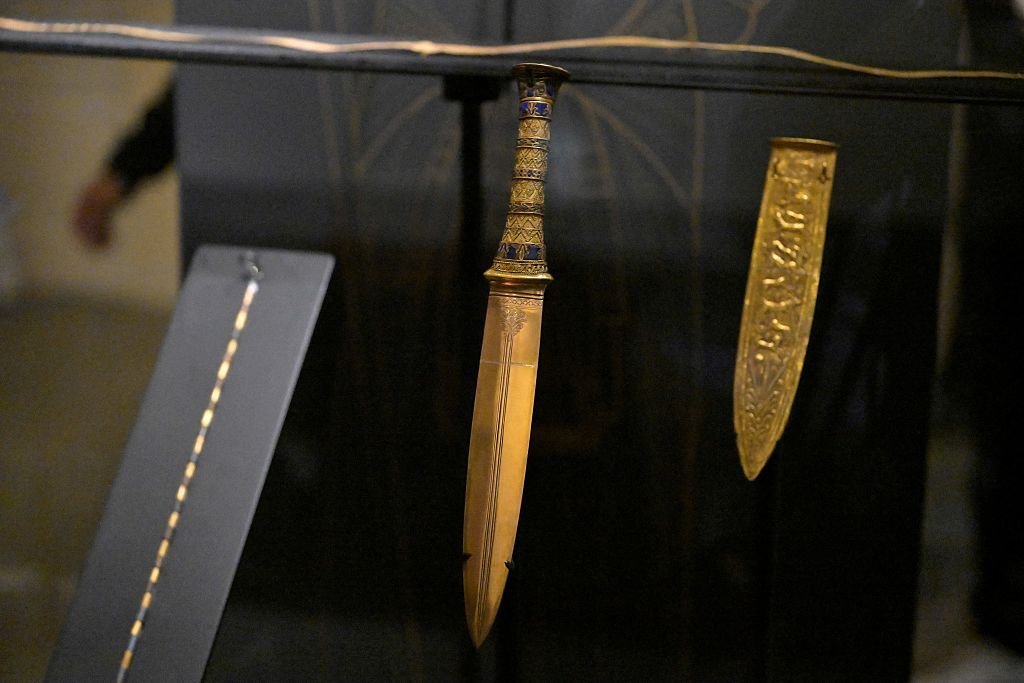
The Gerzeh iron beads were incorporated into jewelry with gems and gold, hinting at their perceived value. All of the other Egyptian objects believed to be made of meteoric iron are similarly small and mostly decorative. The largest and most spectacular is a dagger with a meteoric iron blade more than eight inches long. It was found in the tomb of Egypt’s famous pharaoh, Tutankhamun, who died around 1,323 BCE.
Government records from the reign of Tutankhamun’s grandfather, Amenhotep III, mention an Anatolian king gifting a dagger to the Pharaoh. “People have speculated that this was the same dagger,” says Almansa-Villatoro. “Because, why would they make such a big deal about this king receiving a dagger from a foreign leader, unless it’s made of a very important or very rare material?” As seen with the recent findings from Greece, demand for meteoric iron in the ancient Mediterranean was international.
As of 2013, archaeologists had discovered 28 objects in Egypt believed to be made of meteoric iron. This accounts for about half of the 55 known ancient meteoric iron artifacts found across Europe, Asia, and Africa as of 2023.
The prevalence of meteoric iron in Egypt is difficult to determine, as the composition of many iron objects has never been evaluated. Additionally, says Almansa-Villatoro, “we find more things in Egypt in general from this time period than in other regions,” due to the long history of archaeology there.
Meteoric iron may have been sacred to the Egyptians
Analysis has shown that some of the Egyptian meteoric iron objects are made from several small meteorites combined. This might suggest that the Egyptians were “harvesting” and “actively looking” for this rare material, says Almansa-Villatoro, rather than just using it at random when a meteorite happened to land nearby.
Almansa-Villatoro believes that meteoric iron “was valuable because it was recognized to be material that came from the sky,” not just because it was more pure than other iron. Ancient Egyptian religious texts link iron with the heavens and the spiritual realm of the gods, who were sometimes described as having iron bones. One Egyptian term for iron literally translates to “the iron of the sky.“
“Some tools made of meteoric iron were used in a very important funerary ritual known as ‘the Opening of the Mouth,’” says Almansa-Villatoro. These include small iron blades found in Tutankhamun’s tomb (though not the famous dagger). The purpose of this ritual was “to give the deceased back their senses,” Almansa-Villatoro explains, allowing them to speak, breathe, and eat in the afterlife. Meteoric iron might have been particularly prized for crafting these ritual objects.
By the time of Tutankhamun’s reign, the Egyptians might have encountered smelted iron produced in other lands, but they were still using meteoric iron in rituals and reverently placing it in tombs.
“It is possible that they still saw meteoric iron as something different” from smelted iron, says Almansa-Villatoro, though it’s hard to say for sure.
Related ‘That Time When’ Stories
How much did the Egyptians really know about meteors and meteorites?
Some Egyptian texts describe a dome of water with an iron shell enclosing the Earth. Meteoric iron might have been explained as fragments of this cosmic shell breaking off and falling to the Earth.
It’s clear that the Egyptians considered meteoric iron to be a special material, but what exactly they knew or didn’t know about it is not always easy to figure out. The Egyptians understood and interpreted the world around them using very different methods from our own. While we rely on experimental data documented in writing, ancient Egypt “was very much an oral society, where knowledge was transmitted through ritual and through recitation of texts,” says Almansa-Villatoro.
In ancient Egypt, “things that we wouldn’t consider science nowadays, like myth, could have fulfilled the same function” as science does today, says Almansa-Villatoro. The Egyptians used narrative myths to describe the physical universe. The iron shell surrounding the Earth appears in accounts of the soul’s journey to the afterlife, as a barrier that the spirits of the dead must sail across to reach the skies.
With our modern knowledge, it’s easy to explain how a space rock might land on Earth. But what if all you knew of outer space was what you could see with your eyes from our planet’s surface? Egyptian myths may not have the structure of a modern scientific paper, but they offer a glimpse into how ancient people made sense of awe-inspiring natural phenomena like metal falling from the skies.
In That Time When, Popular Science tells the weirdest, most surprising, and little-known stories that shaped science, engineering, and innovation.

2026 Popular Science Home of the Future Awards
For more tech updates, stay tuned to our blog.