Get the Popular Science daily newsletter💡 Breakthroughs, discoveries, and DIY tips sent six days a week. By signing up, you confirm you are 16+, will receive newsletters and promotional content and agree to our Terms of Use and acknowledge the data practices in our Privacy Policy. You may unsubscribe at any time. The La Mojana
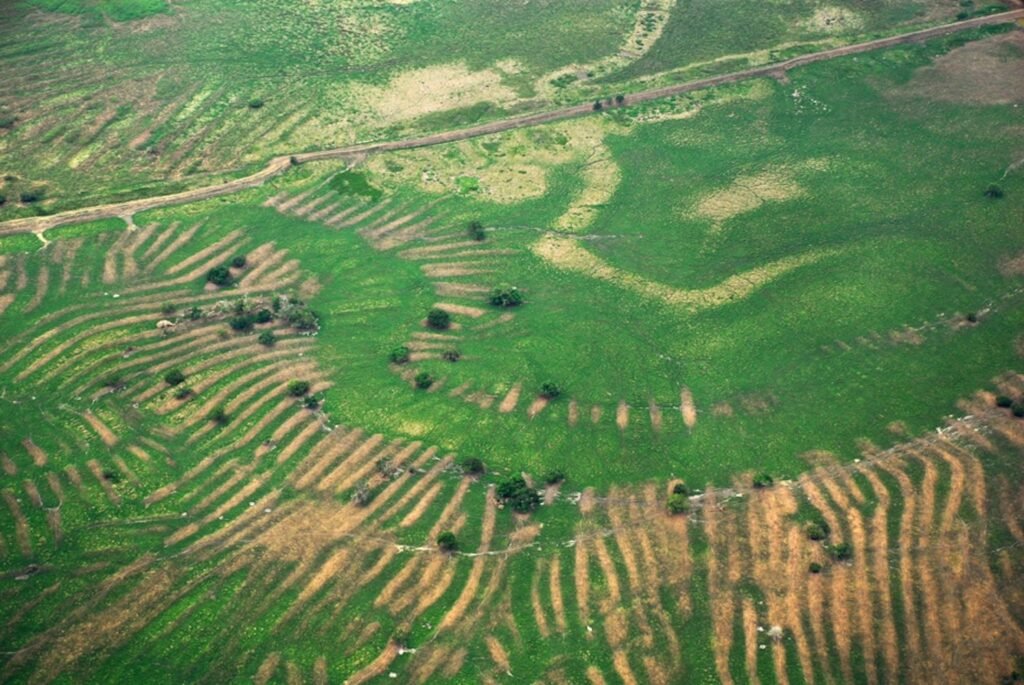
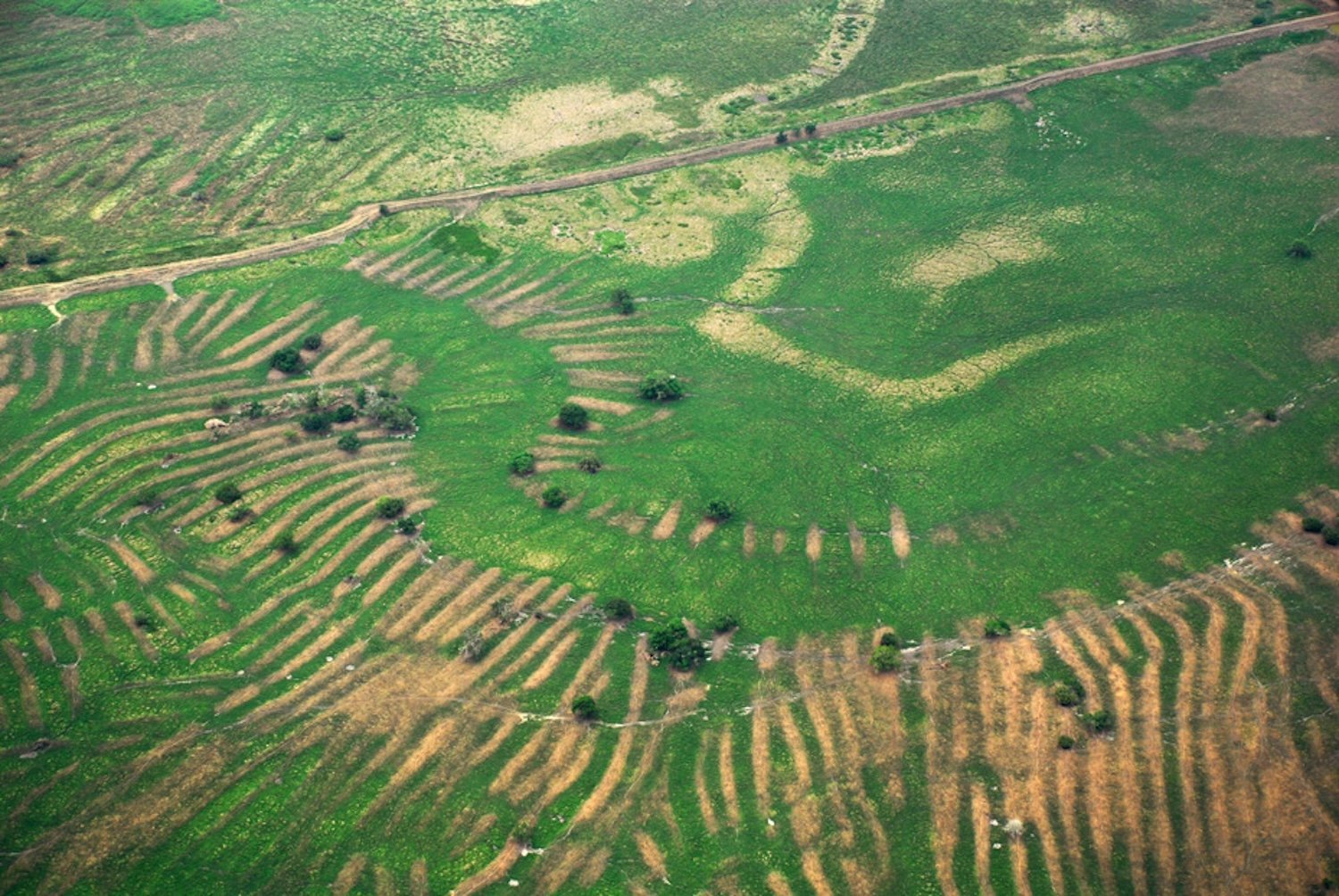
The La Mojana field systems in Colombia’s wetlands are some of the largest examples of monumental ancient engineering in South America. Encompassing an area about as large as Grand Canyon National Park, the network of canals and raised farming ridges are so vast that they’re even visible from airplanes. Archaeologists and historians have long assumed such complex and intricate endeavors must have required oversight from rigidly structured authorities,but new evidence suggests otherwise.
Instead of a centralized chiefdom commanding their citizens to build the field systems, an international research team now believes the hydraulic agricultural arrangement was designed, built, and maintained by local family cooperatives. What’s more, they likely achieved their goals much faster than expected. Their findings, published today in the journal Communications Sustainability, may not only correct the historical narrative—the strategies could help mitigate the region’s ongoing water management crisis.
“These field systems are so impressive that people have assumed they were achieved by hierarchical chiefdoms. Our data tells a very different story,” Jasmine Vieri, an archaeologist at the University of Cambridge and study co-author, explained in a statement.
Ancient water management
This farming system relied on raised fields that could amass huge amounts of water in permanent reservoirs during the rainy seasons, then redirect the stores to fields via canals during drier times of the year. Apart from ensuring reliable water access, the system may have also helped nearby communities trap fish. Construction began during the first centuries BCE,and local pre-Hispanic communities continued to rely on these field networks until about the 11th century CE. It’s not clear why the methods fell out of favor, but one theory is that populations gradually moved from the lowlands into higher altitude areas.
The fields arose at a time when the Mayans and other larger Mesoamerican and Andean cultures were already organizing themselves into larger states. But while previous artifacts like ceramics and gold work found in La Mojana have suggested the existence of smaller, formative chiefdom societies in the region, Vieri’s team noted that there simply is no other evidence to support the more structured oversight theory.
A team of 800
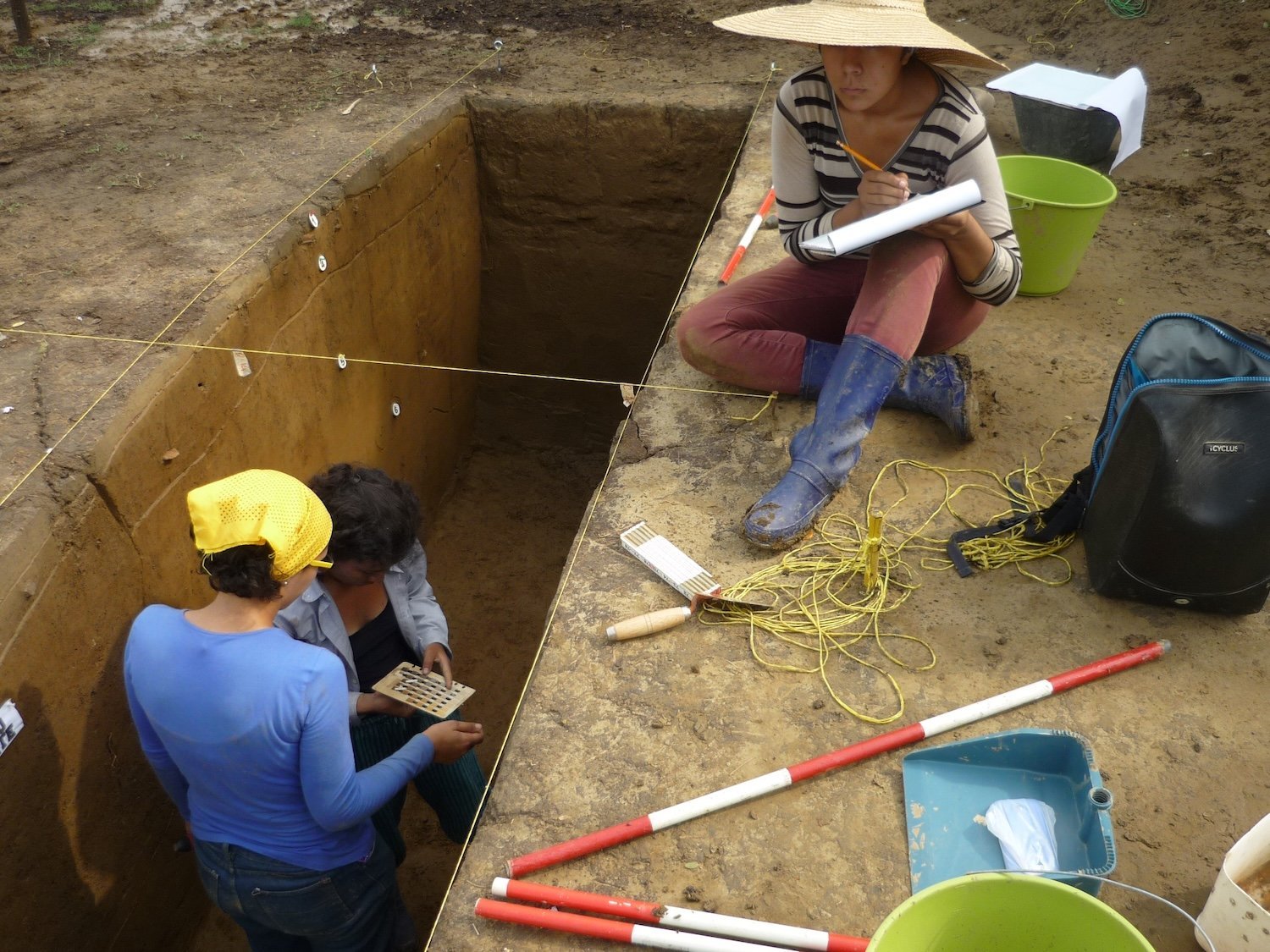
For their new survey of the ancient waterways, archaeologists reviewed satellite imagery of a roughly 1,235 acre section of the field systems near the town of San Marcos in northern Colombia. Vieri and colleagues assessed the volume and dimensions of 1,600 ridges and 63 raised housing platforms inside this area, noting that the earliest ridges were about 4.6 feet high.
Researchers at the Colombian Institute of Anthropology and History (ICANH) and Spain’s University of Santiago de Compostela then calculated the labor and social structures needed to construct such a system. Factors included how much earth was moved, local geological information, the era’s technology, population size, and indigenous working traditions.
Using an estimated population of 1,600 people living inside the 1,235 acres, the team adopted a conservative estimate of 800 workers engaged in the project. The actual number may have been much larger, since ethnographic data shows adults and children routinely helped with subsistence farming.
The results of their calculation models indicate that cooperative families could have easily built these field networks without guidance or pressure from higher authorities. It also was feasible in a much shorter span of time than many experts thought.
“We are confident that one of these canal-ridge systems could have been built in less than two months, around half of a dry season,” said Vieri. “That’s a far lower labor investment than has been previously assumed, and manageable through cooperation.”
Building from the past
These conservation strategies are still relevant today. The study’s authors cite the Colombian government’s recent water management attempts, which primarily involve installing dykes to block water flow and prevent natural flooding. The region’s Caregato dyke has breached multiple times since 2021, damaging towns and ecosystems while also fostering periods of intense drought. Adopting these ancient field systems may avoid similar outcomes, and they don’t even require centralized governance to realize them.
“Policymakers have shown interest in these ancient systems, but lacked data. Our study is the first to show that these sustainable solutions can be organized locally and collectively,” said study author and ICANH archaeologist Fernando Montejo Gaitán. “Local people may need resources from the state, but not necessarily state intervention.”
Beyond helping people today, the new reassessment returns autonomy to indigenous populations that present-day scholars frequently underestimate.
“Arguments for centralized, top-down planning, unsupported by data, risk obscuring the agency of indigenous pre-Hispanic populations,” argued study co-author and University of Cambridge archaeologist Marcos Martinon-Torres. “Pre-Hispanic societies were inventive and cooperative, they worked with nature rather than trying to obstruct it.”

2026 Popular Science Home of the Future Awards
For more tech updates, stay tuned to our blog.