

Drawing blood has always been one of those things we’d been taught to leave to the pros. Even Elizabeth Holmes’ fraudulent Theranos blood-testing system relied on trained phlebotomists to grab a few drops of blood from patients’ fingertips. So when I found out that telehealth’s new favorite blood-drawing system is a bright red self-collection push-button
Drawing blood has always been one of those things we’d been taught to leave to the pros. Even Elizabeth Holmes’ fraudulent Theranos blood-testing system relied on trained phlebotomists to grab a few drops of blood from patients’ fingertips.
So when I found out that telehealth’s new favorite blood-drawing system is a bright red self-collection push-button rumored to be less painful than a needle prick, I knew I had to try this at home.
Blood drawing has become a hot wellness business in recent years, with tech-forward startups like Function Health, Grail, Cancerguard, Superpower, and Inside Tracker all promising to deliver insights about your metabolic health, cancer risk, or hormone levels in blood. Some analysts call this the “bro-conomy” fueled by regular testosterone monitoring, but the category goes well beyond hormone optimization for men. Analysts at Jeffries estimate that this style of “point-of-care testing,” where a patient doesn’t have to be at a hospital or in a lab to get tested, is one of the fastest-growing segments in healthcare worldwide.
Blood tests are considered by many longevity enthusiasts to be the next generation of self-directed care, offering a fuller look at your real-time health than wearables, smartphone step counts, or even genetic testing can provide.
“Health is the ultimate game; it has some of the best scorecards, it’s full of numbers and charts,” Robby Wade, the founder and CEO of at-home blood testing company Rythm Health, told me. “There are ranges where if you push towards optimal, you are going to see general wellness benefits.”
But the game has some rules, perhaps the most important one being: test first thing in the morning, so that you can achieve more accurate cholesterol and hormone readings. So, one early morning in October, I woke up, sleepily stumbled into the kitchen, and unboxed a giant red button for collecting blood from tiny, delicate blood vessels just below the surface of my upper arm.

Hilary Brueck / BI
The big red button to beat
The unequivocal leader in the at-home blood testing space, for now, is a Seattle-based company called Tasso, Inc. Founded by two biomedical engineers, the company’s flagship product is a big, red “easy”-style button for drawing blood, the Tasso+.

Hilary Brueck / BI
It’s useful for just about anyone: Want to know if you’re low on vitamin D? Test blood. What about establishing the health of your liver, kidneys, and thyroid before starting a GLP-1? Yep. Regular blood testing is a no-brainer for men taking testosterone, and women on hormone replacement therapy too. Tasso devices are being used by major telehealth companies including Hims & Hers (for hormone tracking), eMed (for GLP-1 prescriptions), and the rapidly growing blood-testing startup Rythm Health, which I used for my own test.
“This is part of knowing your numbers,” eMed CEO Linda Yaccarino told me on stage last week at the healthcare tech conference HLTH.
Blood testing isn’t usually this cheap or convenient. For $70.20, I got a panel of 28 biomarkers, including topline insights about my heart health, thyroid, kidney and liver, iron, vitamin D, inflammation levels, and sex hormones.
It’s the kind of panel that my doctor could easily order, but not at this price. Typically, this kind of bloodwork would cost at least $120, probably more. For $150, Quest Labs offers a basic 59-marker panel for men, but you have to go into a lab to give your sample. Same deal with LabCorp, which sells a few different direct-to-consumer blood tests, all over $300. Direct-to-consumer subscription website Function Health offers two comprehensive blood draws per year for $365, but again, you have to do it on-site at a Quest Lab, or pay extra to get a phlebotomist to come to you.
Besides the pricing, the convenience factor of drawing your own blood at home is pretty huge. I didn’t need to make an appointment or hop in the car; I just woke up and laid out my blood test kit on the counter while the coffee was brewing and the toast was browning. In less than 20 minutes, I had a mini vial full of blood, ready to be analyzed. It was far more convenient — and painless — than a traditional blood draw, and I couldn’t identify a huge downside.
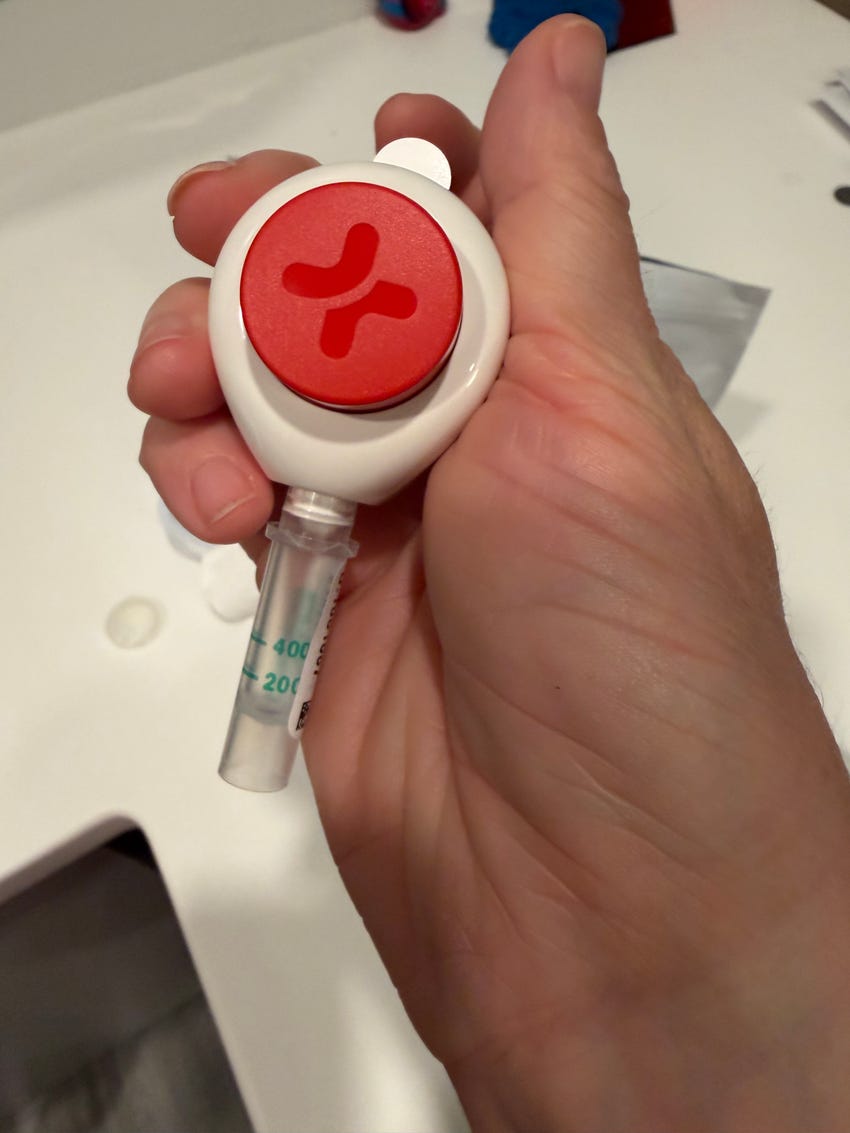
Dr. Olga Pozdnyakova, chair of the College of American Pathologists, told me that the lab testing Rythm does uses the same kind of FDA-approved instruments as any other major lab like Quest or LabCorp, which means the results are pretty reliable, as long as you don’t screw up the collection.
Results in 48 hours
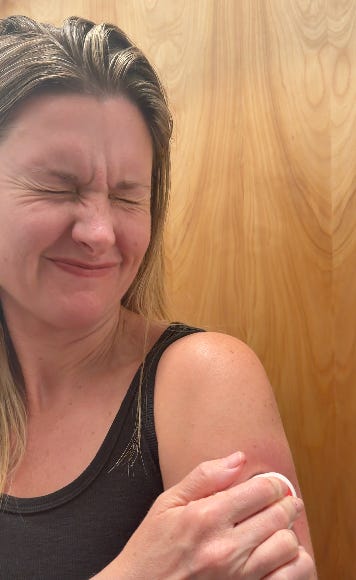
When I tried Tasso+, the scariest part of the process was getting ready to push the button. Afterward, I felt almost silly for being nervous about it — I didn’t even feel a prick; it was more like a gentle tap on my arm:
I dropped off my sample at FedEx later that day, and 48 hours later, the results were in the app. The company wants to get that wait time down to 24 hours, and is using a giant, strategically located lab smack-dab in the middle of the country in Omaha, Nebraska, to get it all done in a hurry.
“The reality is the more people can trust your infrastructure, the more they’ll trust you,” Wade, the Rythm CEO, said.
Having tested my blood many times before as a health and longevity reporter, I was surprised at the speed with which Rythm provided my results. Earlier this year, when a trained phlebotomist came to my house and tested my blood for signs of early cancer, it took 14 days to get my results back.
As the days wore on into one week, then two, my worrying intensified. I didn’t think I had anything to be concerned about, but why was it taking so long to get results? I imagined lab techs in some dark corner analyzing my sample under a fluorescent light, marveling at my strange, otherworldly mutations they’d never seen before. When I finally got the result back, an all-clear on cancer, all I could think was, well, what took so long?
With Rythm, I got my results back in calming shades of light blue (optimal range), gray (average), and maroon (out of range).
My out-of-range readings were nothing terribly shocking — the stress hormone cortisol was elevated, and my iron was a little bit low. Nothing super actionable, but maybe I’ll have a little extra meat this Thanksgiving.
What’s next: a full DIY setup

Richard Baker / In Pictures via Getty Images
The excitement around blood testing, while it still carries a fair amount of Theranos-fueled stigma, is building in Silicon Valley.
Rythm has one main direct competitor, SiPhox, which sells one-off blood testing kits starting at $124. Other popular telemedicine companies, like Superpower and Function, offer to bring someone to your house to collect blood (for an extra fee).
Some are chasing the idea that you could soon do all of this for yourself instead.
20-year-old founder Liam McNamara told me he’s in active fundraising mode for Matrix Biotech, the startup he founded at a party in his dorm. Matrix is pioneering a blood test you could perform end-to-end at home, first using a device like Tasso+ to draw blood, and then dribbling a couple drops into a COVID-style lateral flow test. After preparing your own sample, you’d use your smartphone camera to analyze the results at home in minutes, instead of waiting days or weeks for professional lab work.
This is a technique that Pozdnyakova, the hematology expert, said is “promising” but still “nascent.”
Lateral flow tests are already a proven technology for detecting viruses and pregnancy hormones. The main challenge will be developing a test that can sync up with any smartphone camera and deliver reliable, FDA-cleared results.
McNamara is bullish — confident that this will disrupt the US’ $100 billion blood-testing market that determines treatment decisions.
“I’m not Elizabeth Holmes,” he said in a LinkedIn video posted by Founders, Inc. last week. “I’ll show you the data.”
{For more tech updates, stay tuned to our blog.|Keep following us for the latest insights.|Check back often for more exciting news!}