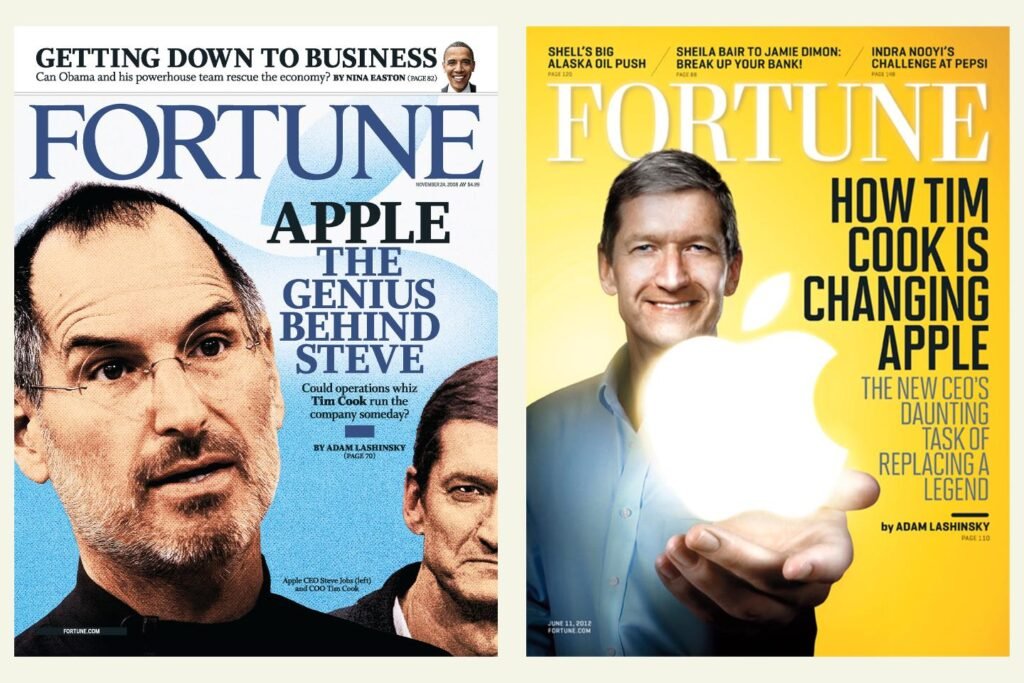
When Fortune first put Tim Cook on its cover in 2008, senior writer Adam Lashinsky introduced him as the “under-the-radar guy” who might someday succeed Steve Jobs as Apple CEO—a “genius” and an “operations whiz,” but also a “blank slate” to outsiders. Cook himself resisted the notion that he could lead Apple: “Come on, replace Steve? No.
When Fortune first put Tim Cook on its cover in 2008, senior writer Adam Lashinsky introduced him as the “under-the-radar guy” who might someday succeed Steve Jobs as Apple CEO—a “genius” and an “operations whiz,” but also a “blank slate” to outsiders.
Cook himself resisted the notion that he could lead Apple: “Come on, replace Steve? No. He’s irreplaceable.”
By 2012, when Lashinsky returned to Cupertino, he found Cook six months into his tenure, a CEO “in complete control.” Jobs had stepped down in 2011 and died soon after, and, Lashinsky wrote, “Cook consistently pays homage to the legacy of Jobs, but he doesn’t apologize for charting a new course.”
Lashinsky was back again in 2015, and by then there was no question: Under Cook, Apple had become richer, bigger, and more expansive in its ambitions. “He never tried to be Steve,” one Apple executive observed. “He tried to always be himself.”
Cook, the calm pragmatist, didn’t resemble his formidable, combustible predecessor. But he had become a visionary leader in his own right.
This article appears in the October/November 2026 issue of Fortune with the headline “Becoming Tim Cook”
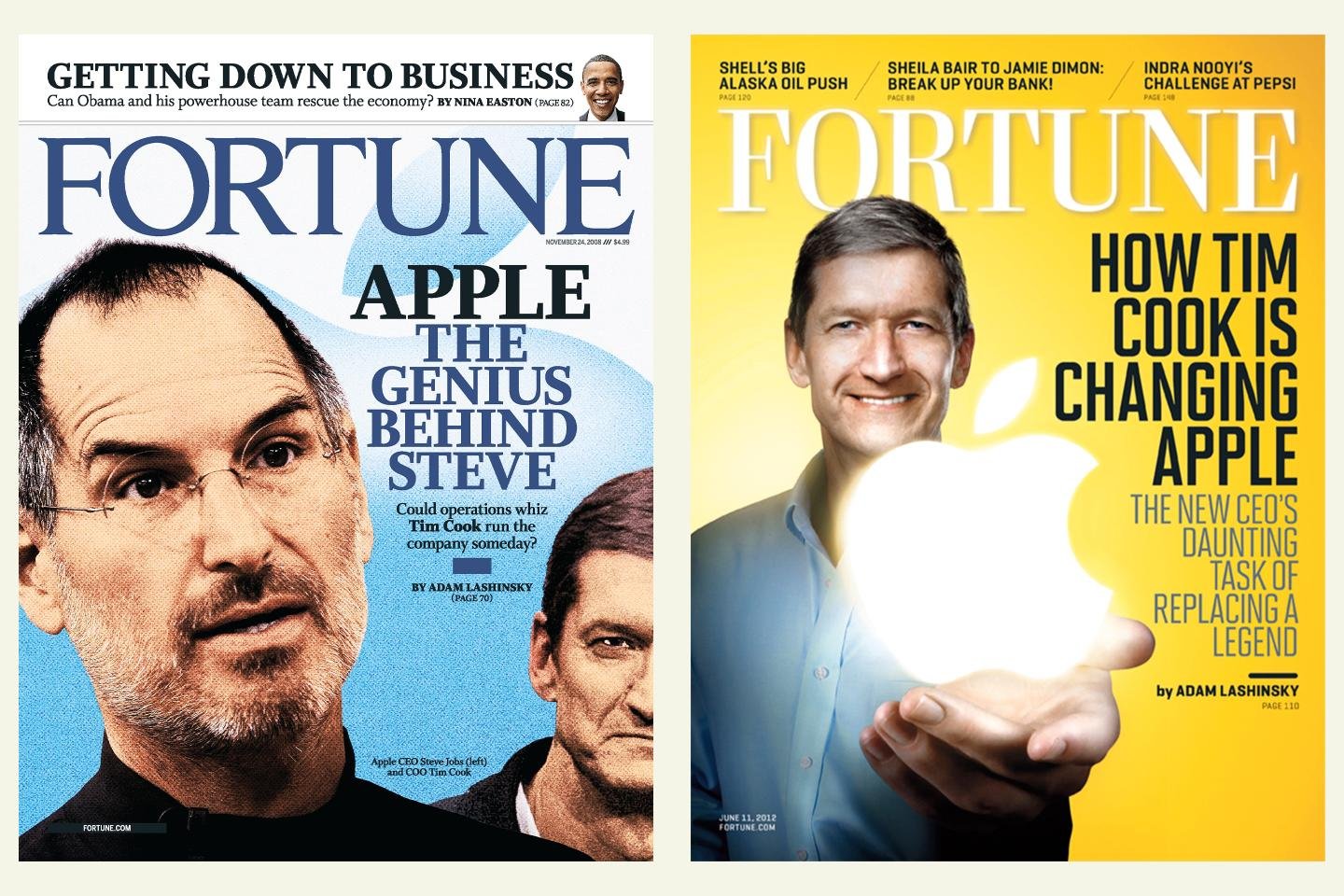
Left: JOSUE EVILLA, FROM PHOTOS BY GETTY IMAGES; right: JESSE LENZ, FROM PHOTOS BY ISTOCK AND APPLE
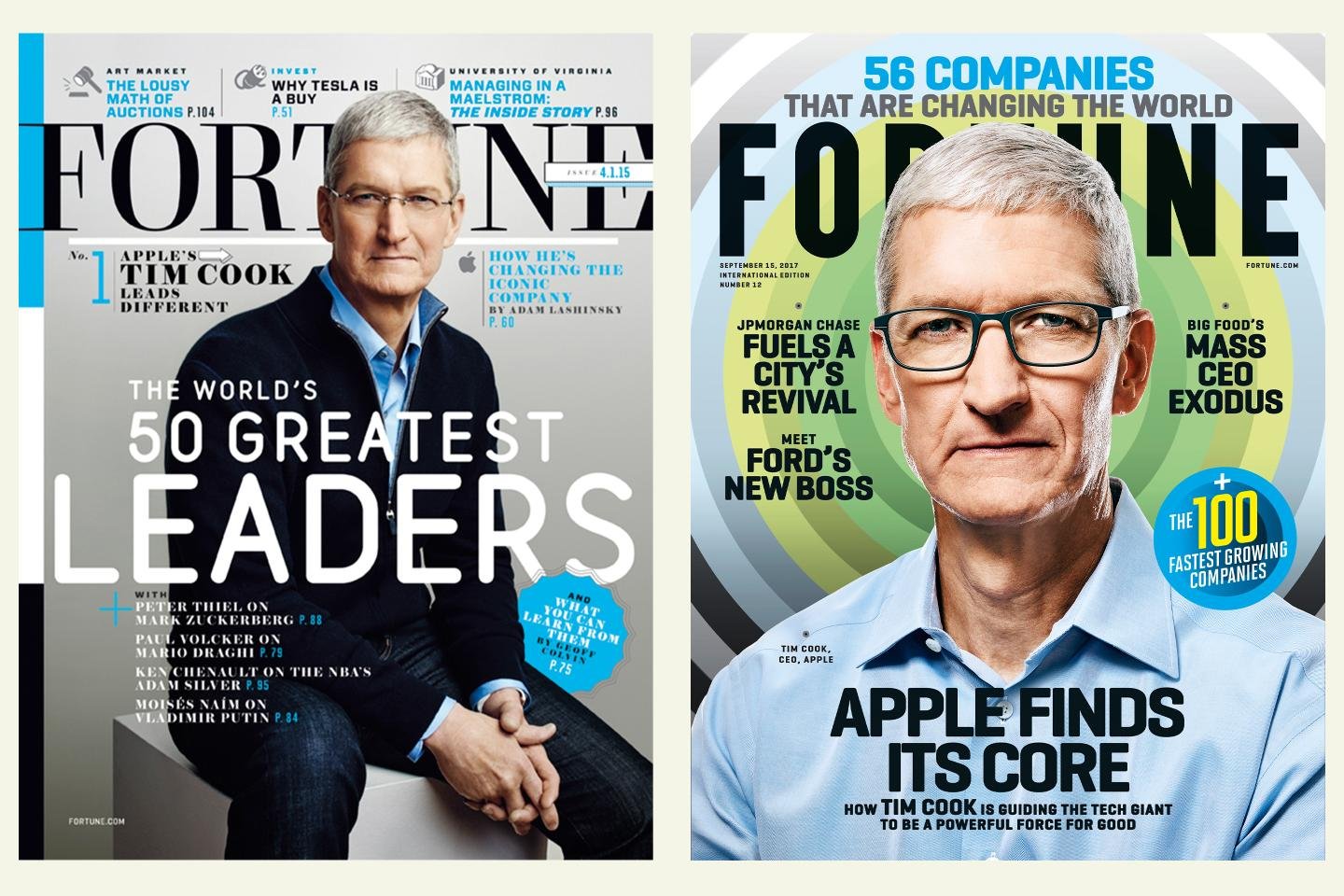
left: Spencer Lowell for Fortune; right: Joe Pugliese for Fortune
Keep following us for the latest insights.