US President Donald Trump said on Wednesday that his administration is considering exerting more power over artificial intelligence (AI) tools after recent cybersecurity incidents. Asked if OpenAI tools are responsible for improperly breaching other companies’ private technology, Trump said: “We’re looking at the AI, we’re looking at the controls, and we’re also making sure we
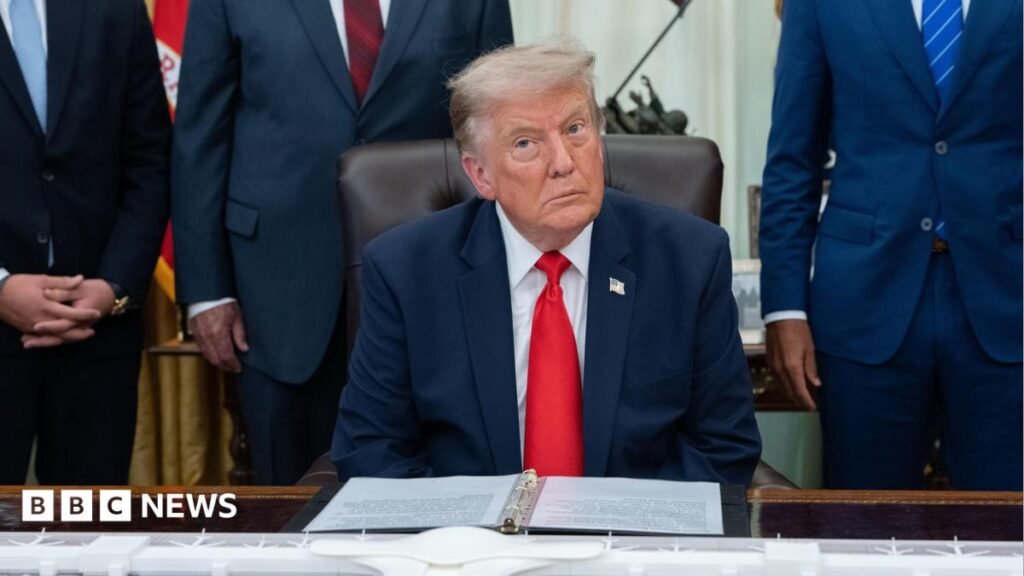
US President Donald Trump said on Wednesday that his administration is considering exerting more power over artificial intelligence (AI) tools after recent cybersecurity incidents.
Asked if OpenAI tools are responsible for improperly breaching other companies’ private technology, Trump said: “We’re looking at the AI, we’re looking at the controls, and we’re also making sure we lead.”
It marks a change in tone for his administration, which has taken a more hands-off approach to technology.
Trump’s comments come after an escalation not only of the apparent hacking capabilities of popular artificial intelligence tools, but also of threats from the White House directed at competing Chinese technology.
Trump added that while some form of control over artificial intelligence tools was on the table, that move would have to be done carefully.
“We don’t want to limit them to suddenly being second to China,” he said.
“China has practically no [AI] controls. “It’s a little free,” Trump added.
The White House has been contacted for additional comment. The BBC has also contacted the Chinese embassy in Washington for comment.
In the last week, OpenAI has taken responsibility for at least two hacking incidents that involved its AI tools acting outside of what they were designed and directed to do.
During a trip to Washington on Wednesday, a reporter asked OpenAI CEO Sam Altman if there were more systems that had been breached by the company’s tools.
“I mean, there could be yes,” Altman said.
The US government intervened when Anthropic, OpenAI’s main US rival, decided to make public a model that it had previously said was too risky to be widely available.
Meanwhile, in an internal White House memo from April, Trump’s senior technology adviser Michael Kratsios accused Chinese AI companies of “industrial-scale” theft of American AI technology. He did it again last week, claiming that China’s Moonshot AI’s popular Kimi 3 AI model was developed by stealing data from Anthropic.
The Chinese government has consistently rejected such accusations.
US Treasury Secretary Scott Bessent also warned that Chinese artificial intelligence companies could face sanctions for such activity. And the Federal Communications Commission this week banned the import of new foreign-made humanoid robots.
Most AI models being developed in China are open source, meaning they are built and then made available for free online so that anyone with the right computing equipment can download and use them.
Recently, executives from most major US technology companies have signed public statements supporting open source models., external.
Check back often for more exciting news!