A Kenyan court initially suspended the country’s agreement after legal challenges demanding protection of patient privacy. Arnold Kavaarpuo, chief executive of the Ghana Data Protection Commission, told the BBC that the Accra government had opposed the deal it was offered for similar reasons. “We had concerns about the scope and breadth of data that was
A Kenyan court initially suspended the country’s agreement after legal challenges demanding protection of patient privacy.
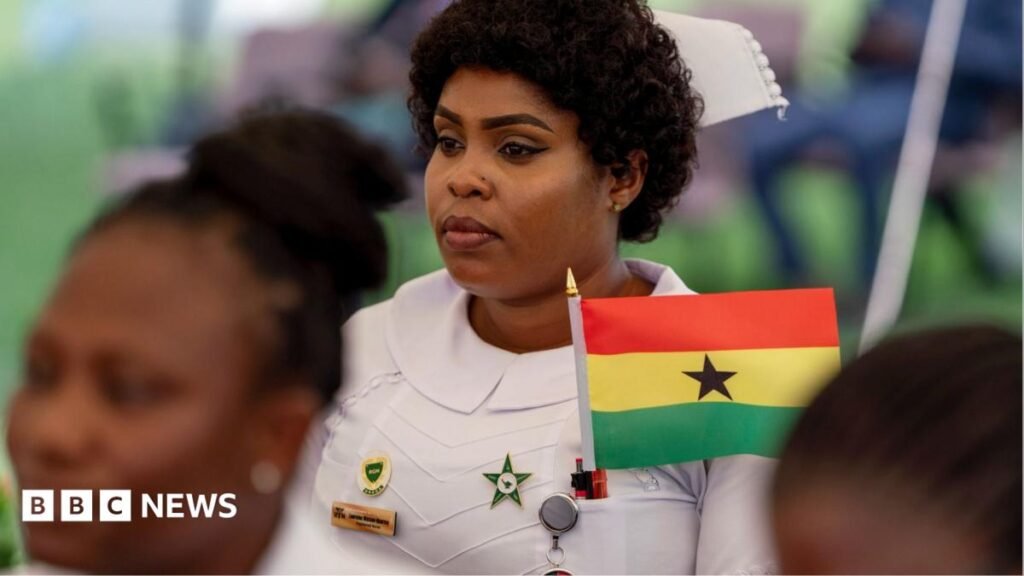
Arnold Kavaarpuo, chief executive of the Ghana Data Protection Commission, told the BBC that the Accra government had opposed the deal it was offered for similar reasons.
“We had concerns about the scope and breadth of data that was required,” he said.
“It was us generating data and passing it to US authorities, and there was no real reciprocal action when it came to data protection and Ghana’s sovereignty.
“And from our perspective,” he added, “once the data left Ghana’s borders, we had no control over what would happen to it.”
Zimbabwe also cited concerns about requests for medical data, presumably to be shared with American pharmaceutical companies, as the reason it rejected a deal.
There were no guarantees that drugs or vaccines developed from pathogens would be available to its people, a government spokesperson said, noting that the WHO already had a system for members to share data and benefit from any treatments in future pandemics.
African countries have already passed on medical information through existing programs, including USAID and Pepfar, the United States’ main program to combat HIV and AIDS.
The United States insists that sharing data and specimens is key to continuing scientific development and mutual cooperation.
And a State Department spokesperson said the material requested was the same aggregated, anonymized data that has been used for years in the fight against infectious diseases.
What has changed is the context, says Nelson Aghogho Evaborhene, a doctoral fellow in global health governance at Roskilde University in Denmark.
“It was an unequal relationship, but politically quite tolerable,” he says, “because it could be sold to the national population as an altruistic need to improve the health service.
“But now it’s changed significantly, because it’s more about transactional leverage.”
Many African nations have also learned lessons from Covid, as the race to find a vaccine demonstrated the value of data on pathogens, but left the continent scrambling to get doses for its population.
“I think one of our biggest opportunities as Africa,” says Aggrey Aluso, executive director of Resilience Action Network Africa (Rana), “is the fact that we have important information that can help build the global health security ecosystem.”
Rana joined more than 50 civil society groups to sign an open letter warning African leaders that the US terms were not guided by African national or regional interests, a view shared by South Africa.
“Frankly speaking, no self-respecting nation on Earth should agree to [two requests]”South Africa’s Health Minister Dr. Aaron Motsoaledi told the BBC.
“That [the US] They will get your pathogen if there is any pandemic or epidemic in your area.
“And they will also provide them with a genome for life. But the United States will give them money for five years.”
The debate on health diplomacy has come into sharper focus in recent weeks following the spread of a new Ebola outbreak in the Democratic Republic of the Congo.
For more tech updates, stay tuned to our blog.