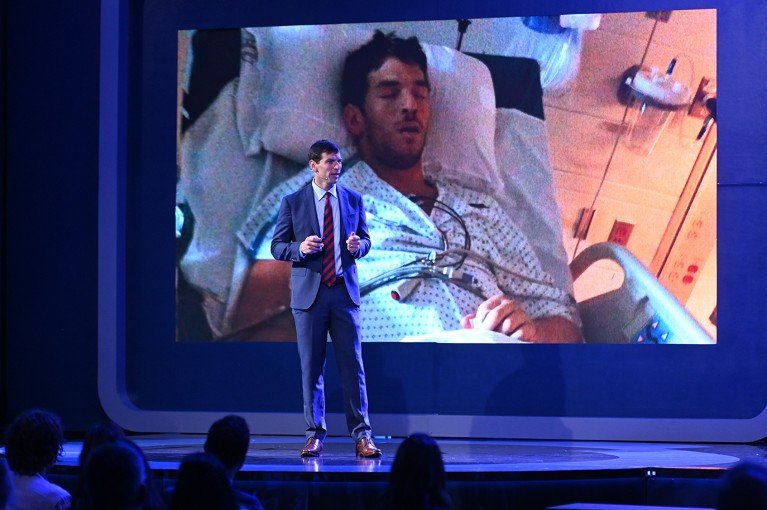
David Fajgenbaum discovered how to repurpose a drug to treat his own rare disease and has dedicated much of his career to repurposing drugs. Credit: Noam Galai/Getty Images for Clinton Global Initiative As a child, molecular biologist Francesca Granata had episodes of skin pain so excruciating that she could not bear even a hug from
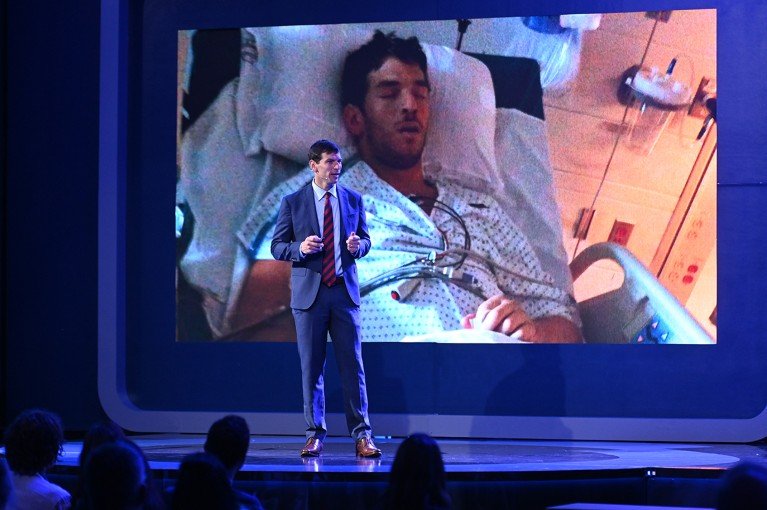
David Fajgenbaum discovered how to repurpose a drug to treat his own rare disease and has dedicated much of his career to repurposing drugs. Credit: Noam Galai/Getty Images for Clinton Global Initiative
As a child, molecular biologist Francesca Granata had episodes of skin pain so excruciating that she could not bear even a hug from her mother. The pain, which felt like boiling water scalding her skin, would relent only after ten days spent in a darkened room. Yet doctors suggested repeatedly that her pain was psychological. “A lot of physicians said things like, ‘You are so beautiful, why are you here?’” she recalls.
“Deep down, I knew something was wrong,” Granata says. In 2003, at age 16, she consulted Orphanet, now a database for patients and medical professionals, and began reading it alphabetically, one syndrome at a time. She was still perusing it as a 21-year-old undergraduate student at the University of Milan in Italy when a lecturer in biochemistry described porphyrias. This group of rare genetic disorders is caused by an accumulation of porphyrins, the building blocks of heme, a component of oxygen-carrying haemoglobin. Certain forms of the condition can result in burning or itching skin.
Granata skipped to the letter ‘p’ in Orphanet and found a reference to dermatologist Gianfranco Biolcati, a specialist in porphyrias at the San Gallicano Dermatological Institute in Rome. She travelled there in 2008, where Biolcati diagnosed her with erythropoietic protoporphyria (EPP), an inherited condition in which protoporphyrins accumulate in red blood cells, causing acute, searing skin sensitivity to light, and potentially, liver disease.
“After years without a diagnosis, erythropoietic protoporphyria has become not only my disease, but also the focus of my work,” Granata explains. In 2011, as a master’s student at the Policlinico of Milan research hospital, she decided to pursue a research career in the field of porphyrias. She is now a specialist there in rare haemotological diseases and inflammation. In parallel, Granata founded Vivi Porfiria, a patient-advocacy organization in Italy created to “give a voice to people living with porphyria, raise awareness and promote early diagnosis”. In 2018, she co-founded the International Porphyria Patient Network, a global patient-advocacy group to connect national porphyria organizations and promote international collaboration.
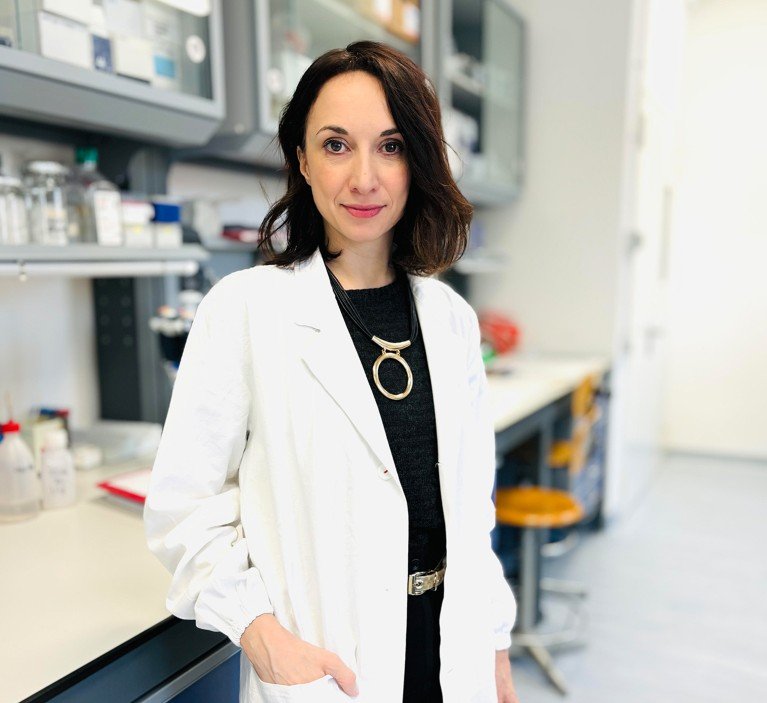
Francesca Granata has created patient advocacy groups to raise awareness of porphyrias, rare genetic disorders, and is driven to find a cure for herself and others. Credit: Francesca Granata & Valentina Brancaleoni
It might seem unusual for scientists to study rare diseases that they have, but researchers who choose this path often cite altruism as their impetus. Those interviewed by Nature’s careers team say that their personal experience with an illness enables them to empathize with other patients, driving them to find better therapies for themselves and others. Some choose to advocate for their community and a better understanding of the challenges faced by those who have a rare syndrome. Although they recognize that there is potential bias in studying their own disease, they also point out that they are less conflicted in other ways because they have a personal stake in the science. Many feel empowered by their increased understanding of the disease and deeply fulfilled by their pursuit of new or improved treatments for illnesses with no known cure.
For Granata, her own pain “drives my soul, my person” to find drugs or make other discoveries that can increase the quality of her life and those of other people with EPP.
Fuelled by the familiar
Biomedical researcher Sonia Vallabh feels compelled by her family history to develop preventive drugs for prion disease, a rare, lethal neurodegenerative disease that is caused by misfolded proteins that kill neurons. In 2010, Vallabh watched as her 52-year-old mother succumbed to a rapidly progressive dementia that was revealed on autopsy to be genetic prion disease.
Meet the biotech-company founders driven by their child’s rare disease
After her mother died, Vallabh was tested for the mutation in the PRNP gene that codes for the prion protein. (The normal version of the prion protein seems to play a part in supporting nerve cells.) She, too, carries a gene mutation for prion disease. But instead of submerging herself in grief, she quit her career in law and retrained as a scientist. “I needed to educate myself so that I can be my own advocate going forward,” she says. “I didn’t feel like there was an ‘ignorance is bliss’ option — not for me.”
She and her husband, computational biologist Eric Minikel, now co-lead an initiative to develop preventive drugs for prion disease at the Broad Institute of MIT and Harvard in Cambridge, Massachusetts. In a clinical trial called PRiSM that began in April, they are evaluating the safety, tolerability and pharmacokinetics of using siRNAs, or small interfering RNAs, which regulate gene expression, to treat people with symptomatic prion disease.
Their goal is to reduce the amount of normal prion protein found across the brain, because that is what gets misfolded in people with prion diseases, Vallabh explains. “In pre-symptomatic people at risk, if we can lower the amount of normal protein, I’m hoping we can delay or even prevent the formation of the first misfolded prion.”
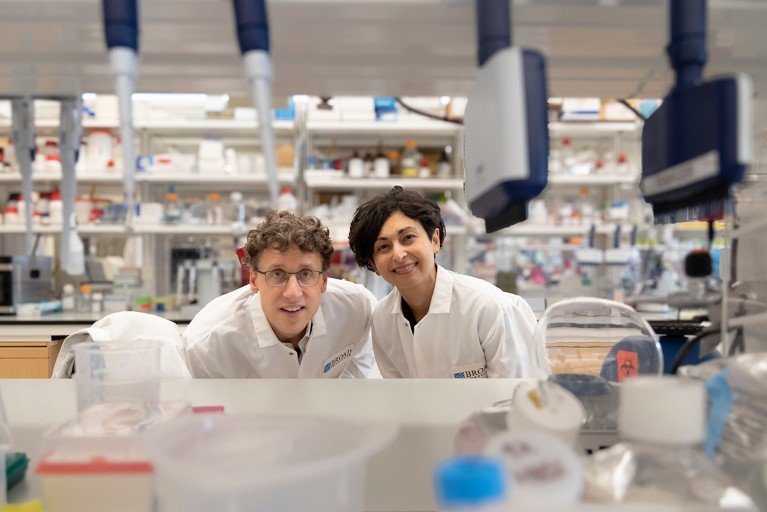
Sonia Vallabh (right), along with her husband Eric Minikel, runs a clinical trial to test potential therapies for people with symptomatic prion disease. Credit: Allison Colorado
Some might see a conflict of interest in both experiencing and studying a specific disease. But Vallabh disagrees: “After many years of doing this, I really believe, as I did in the beginning, that I am as close as it gets to a person without a conflict of interest. I will never do something just to advance my own career, just to keep the lights on in the lab, to try to get a high-impact paper or to get a promotion,” she says.
“This is not to malign the people in my field,” she hastens to add. On the contrary: “If someone beats me to developing a safe and effective therapy and preventive treatment for prion disease, no one will be happier than me.”
Physician-researcher David Fajgenbaum, who as a 25-year-old medical student in 2010 was diagnosed with a rare immune disorder, Castleman disease, also sees the potential for bias.
“In biomedical research, we’re all looking for patterns,” Fajgenbaum says. The best way to ensure against bias towards false patterns, he says, “is to surround yourself with brilliant people and ask them what they think. Build in external checks from colleagues and collaborators to make sure that you’re looking for real signals.” He also recommends that researchers “always work with institutional review boards. These ethics committees exist for a reason.”
Several scientists emphasized the empathy they feel for people with the same illness. That insight could help with designing better clinical trials, says stem-cell biologist Valentina Fossati at the Jackson Laboratory-NYSCF (JAX-NYSCF) in New York City.
When she was diagnosed with the autoimmune disorder multiple sclerosis (MS) at age 30, it was as if “a huge bomb exploded in my head”, says Fossati. At the time, she was doing a postdoc at the same institution (then called the New York Stem Cell Foundation, or NYSCF), studying infection-fighting T cells. Although her first impulse after the diagnosis was to quit science and return home to Italy, she decided, after a conversation with the late Susan Solomon, co-founder of the NYSCF, to stay at the institute and study MS instead.
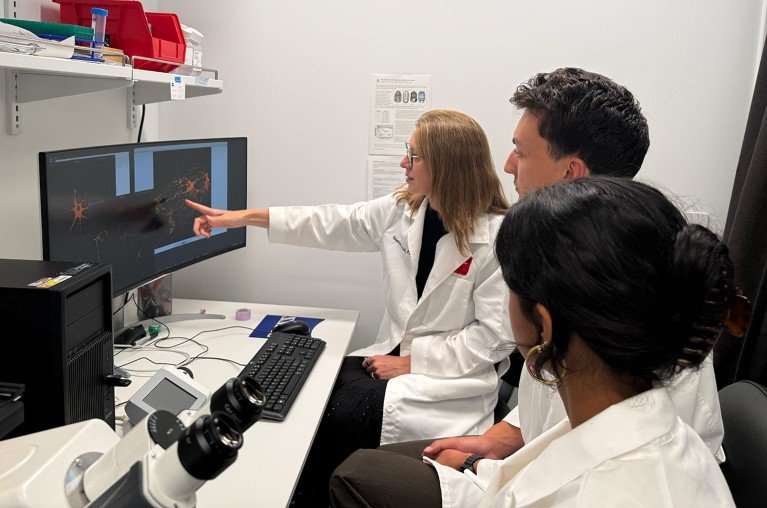
Valentina Fossati (pointing at screen) says that patient-researchers are well placed to study their disease because they understand the challenges of living with it. Credit: Rebecca Arian
“I was extremely scared at the beginning,” Fossati says, but after reading as much as she could, she became fascinated by MS, in which a person’s own immune system attacks myelin, the fatty protective sheath that wraps around nerve fibres. She now leads JAX-NYSCF’s MS programme, and has pioneered laboratory protocols to transform human stem cells into all the main cell types of the brain. These include oligodendrocytes — the cells that generate myelin sheaths around neurons in the central nervous system. In doing so, Fossati hopes to further understand the pathogenic mechanisms driving MS.
There are benefits to being a patient-researcher, she insists. “You can be more mindful of designing a clinical trial where the patient can be more compliant, because you design it around things you have tried,” Fossati says. For example, she notes that patients often fail to comply with a trial regimen because of medication side effects, a fear of needle jabs or anxiety about being enclosed inside the narrow tube of a magnetic resonance imaging (MRI) machine while it booms and bangs.
As someone who has endured these trials herself, Fossati says that she can understand what would be discomfiting for a participant and suggest a change to a protocol, such as using a skin cream instead of an injectable drug.
A purpose in re-purposing
Like many researchers interviewed, Fossati says that her biggest inspiration comes from the community of people she has met, both colleagues and others with the disease. Similarly, Fajgenbaum pays tribute to the talented collaborators who have worked with him on his signature initiative, Every Cure. The project uses artificial intelligence to scan thousands of existing medicines that might be repurposed to treat rare diseases — including aggressive cancers and often-fatal inflammatory disorders.
When drug discovery fails: scientists share their frustrations with the process
In the early years after his diagnosis, “I almost died on five separate occasions”, Fajgenbaum recalls, because his disease caused multi-organ system failure. Originally, doctors treated him with aggressive chemotherapies designed for blood cell cancers, but he kept relapsing. By running his own blood tests and scouring the medical literature, he discovered that an immunosuppressant drug, sirolimus, which inhibits a proliferative cell pathway called mTOR, could stop the activation of his immune system1. “This repurposed drug has prevented a relapse of my condition for over 12 years. It saved my life,” he says.
Although his lab at the University of Pennsylvania in Philadelphia focuses on Castleman disease and similar disorders, Fajgenbaum now devotes most of his energy to Every Cure. “We’ve reviewed over 14,000 of the best repurposing ideas from our platform and we currently have 12 active repurposing programmes,” he says. Two of those programmes have found drug regimens that have been shown to be effective in preliminary clinical studies to treat Rosai-Dorfman-Destombes disease, a non-cancerous overgrowth of white blood cells, and Bachmann-Bupp syndrome, which leads to developmental delays.
For anyone planning to research their own disease, Granata advises having a certain level of detachment. To maintain her objectivity, she invokes what she calls her “anthropological brain” to advise patients on effective treatments and against unproven remedies. Using her anthropological brain, she explains, means not involving emotions, and not taking it personally if your results don’t come out as expected.
Likewise, Fossati advises compartmentalization. If a researcher feels passionate about studying their own disease, they should do it, she says. But, she cautions, “if you have a more progressive disease or you know that there is no available cure now, it may become overwhelming. So, it’s important that you compartmentalize to separate your personal life from what you are studying, otherwise the anxiety really heats up.”
For Fossati, “working at the cellular and molecular level helps me maintain some distance from concerns about what the future may hold for me personally”. Focusing completely on the task at hand helps her to compartmentalize, she says. “When you choose to work on a disease that affects you personally, you gradually develop your own strategies for managing that balance in a way that works best for you,” she says.
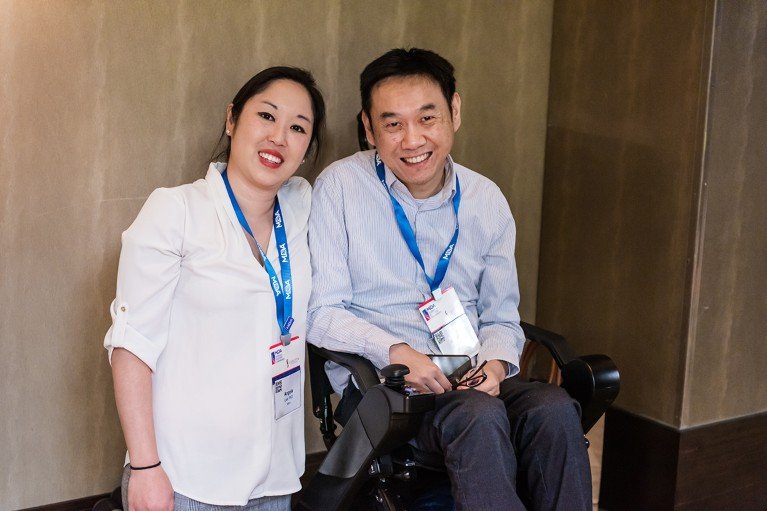
Monkol Lek (right) and his wife Angela Lek both work in the field of muscular dystrophy and related neuromuscular diseases.Credit: Angela Lek
Monkol Lek, a geneticist at Yale School of Medicine in New Haven, Connecticut, offers some practical advice. For those investigating their own disorder, he suggests getting involved with the rare-disease community and going to patient conferences. It also really helps to “spend a day in a lab that researches your disease”, he says.
Check back often for more exciting news!