A drug task force in Mississippi is urging people to avoid kratom after authorities found packages of the substance while investigating the deaths of two University of Mississippi students. The warning Tuesday came despite no “confirmed information” that kratom contributed to either death, Lafayette County Metro Narcotics said in a news release. The students were
A drug task force in Mississippi is urging people to avoid kratom after authorities found packages of the substance while investigating the deaths of two University of Mississippi students.
The warning Tuesday came despite no “confirmed information” that kratom contributed to either death, Lafayette County Metro Narcotics said in a news release. The students were found Monday afternoon in different locations, one on campus and the other off campus, a university spokesperson said.
U.S. health officials and states have increasingly scrutinized kratom, an herbal extract that acts as a stimulant at low doses and a sedative at high doses, over the past decade. Kratom is legal at the federal level, but some state and local governments have banned the substance and federal authorities have issued warnings about its risks.
Two state agencies were working to expedite toxicology reports for the students, Mississippi Gov. Tate Reeves said in a statement Wednesday.
“Mississippi is praying for the families and friends of the two Ole Miss students during this incredibly difficult time,“ Reeves said.
Authorities said they had no evidence the deaths were connected but noted the kratom found at the scenes was sold at a retail store. Officials did not name the store or say whether any criminal charges would be filed.
“Out of an abundance of caution, we encourage everyone to avoid kratom and any other medication or substance that was not prescribed to you or obtained from a trusted, regulated source,” the task force’s news release said.
The university said Thursday that it was not releasing the students’ names yet out of respect for the families’ wishes.
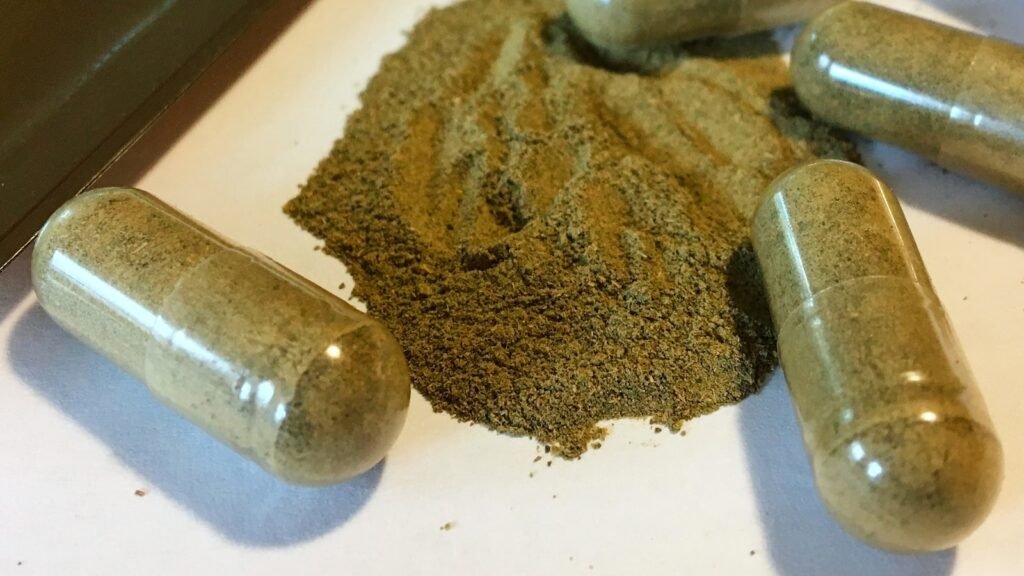
It is used in capsules, powders and liquids that are often sold in gas stations or smoke shops. Proponents say that in its pure form, kratom is a safe, natural herbal supplement that can help manage pain, anxiety and depression and ease the effects of opioid withdrawal.
Doctors who treat addiction, however, say people can quickly become dependent on it, leading to withdrawal symptoms. A U.S. Food and Drug Administration webpage is blunt: Don’t use it.
The agency says it carries the risk of serious adverse effects, including liver toxicity, seizures and substance use disorder.
In rare cases, it’s been associated with deaths, though kratom was usually used in combination with other drugs in those cases, and the contribution of kratom in the deaths is unclear, the agency says on its website.
Mac Haddow, with the American Kratom Association, said the FDA and states that have banned kratom are conflating the natural product with synthetic and chemically manipulated ones, which are associated with adverse effects and even deaths.
Haddow, a senior fellow on public policy with the association, said he’s heard numerous people tell lawmakers over the years how kratom has improved their lives.
“Some believe it saved their lives because it allowed them to get off of opioids,” he said.
Podcast host Joe Rogan and Cindy Crawford’s late son, Presley Gerber, have talked about their experiences using kratom.
Last year, the FDA recommended a ban on products with concentrated levels of 7-hydroxymitragynine, a chemical found in only trace amounts in natural kratom.
Mallory Pullman, managing director at Mississippi Poison Control, said she’s seen an increase in such concentrated products in recent years, and consumers may not be able to distinguish them from natural kratom.
“Until you know what product you’re working with, whether it’s kratom or some of these highly concentrated derivatives, you really have to be careful about buying a product and just taking it arbitrarily,” she said in a phone interview with The Associated Press.
Others, including Mississippi, have regulated it, in part by requiring people to be 21 or older to buy it. Both the city of Oxford and Lafayette County, where the University of Mississippi is located, have bans in place.
North Dakota Gov. Kelly Armstrong signed a bill this month restricting the sale of kratom products after declaring kratom a public health crisis this summer and calling a special legislative session to address it. The state has had 50 deaths associated with kratom since 2019, according to the governor’s office.
Despite the bans and restrictions, use of kratom in the U.S. has increased, according to researchers at the University of Michigan and Texas State University.
In a paper published this year, they found kratom use in the U.S. was at an all-time high, with more than 5 million people saying they had used it in their lifetime. The group includes more than 100,000 children ages 12-17.
“Policy changes regarding kratom and 7-OH products are needed in all states if we are serious about protecting our children,” the study’s main researcher, Sean McCabe, said in a statement in the University of Michigan News.
___
Associated Press writer Dave Collins in Hartford, Connecticut, contributed.
For more tech updates, stay tuned to our blog.