As staff at the Lower Manhattan headquarters of Macmillan Publishers headed into work one morning in January 2024, they filed past something strange on the walls—flyers welcoming a new member of the team named “NOA.” The cafeteria was festooned with purple balloons and banners, according to several workers present, and with NOA’s name in light-up
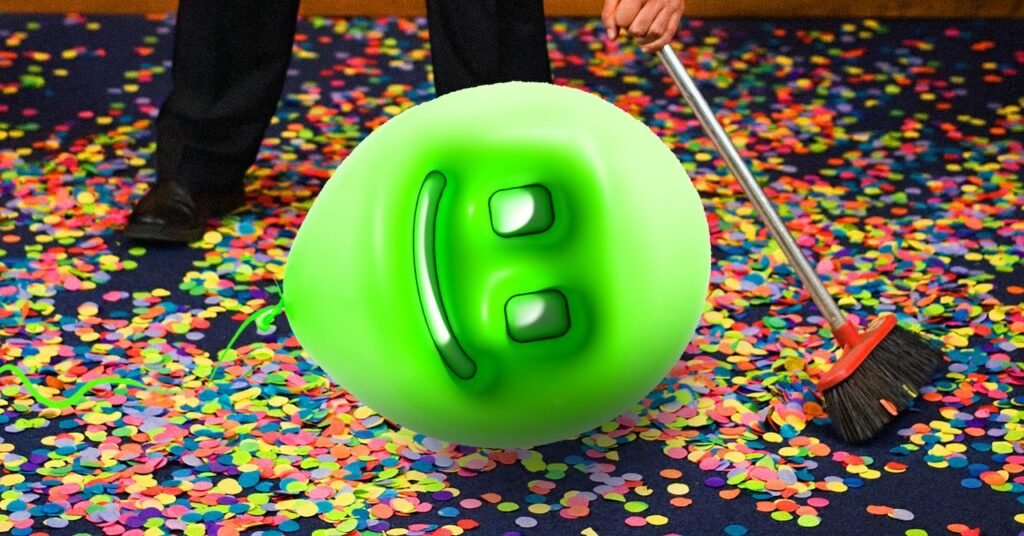
As staff at the Lower Manhattan headquarters of Macmillan Publishers headed into work one morning in January 2024, they filed past something strange on the walls—flyers welcoming a new member of the team named “NOA.” The cafeteria was festooned with purple balloons and banners, according to several workers present, and with NOA’s name in light-up marquee letters. A plate full of doughnuts spelled out “NOA IS HERE.”
NOA was an acronym for No Ordinary Assistant, which many of Macmillan’s human assistants found “offensive,” multiple employees tell WIRED. In an email to staff, NOA was introduced as an AI chatbot developed by the German software company Chaptr, which is “backed” by Holtzbrinck, Macmillan’s parent company.
The email also assured employees NOA was “a safe environment where you can input proprietary information without the risk of sharing that data with any third party.” Ostensibly, this means NOA was a closed-loop enterprise tool that did not retain or share data for model training.
Macmillan staffers say they were warned during training sessions that NOA could hallucinate and would always need to be fact-checked by humans. Still, employees say, they were encouraged to use NOA for composing emails, drafting copy, doing marketing research, and generating ideas. Multiple staffers say they were told to “only” paste a “percentage” of authors’ manuscripts into NOA. Employees could also adjust NOA’s speaking tone, with options including “lighthearted,” “spartan,” pessimistic,” “sarcastic,” and “regretful.”
One Macmillan employee remembers a Chaptr representative reassuring workers during an early in-person training session that Chaptr understood publishers were dealing with something very important—content. “And here I thought we were publishing literature,” the employee says.
Later in 2024, Macmillan employees were encouraged to use NOA to generate their goals for performance reviews. “We built a specialized prompt to have NOA write goals for you!” one email read.
Several Macmillan employees say NOA was unhelpful and unreliable. “It was terrible, and no one used it,” one says. WIRED spoke with multiple publishing employees for this article, including some who have since left their employers. WIRED is not naming these employees, nor the authors we interviewed, because they are concerned about professional repercussions.
In October 2025, Macmillan staff learned via a company-wide email that Chaptr would be sunsetting NOA. Since then, workers say, leadership has been attempting to integrate Google Gemini into the publishing process. Some staffers subsequently experimented with using Gemini to evaluate submission letters from literary agents, but the Gemini-generated evaluations were “useless,” according to one editor.
Check back often for more exciting news!