NASA interns at Johnson Space Center are applying their talents to real-world projects while working alongside engineers, scientists, communicators and innovators advancing human spaceflight. Discover how these students are gaining hands-on experience, contributing to real missions, and preparing to join the nation’s highly skilled and competitive aerospace workforce. Meet the students behind the work and
NASA interns at Johnson Space Center are applying their talents to real-world projects while working alongside engineers, scientists, communicators and innovators advancing human spaceflight. Discover how these students are gaining hands-on experience, contributing to real missions, and preparing to join the nation’s highly skilled and competitive aerospace workforce.
Meet the students behind the work and find out what inspired them to pursue careers at NASA.
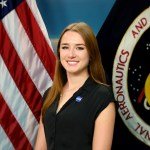
Macie Landon
Lunar Base Program Strategic Communications Intern
Macie Landon is helping to tell the story of humanity’s first outpost on the lunar surface. Using graphic design, 3D modeling, video production and other multimedia tools, create visual content that supports public outreach and internal communications of the Lunar Base Program.
Landon’s path to NASA began with a lifelong interest in space, science fiction, art, and video games. While studying visualization at Texas A&M University, he planned to pursue a career in games or animation before discovering he could apply those same creative skills at NASA.
His first internship was at the Graphics and Visualization Laboratory at NASA’s Glenn Research Center in Cleveland, where he created 3D models for virtual reality simulations.
“I had no idea I could go into multimedia design at NASA,” Landon said. “I loved and was so inspired by the creative force of all the NASA centers.”
After making connections at Glenn, Landon applied for a summer internship at Johnson, where he continues to use design to help communicate NASA’s human space exploration goals.
“Everyone at NASA is very smart, helpful and willing to share their stories,” he said. “Almost every day I have at least one memorable and surprising moment.”
Landon has also gained recognition for the collaboration behind NASA missions.
“Through my two internships, I learned how thousands of people from different backgrounds work together to achieve the same goal of benefiting humanity,” he said.
Working in strategic communications has changed the way Landon views STEM careers.
“Without someone sharing the stories of NASA’s work, much of it would go unnoticed,” he said. “NASA creatives are key to inspiring the next generation.”
In addition to creating multimedia products, Landon regularly interacts with the public at outreach events and answers questions from audiences of all ages and backgrounds.
“I’ve learned a lot about how to have meaningful and impactful conversations with people,” he said.
Looking ahead, Landon hopes to continue using design and storytelling to help people better understand NASA’s missions while inspiring future explorers.
“I hope that through my work as a NASA intern, I continue to inspire the next generation of scientists, creatives, explorers and more to be part of NASA’s mission to better humanity,” he said.
For students considering careers in STEM, Landon encourages them to follow what truly interests them.
“Explore what you really love. You might discover there’s a place for your skills at NASA, too.”
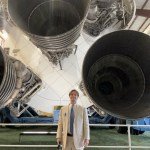
John Graham Reynolds
Research Engineering Intern in AI and Machine Learning
John Graham Reynolds develops generative artificial intelligence systems at NASA’s Advanced Operations Concepts Laboratory that help improve mission support and engineering operations for NASA’s Orion Program and other aspects of human spaceflight.
Before joining NASA, Reynolds worked for four years as a professional engineer. Seeking an opportunity to make a greater impact, he returned to graduate school and sought a job that aligned with his passion for meaningful innovation.
“NASA is the greatest symbol of American ingenuity and a beacon for public progress,” Reynolds said. “Applying here was a no-brainer.”
As a graduate intern, Reynolds has contributed to technologies supporting NASA’s human spaceflight missions.
One achievement he is especially proud of came during the Artemis II mission, when his team’s flagship AI system provided engineering support for the Orion spacecraft.
The system provided Orion flight software console operators in the Orion mission evaluation room with an AI-powered interface to quickly access and summarize internal engineering documentation, allowing engineers to analyze failures, troubleshoot problems, and contribute to Orion operations during Artemis II.
“Helping support a mission that took humans further from Earth than ever before was an incredible experience,” he said.
Working alongside NASA engineers has also changed the way Reynolds thinks about a career in STEM.
“NASA is full of smart people, but, above all, it is full of people who are passionate about what they do,” he said. “That overwhelming sense of passion and purpose regularly reminds me of the value that STEM careers offer.”
Reynolds says one of the most important lessons he has learned is that innovation depends on collaboration.
“Always be open to the ideas of others and they will be open to you,” he said. “No one can solve all problems. Teamwork, collaboration and thoughtfulness are the greatest agents of improvement.”
Mentoring and networking have also played an important role in their internship experience.
“Connecting with full-time staff and other interns has opened many doors for me,” Reynolds said. “I know those connections will support me for the rest of my life, inside and outside of NASA.”
Looking ahead, Reynolds hopes to continue developing technologies that strengthen NASA’s missions and advance the future of space exploration.
For students considering a career at NASA, Reynolds encourages them to stay curious and follow what really interests them.
“Find what you love, even if it’s not STEM,” he said. “Explore everything that interests you. Never stop.”
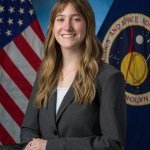
morgan grillley
Photography Intern
Morgan Gridley is helping document the next chapter of human spaceflight as a photography intern at Johnson. From astronaut portraits and crew training to announcements of important missions, his photographs help tell the story of NASA missions. Now in his second summer internship, Gridley is building on the experience that sparked his passion for documenting exploration.
“Working alongside so many talented photographers, engineers, scientists, astronauts and creatives has shown me how many different ways people contribute to NASA’s mission,” Gridley said.
Gridley learned about the internship after NASA photographer Bill Stafford, an East Texas A&M University alumnus, shared the opportunity with professors. His teacher passed it to the class and Gridley introduced it immediately.
“I’ve always loved space and exploration, so it seemed like an amazing experience,” he said.
Gridley’s work included photographing one of NASA’s WB-57 aircraft during takeoff. Those images later supported news coverage highlighting the plane’s role in aerial images during the Texas floods.
She was also one of the photographers covering the Artemis III crew announcement, and some of her images appeared in news coverage of the historic milestone.
Gridley credits her mentors for helping her grow during both internships.
“I consider each member of my team to be one of my mentors,” he said. “Even after finishing my first internship, I stayed in touch by sharing my work and getting feedback on my photographs.”
Photographing astronauts in the studio has become one of Gridley’s favorite tasks.
“When I started photography, I focused mainly on landscapes and didn’t like taking portraits,” he said. “Now, portrait photography is my favorite part of what I do.”
Looking ahead, Gridley hopes to continue documenting NASA’s work as part of the photography team.
“Being able to capture moments that are part of NASA history has been an incredible experience and I would love the opportunity to continue telling those stories through photography,” he said.
For students considering careers in STEM and creative arts, Gridley encourages them to stay curious and take advantage of new opportunities.
“Don’t be afraid to step out of your comfort zone,” he said. “Staying open to new experiences can lead to opportunities and interests you never expected.”
Learn more about NASA internship programs.
For more tech updates, stay tuned to our blog.