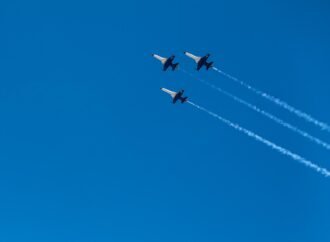
As part of the agency’s Inspiration Tour, NASA will conduct a flyover at the University of Alabama vs. Texas A&M football game in Tuscaloosa, Alabama, on Saturday, Oct. 24. NASA Administrator Jared Isaacman will pilot one of three F-5 fighter jets during the flyover, highlighting NASA’s contributions to aeronautics and the agency’s continued commitment to
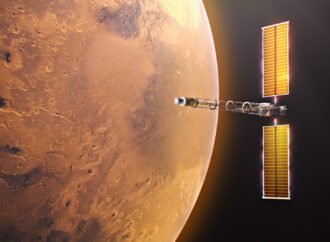
Destined for Mars and beyond, NASA’s Space Reactor-1 (SR-1) Freedom will be humanity’s first fission-powered spacecraft to travel outside Earth’s orbit. Announced during NASA’s “Ignition” event, this mission will demonstrate nuclear electric propulsion in deep space, and progress is underway on its key element: the nuclear power module. To expedite development of the spacecraft, NASA
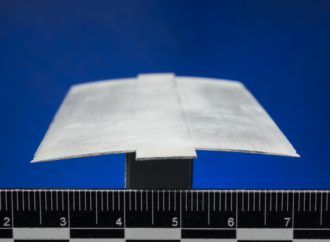
NASA researchers are developing the future of flight on Mars, laying the groundwork for helicopters with the ability to fly higher and farther while conducting science on the Red Planet. Using high-fidelity computer simulations and wind tunnel tests, engineers are reimagining the rotorcraft blades that could carry the next generation of Mars flyers. NASA’s Ingenuity helicopter
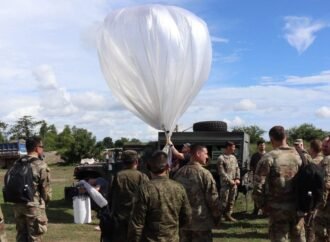
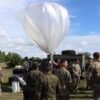
The US Army is looking to expand its use of high-altitude balloons as the service builds out its capabilities near and in outer space. These balloons operate in the stratosphere, roughly 60,000 to 100,000 feet above Earth, the space in between where conventional aircraft fly and satellites. Army officials say they see an opportunity to
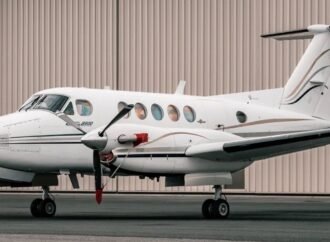
A NASA Dynamic Aviation A200 aircraft will conduct low-flying research flights over farmland near Transit, Texas, from Thursday, Oct. 22, through Monday, Nov. 9. These flights will measure gaseous and particulate emissions from animal feeding operations. Agricultural emissions represent an important and understudied part of Earth’s land and atmosphere systems. The FarmFlux mission will deploy
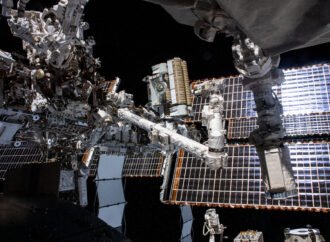
From the International Space Station’s unique position 250 miles above Earth, the Sun is a vital source of energy. Solar power supports the station’s life support systems, daily activities, and hundreds of research investigations that improve life on Earth and prepare humans for deep space exploration. Over the past five years, NASA augmented the station’s