
NATO is preparing for the next drone war, but officials warn that building millions of drones now could leave the alliance with obsolete weapons stockpiles before the fight even begins. Ukraine’s fight against the Russian invasion is showing Western militaries that they must be prepared with drone and counter-drone technology. It also shows how quickly
NATO is preparing for the next drone war, but officials warn that building millions of drones now could leave the alliance with obsolete weapons stockpiles before the fight even begins.
Ukraine’s fight against the Russian invasion is showing Western militaries that they must be prepared with drone and counter-drone technology. It also shows how quickly technology can become irrelevant on the modern battlefield.
Allies are investing in drone acquisition and training, but there are warnings against building vast arsenals that remain in wait.
Tarja Jaakola, NATO undersecretary general for defense and arms industry innovation, said that when it comes to drone and counter-drone solutions, “it’s not like acquiring hardware like we did before: buy, store and then wait.”
In this area, he said, “We need to change the way we do procurement.”

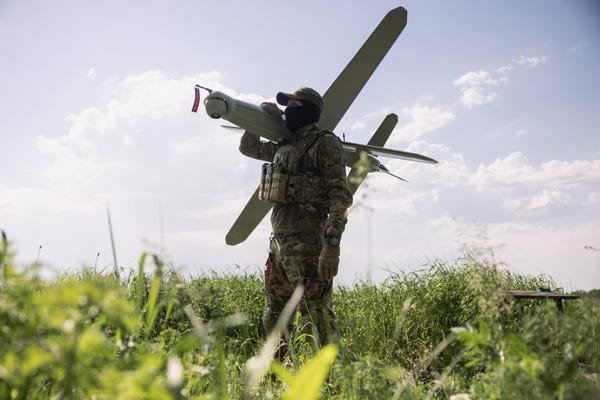
The West wants to learn everything it can about drone warfare from Ukraine. Diego Fedele/Getty Images
That means rethinking how the military works with industry so companies can produce updated equipment as soon as it’s needed, he said.
Jaakola said NATO needs to recognize “the way technology is evolving” and move toward new “business models and contract models” with industry, purchasing small quantities for training and testing, while ensuring companies have “the production capacity” and “the innovation in place” to produce drones when needed.
It can no longer simply be a transactional relationship with the industry; rather, it needs to be “a more strategic partnership that we need to build,” he said, adding that old forms of defense procurement are no longer sustainable.
Carsten Breuer, Germany’s defense chief, said building many drones now does not guarantee future readiness. Germany believes that Russia could be ready to start a war with NATO as early as 2029. He said that when it comes to drones, “can we talk about millions if in 2029 those millions are already obsolete?”
He said that for the West “it’s not just about quick acquisitions. It’s also about innovating those acquisitions.” It’s not just about having many drones. “It is also about establishing the industrial base here in other countries and committing to this industrial base on a permanent basis, and also that our armed forces are willing to test and destroy those drones. It also requires changing procedures.”
The West needs to be prepared, he said, because “we are not at peace, but we are not formally at war either.”
James Patton Rogers, a drone expert at the Cornell Brooks Tech Policy Institute, told Business Insider that a key concern for Western militaries is “how quickly drones become obsolete.”
Ukraine says it is in a constant race to overtake Russia in development and keep its drones and battlefield technology relevant. Davyd Aloian, deputy secretary of Ukraine’s National Security and Defense Council, said that “speed is of the essence” and that Ukraine’s defense industry has to move much faster than its partners are used to because, in a matter of months, “the solutions will already be obsolete.”
That urgency has reshaped the way Ukraine’s military and defense industry works. Companies supply and test equipment directly with individual units, soldiers can make their own adjustments on the battlefield, and manufacturers incorporate that feedback into updated products.
Frontline Robotics has supplied drones and weapons to more than 60 Ukrainian units. The local gun maker told Business Insider that it makes small changes to its products up to 20 times a month and major updates about every six months to maintain its edge.

Ukraine is constantly updating its drones and manufacturing new types of drones to maintain the advantage on the battlefield. Scott Peterson/Getty Images
Ukrainian companies and foreign firms supplying units are also building weapons that are easier to upgrade, including modular drones and with software that can be upgraded remotely and more quickly, without taking them out of service or redesigning them from scratch.
Jaakola said earlier this year that the alliance needs to study how Ukrainian companies get feedback from soldiers and offer new solutions “in a matter of weeks,” calling it an “important lesson we need to learn from Ukraine.”
The West may not need to rely as much on drones as Ukraine has, especially since Ukraine has often turned to drones to compensate for shortages in other weapons. But potential adversaries are investing heavily in this technology, and Western military leaders still see drones as critical to future warfare.