NASA has selected 12 new investigations to help support human explorers in space. Six will help advance the ability to produce food off-planet, while another six advance the understanding of how unique conditions associated with space exploration can impact the health and physiology of astronauts. The six food-focused investigations, supported by the agency’s Space
NASA has selected 12 new investigations to help support human explorers in space. Six will help advance the ability to produce food off-planet, while another six advance the understanding of how unique conditions associated with space exploration can impact the health and physiology of astronauts.
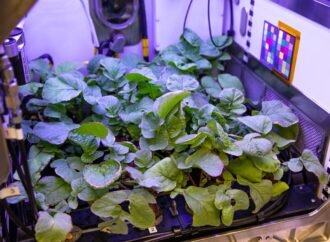
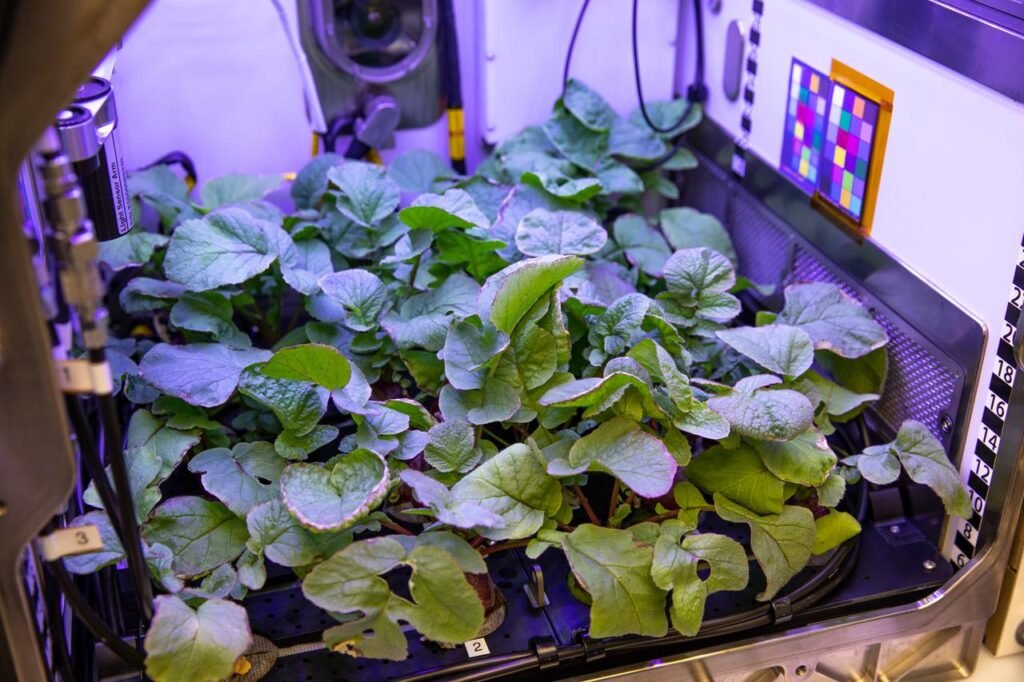
The six food-focused investigations, supported by the agency’s Space Crops grants, advance NASA’s goal of harnessing the power of plants to enhance quality of life for humans in space, as well as to enable lunar and Mars exploration. Four of the space crops proposals focus on studies of edible plants and how their growth, physiology, and associated microbial communities are affected by environmental conditions in space or on other planetary bodies.
Another proposal involves understanding mechanisms by which certain plant species, called resurrection plants, can withstand extreme, dry conditions. The last space crops proposal builds on previous studies on the International Space Station to uncover functions of algal genes, segments of DNA controlling algae survival, whose expression is modified by spaceflight. Such studies can help scientists integrate biological-based solutions into space life-support systems.
The second set of six proposals fall under the agency’s Biological and Physical Sciences Division’s focus on precision health, which seeks to unravel the mechanisms by which space exploration affects health and well-being. One proposal studies how lunar dust exposure impacts respiratory, immune, and inflammation responses. A second proposal identifies repurposed drugs that can mitigate the effects space travel has on health and physiology.
Two more of the research proposals look at how radiation combined with other stressors affects age-relevant characteristics seen in various organ and physiological systems. The final two proposals assess molecular and cellular changes induced by stressors in space that can alter gene expression or protein function. The research will identify ways to mitigate health issues and develop early-warning detection systems to notify crew of potential concerns.
The principal investigators who conduct the space biology studies come from 10 institutions across eight states. Nine of the awards are for investigators who are receiving funding from the Space Biology Program for the first time.
- Jannell Bazurto, University of Minnesota
Cultivating the Cosmos: Investigating Plant-Microbe Dynamics for Sustainable Space Farming - Miranda Haus, Michigan State University
Investigating Legume Crop Rotations and Microbial Interactions in Regolith Simulants - Andrew Settles, NASA Ames Research Center
Genetic Mitigation of Spaceflight Stressors on Production of Chlamydomonas - Christopher Taylor, Ohio State University
Hydroponic Microbes in a Low Carbon, High-Radiation Environment; Identifying the Genetic Determinants of Water- and Plant-Associated Microbial Survival in Extraterrestrial Environments - Robert VanBuren, Michigan State University
Leveraging the Natural Resilience of Resurrection Plants for Space Bioregenerative Systems - Shuyang Zhen, Texas A&M AgriLife Research
Environmental Optimization and Cultivar Selection to Enhance Dwarf Tomato Growth and Stress Tolerance for Space Agriculture
- Archana Dhasarathy, University of North Dakota
Epigenetic Memory as an Adaptive Mechanism to Microgravity and Radiation Exposure - Andrij Holian, University of Montana
Contribution of Aging to Particle-Induced Chronic Inflammation - Mert Gur, University of Pittsburgh
Probing Pathogenic Mutations Under Spaceflight-Relevant Stressors Via All-Atom Molecular Dynamics Simulations - Grace O’Connell, University of California
Persistent Spine Health Impacts of Microgravity and Radiation Following Recovery - Satoshi Okawa, University of Pittsburgh
Investigating Space Flight-Induced Brain-Heart Axis Aging and Identifying Repurposed Drugs to Mitigate Its Effects - Sanghee Yun, Ph.D., The Children’s Hospital of Philadelphia
Spaceflight-Relevant Hypercapnia Effects on Space Radiation- and Social Isolation-Induced Biological Aging: A Systems Biology Analysis of Multiple Aging Hallmarks
When fully implemented, more than $7 million in grant money will be awarded throughout fiscal years 2026-2030. These awards were made in response to research proposals submitted to ROSES-2024: Program Element E.9: Space Biology Research Studies (NNH24ZDA001N-SBR).
To learn more about NASA’s biological and physical research in space, visit: https://science.nasa.gov/biological-physical/
For more tech updates, stay tuned to our blog.