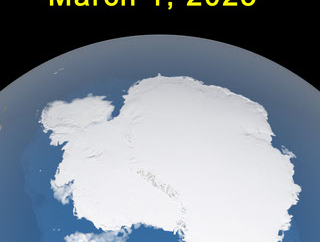
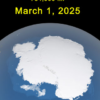
Arctic sea ice reached its annual minimum extent on Sept. 12, according to NASA and the National Snow and Ice Data Center (NSIDC) at the University of Colorado Boulder. The ice covered an estimated 1.78 million square miles (4.6 million square kilometers), tying 2008, 2010, and 2025 for the 10th-lowest minimum in the satellite record.
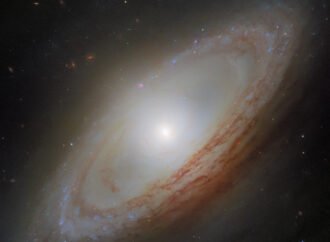
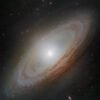
Though the spiral galaxy in this new image from the NASA/ESA Hubble Space Telescope seems serene, it hides a chaotic secret. This galaxy is NGC 4698, and it lies about 55 million light-years away in the constellation Virgo. It’s one of over a thousand galaxies in the Virgo Cluster, the nearest large cluster of galaxies bound together by
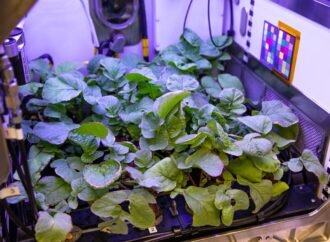
NASA has selected 12 new investigations to help support human explorers in space. Six will help advance the ability to produce food off-planet, while another six advance the understanding of how unique conditions associated with space exploration can impact the health and physiology of astronauts. The six food-focused investigations, supported by the agency’s Space
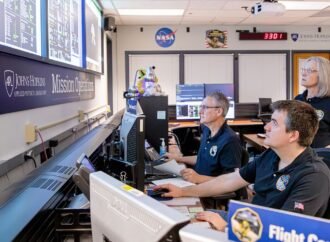
After its longest hibernation period of nearly a year, NASA’s New Horizons spacecraft has emerged in good health and is ready to begin transmitting scientific data collected in the distant Kuiper Belt, far beyond Pluto. On June 23, flight controllers at the Johns Hopkins Applied Physics Laboratory (APL) in Laurel, Maryland, confirmed that New Horizons,
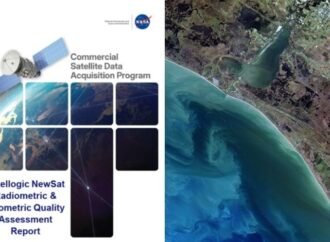
A new quality assessment report from NASA’s Commercial Satellite Data Acquisition (CSDA) program approves the use of data from Satellogic’s NewSat constellation, which includes the Mark IV and Mark V sensor generations, for scientific use. Issued March 9, 2026, the Commercial Satellite Data Acquisition Program Satellogic NewSat Radiometric & Geometric Quality Assessment Report documents the