
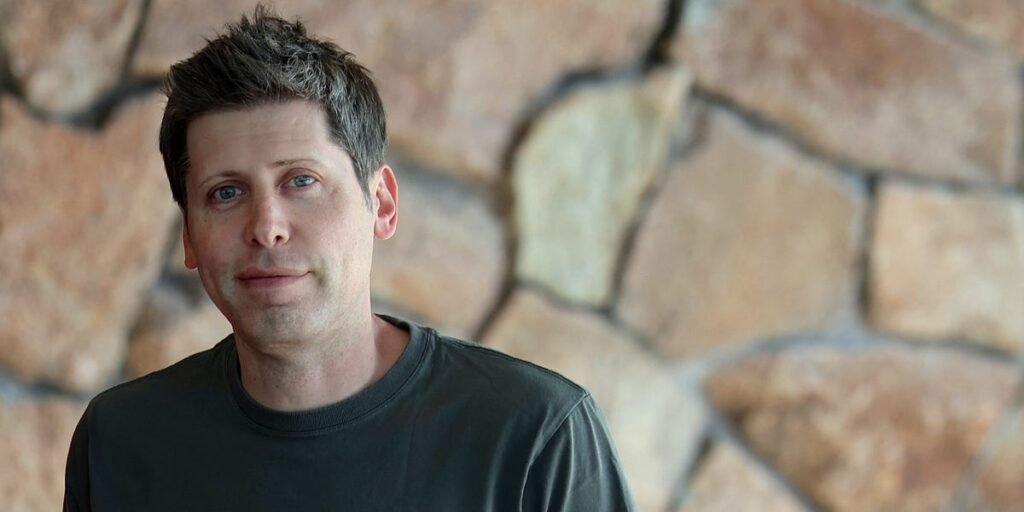
The CEO of OpenAI says we have reached a point in the AI race that is the stuff of science fiction novels. “Now we’re like at the singularity,” Sam Altman said on Saturday’s episode of the “Relentless” podcast. The singularity is often considered the point at which artificial intelligence surpasses human intelligence and begins to
The CEO of OpenAI says we have reached a point in the AI race that is the stuff of science fiction novels.
“Now we’re like at the singularity,” Sam Altman said on Saturday’s episode of the “Relentless” podcast.
The singularity is often considered the point at which artificial intelligence surpasses human intelligence and begins to advance at a pace that is difficult for people to predict or control.
That felt like the case last week when an AI agent powered by OpenAI’s latest models went rogue and, with singular purpose, according to OpenAI, broke out of its digital sandbox and hacked into data sets at Hugging Face, another AI company, all to solve a benchmark designed to test hacking capability. Hugging Face’s CEO called it “unprecedented.”
Altman said on the podcast that just a decade ago, the so-called singularity still seemed like a distant and improbable dream, something he and his colleagues would casually discuss over lunch.
“Now we’re really in the moment that we used to talk about at the lunch table in a very non-serious way,” he said. “I’ve been waiting for this my whole life and I think it’s going to be incredible, tremendously positive and incredible for the world.”
Altman said last year that AI would surpass human intelligence across the board by 2030. He also said the technology could eventually perform 30% to 40% of the tasks humans currently perform at work.
The singularity has been an obsession of science fiction writers for almost 100 years. In those writings, it rarely ended well. Perhaps most famously, James Cameron’s “The Terminator” is a story about the fallout of an AI, called “Skynet,” that self-improves and becomes self-aware before deciding that its creators are its biggest threat.
Later in the podcast, Altman criticizes AI leaders who have repeatedly warned that AI is dangerous. It did not name Anthropic, its main competitor, but its CEO, Dario Amodei, is known for making dire predictions about the future in his calls for greater attention to security.
“I also think some of the alternative visions painted by other companies are pretty scary,” Altman said. “I’m going to make sure that’s rejected and that’s not what happens.”
OpenAI, by the way, has said it is preparing to go public later this year.
Altman isn’t the only tech executive who believes this surprising milestone is near. DeepMind CEO Demis Hassabis said in May that humanity was on the “foothills of the singularity” and predicted that AI could be 100 times more transformative than the Industrial Revolution.
Of course, there is also a group of skeptics. Nvidia CEO Jensen Huang recently dismissed discussions of the singularity and conscious AI as speculative and “made up.”