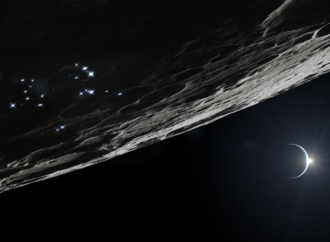
As an astronaut traverses the lunar South Pole, tribocharging from walking on the lunar surface and plasma charging from the ambient plasma generate electric charge on the spacesuit. This problem is severely compounded when entering lunar shadows and Permanently Shadowed Regions (PSRs). In these dark zones, the spacesuit can buildup a substantial negative potential due
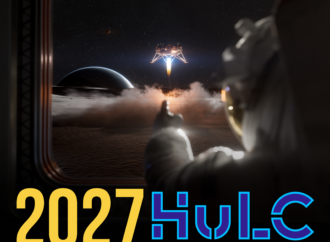
NASA’s 2027 Human Lander Challenge is seeking ideas from college and university students to help address one of the most critical needs for sustained lunar exploration: reliable communications. As NASA prepares for long-term human presence on the Moon through the Artemis and Moon Base programs, communications systems will be just as important as spacecraft and
Following a successful inaugural year of ingenuity and career building, NASA ORBIT (Opportunities in Research, Business, Innovation, and Technology) has officially returned for a second season to bring university and college student innovation to the forefront of Earth technology development and deep-space exploration. Registration for the 2026–2027 challenge is open through Monday, Nov. 16, 2026,
The NASA ORBIT (Opportunities in Research, Business, Innovation, and Technology for the Workforce) Challenge invites university and community college students nationwide to work with real NASA intellectual property and mission challenges. Choose your path: develop commercial applications of NASA patents that solve problems here on Earth (ORBIT Earth), or design next-generation technologies for space exploration
This as-told-to essay is based on a conversation with Robbie Cartwright, founder of Yorkshire Trainers. It has been edited for length and clarity. I’ve been selling things since I was a child: candy bars, fidget spinners — you name it. My middle school had a challenge to see which student could take a small investment
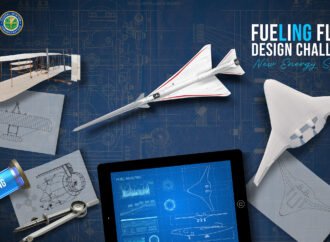
Engineering Notebook Template Scoring Rubric The 2026-2027 challenge theme is, “Fueling Flight Design Challenge: New Energy Systems.” As more and more aircraft are a part of the US’ National Airspace System (NAS), NASA and partners at the FAA, at universities, and in the aviation industry are searching for ways to increase safety, make flight more affordable, find