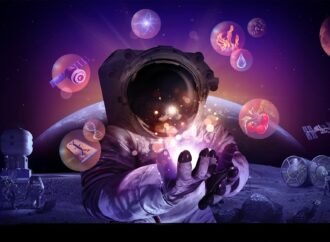
The NASA Space Biology Program within the Biological and Physical Sciences (BPS) Division investigates how living systems respond across the full spectrum of biological organization to advance understanding of how living systems respond to the unique stressors of space exploration—including microgravity, ionizing radiation, low magnetic fields, and elevated CO₂. As NASA prepares for long-duration deep
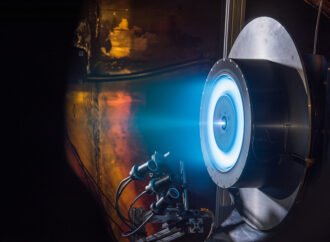
Mid-power (3-7 kW) Hall effect thruster systems have been identified by government and industry stakeholders as critical capabilities for satellite, defense, and exploration missions. Given the need for this capability, NASA is launching the Advanced Mid-Power Electric Rocket (AMPERE) Challenge. The NASA AMPERE Challenge invites U.S. commercial companies to develop and demonstrate mid-power Hall effect
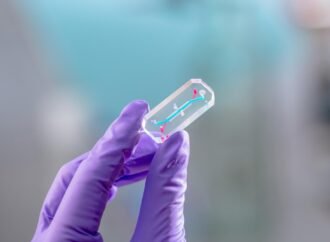
The Quantum-Enabled Predictive Preclinical NAMs for Toxicity and Safety (QuSAFE) Challenge, a collaboration between the National Institutes of Health (NIH) and NASA, advances quantum-enabled sensing for in vitro NAMs, such as organoids and microphysiological systems (MPS), to improve drug safety while reducing animal use. In vitro NAMs, such as organoids and microphysiological systems (MPS), can
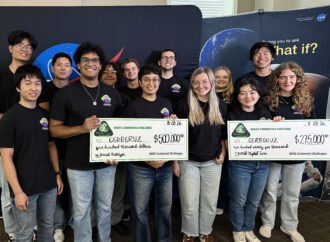
NASA named a team from the Massachusetts Institute of Technology (MIT) as the first prize winner for Phase 2 of the agency’s LunaRecycle Challenge, which focused on developing solutions for reducing waste during missions to the Moon or deep space by recycling common materials, like fabrics, plastics, foam, and metals. The Composites for Extraterrestrial Recycling By Engineering the Reuse and Upcycling of Zotek (CERBERUZ) team, comprised of undergraduate, graduate, and doctoral students at MIT, received a total of $775,000 in awards. The technology grinds mixed trash into a fine powder,
The Orbital Clarity Challenge — the sixth in the NASA TechLeap Prize series — is a collaborative effort between NASA’s Heliophysics Division, Flight Opportunities program, and Center of Excellence for Collaborative Innovation. The Heliophysics Division studies space weather, including how it heats and expands Earth’s outer atmosphere during intense solar activity, creating orbital drag through atmospheric density changes. The
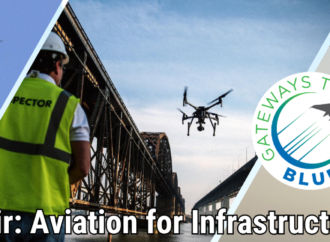
NASA’s next Gateways to Blue Skies competition invites collegiate teams to imagine innovative new ways aircraft could inspect land-based infrastructure, such as bridges and tunnels, to improve safety, reliability, and costs by 2035 or sooner. Infrastructure is the foundation of the nation’s strong economy, global competitiveness, and daily quality of life. When that infrastructure is