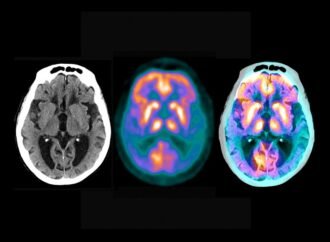
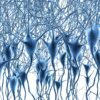
Mapping microproteins in the brain might help to understand, and treat, Alzheimer’s disease.Credit: Zephyr/SPL More than 1,000 previously overlooked ‘microproteins’ have been found in samples of human brain tissue, providing researchers with the most comprehensive database yet to study these hidden molecules inside the human brain. Dozens of the tiny proteins showed altered expression in
MONTPELIER, Vt. — The very disease that has decimated millions of American elms in the U.S. is now being used to bring the iconic trees back. In Vermont, Leila Wilson, a research ecologist with the U.S. Forest Service, is one of the scientists leading an effort to beat Dutch elm disease, which has killed tens
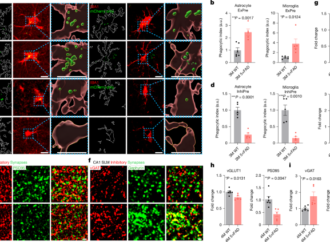
Mice All mouse experiments were performed according to protocols approved by the Institutional Animal Care and Use Committees (IACUC) at Korea Advanced Institute of Science and Technology (KAIST) and the Institute for Basic Science (IBS), adhering strictly to ethical guidelines. B6.Cg-Tg(APPswe, PSEN1dE9)85Dbo/Mmjax (APP/PS1) mice and B6.Cg-Tg(APPSwFlLon, PSEN1*M146L*L286V)6799Vas/Mmjax (5×FAD) mice were produced in our laboratory and
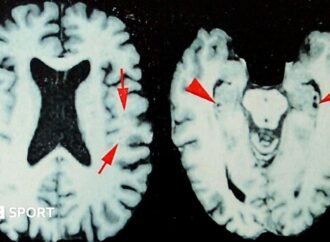
As many as 97.7% of NFL players who died between 2016 and 2021 could have had brain disease related to repeated blows to the head, a new study says. Researchers looked at 878 former players who died during that period, with 235 having donated their brains to research. Of those, 215 were found to have
Fidji Simo, the former OpenAI executive who cofounded the biomedical startup ChronicleBio, said she believes AI can eventually cure all diseases, but smarter models alone won’t get us there. In an X post on Monday, Simo responded to Anthropic CEO Dario Amodei, who wrote over the weekend that AI companies need to deliver concrete breakthroughs
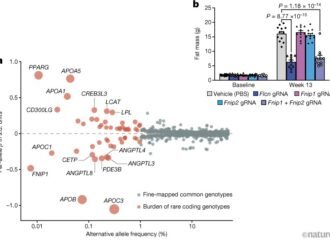
RESEARCH BRIEFINGS 05 August 2026 A study of more than one million people shows that rare genetic variants that disrupt the FNIP1 gene are associated with a favourable metabolic profile and a roughly 60% lower risk of cardiometabolic disease than the general population. Silencing genes in the FNIP1 pathway in mice induces fat breakdown and