VIDEO REVIEW: Tesla Model Y L: The 6-seater variant of the popular electric SUV arrives in Australia
- AI, ai coding assistant, AI regulation, Artificial Intelligence, openai, Reviews, Tech, Technology, Tesla, Vehicles
- March 29, 2026

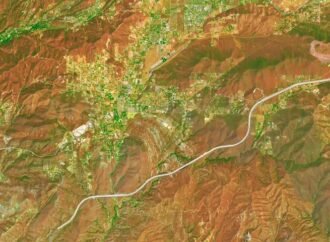
Every month, NASA Earth Observatory features a puzzling satellite image. The September 2026 puzzler appears above. Your ChallengeIdentify the location shown in this satellite image. Share what clues you see, where you think it is, and what makes this place interesting or unique to you. How to AnswerSubmit your response using this form and select “Puzzler Answer” as the
READ MORE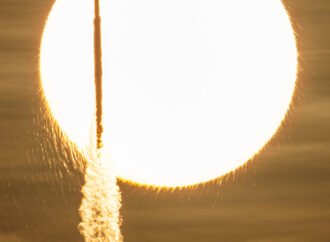
NASA’s Nancy Grace Roman Space Telescope, aboard a SpaceX Falcon Heavy rocket, transits the Sun during launch from the agency’s Kennedy Space Center in Florida on Aug. 30, 2026. Roman is named after the agency’s first chief astronomer. Roman will survey billions of stars and galaxies with a field of view far larger than Hubble’s,
READ MORE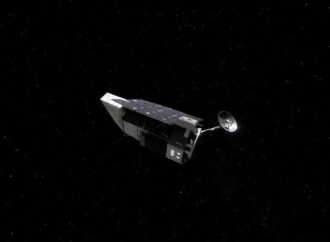
Beauty pass of Roman, coming around from behind with high-gain antenna rotating. Credits: NASA’s Goddard Space Flight Center/Conceptual Image Lab Roman is making its three-month journey from Earth to Sun-Earth Lagrange Point 2, or L2. Along the way, Roman is undergoing a process called commissioning, where systems are turned on, adjusted, calibrated, and prepared for
READ MORE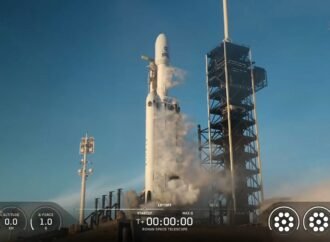
Explanation: A new telescope has been launched into space to study the universe. The Nancy Grace Roman Space Telescope (RST) has the same size main mirror as the Hubble Space Telescope (HST) but sees 100 times more sky during each snapshot. This is possible because when compared to HST, RST’s main mirror is more curved,
READ MORE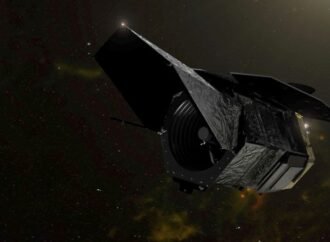
The field of view of the Nancy Grace Roman Space Telescope (artist’s illustration) will be roughly 100 times bigger than that of the Hubble Space Telescope. Credit: NASA/Handout via Reuters The largest infrared digital camera ever built and its scientific companion, a massive mirror originally designed for a spy satellite, are now safely in orbit,
READ MORE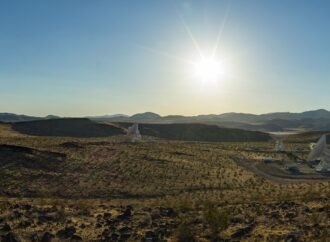
Five antennas soak in the summer sun at the Deep Space Network’s Goldstone complex near Barstow, California, in August 2026. The recently completed Deep Space Station 23, a 34-meter (114-foot) beam-waveguide antenna, can be seen to the right of the frame in the foreground. The other three 34-meter antennas are, from left, DSS-26, DSS-25, and DSS-24.
READ MORE