VIDEO REVIEW: Tesla Model Y L: The 6-seater variant of the popular electric SUV arrives in Australia
- AI, ai coding assistant, AI regulation, Artificial Intelligence, openai, Reviews, Tech, Technology, Tesla, Vehicles
- March 29, 2026

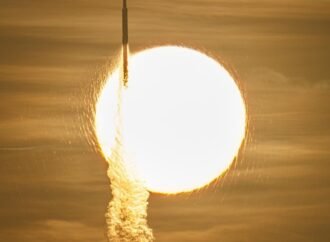
From this vantage point, Roman will conduct an unprecedented survey of the universe. Its field of view is 100 times larger than Hubble’s and, according to NASA, it can survey the sky 1,000 times faster using its 300-megapixel infrared camera. Roman also has a Coronagraph system that can block and mask glare from stars, allowing
READ MORE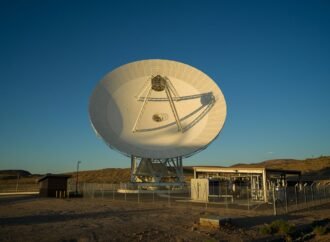
Long shadows are cast by the recently completed Deep Space Station 23 at the Deep Space Network’s Goldstone complex near Barstow, California, in August 2026. A 34-meter (114-foot) multifrequency beam-waveguide antenna, DSS-23 will boost the DSN’s capacity and enhance NASA’s deep space communications capabilities for decades to come. NASA leadership and personnel as well as
READ MORE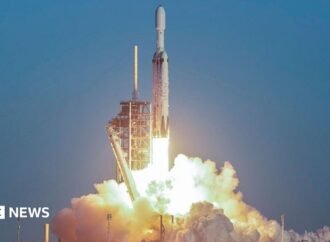
The new Nancy Grace Roman telescope is similarly expected to revolutionise our understanding of the Universe, including through investigating dark energy. It has a five-year primary lifespan with a goal to operate for 10 years. Nasa says the telescope’s “crisp, sweeping surveys will help scientists investigate dark energy and dark matter, discover and characterise exoplanets,
READ MORE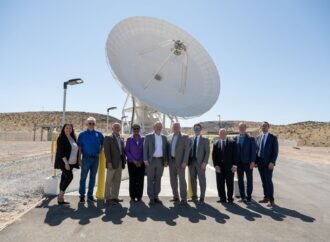
Leadership from NASA Headquarters, the Jet Propulsion Laboratory, and the Deep Space Network (DSN) stand in front of the recently completed Deep Space Station 23 antenna at the Deep Space Network’s Goldstone complex near Barstow, California, on Aug. 25, 2026. From left: Germaine Aziz (project manager, DSN Aperture Enhancement Project, JPL); Bradford Arnold (manager, Telecom
READ MORE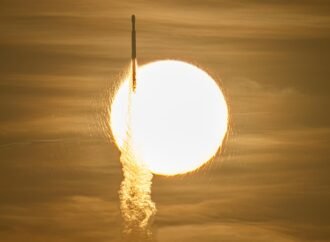
Now on a three-month, million-mile journey to its final orbit, NASA’s Nancy Grace Roman Space Telescope will soon reveal the universe’s darkest secrets. The mission launched at 7:26 a.m. EDT Sunday aboard a SpaceX Falcon Heavy rocket from Launch Complex 39A at the agency’s Kennedy Space Center in Florida. Roman pairs a large field of
READ MORE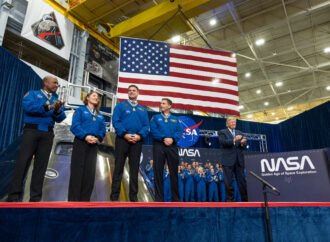
From left to right: NASA astronauts Victor Glover and Christina Koch, CSA (Canadian Space Agency) astronaut Jeremy Hansen, and NASA astronaut Reid Wiseman receive the Congressional Space Medal of Honor from President Donald J. Trump on Aug. 28, 2026, for their service during the Artemis II mission. The Congressional Space Medal of Honor was authorized
READ MORE