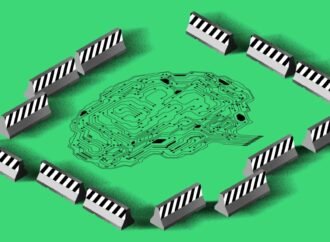
OpenAI has parted ways with three researchers on its safety team who allegedly shared confidential company information with a third-party AI safety organization, The Wall Street Journal reported on Thursday. “We have parted ways with three individuals for violating our policies on accessing and handling sensitive company information,” an OpenAI spokesperson said in a statement to the
Chinese AI developer Moonshot is conducting an internal review after researchers were able to persuade two of its popular Kimi models to tell them how to make biological weapons and carry out assassinations. Mindgard, which tests the security of AI systems, told the BBC it discovered in July that Kimi K2.6 and K3 Swarm could
“The chance of human extinction is about a coin flip, in my view,” Geoffrey Irving, a former OpenAI and Google DeepMind employee, said in a new interview. It’s one of a dozen interviews with AI researchers, including current and former employees at OpenAI, Google, and Anthropic. Palisade Research, which says it’s a nonprofit studying AIs’
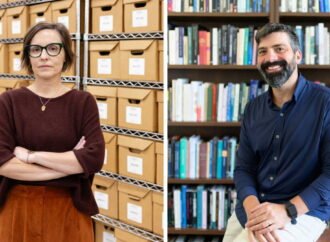
Kate Spradley and Felipe De Brigard are two of this year’s MacArthur Fellows, each working at the interface of science and justice. The John D. and Catherine T. MacArthur Foundation hide caption toggle caption The John D. and Catherine T. MacArthur Foundation It should have been a fairly routine exhumation of a man’s body from
One of modern AI’s most influential researchers is now at the center of AMD’s $8 billion bet on physical AI. AMD said Monday it had agreed to acquire World Labs, a San Francisco startup cofounded in 2024 by Stanford professor Fei-Fei Li, in an all-stock deal valued at roughly $8.2 billion. World Labs is building
The social sector is in severe distress. Nonprofits serving communities across the US have faced an existential crisis since January 2025, when the Trump administration and its allies in Congress began a series of actions targeting the sector. Nonprofits have been reeling from these actions, even as demand for their services has increased as a