Regenerative medicine holds extraordinary promise for transforming the treatment of chronic and life-threatening diseases. Yet the field continues to advance on an incomplete scientific foundation: the underrepresentation of women and non-binary people in both preclinical and clinical research. This is not a minor oversight, but a fundamental limitation that compromises the safety, accuracy and translational
Julia Hirschberg thought that she had reason to celebrate. In July, she had been elected to become a member of the European Academy of Engineering (EAE), an organization billed on its website as the “premier institution representing the highest professional distinction in engineering” with 35 Nobel laureates among its more than 400 elected members. The
US platform iLands allows users to easily create agents using plain language instructions. Credit: Michael Szebor/Nature Last month, Adrian Barnett, a statistician at Queensland University of Technology in Brisbane, Australia, received an e-mail request to share his data on potentially fraudulent research papers. The sender wanted to use the data for their own project. But
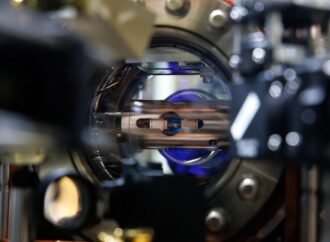
A close-up of the lutetium clock’s interior, which is the world’s most accurate timekeeper. Credit: Centre for Quantum Technologies, National University of Singapore Physicists have unveiled the world’s most accurate clock — a timepiece so reliable that it would take more than 260 billion years to lose a second. Precision clocks are used in everything
A team of three independent security researchers at Hacktron says it took less than 72 hours for them to hack into OpenAI employee accounts using Anthropic’s Claude Opus 4.8 and 5, the Wall Street Journal reports. They were able to access OpenAI’s GitHub repository, called “Monorepo,” which reportedly contains “OpenAI’s algorithmic secrets,” according to the
Beth Barnes, one of the AI industry’s most influential watchdogs, said in July she was struggling to hire talented researchers to monitor AI’s risks. That has begun to change. Researcher Joe Benton announced this week that he had left Anthropic for Barnes’ nonprofit METR, writing that he worries about “extinction-level risks” from the tech. The